Instagram is full of dietitians telling you what to eat. How many grams of protein per kilo of body weight, how many calories at breakfast, which miraculous superfood will transform your health in three weeks. None of them ask you the right question: do you even have the vitality to digest it?
I received in consultation a forty-four-year-old woman, Sophie, a schoolteacher, who was scrupulously following a nutritional protocol found online. Raw vegetables at lunch and dinner, green smoothie in the morning, sprouted seeds, spirulina, wheatgrass juice. On paper, it was impeccable. In reality, she was more tired than before, she had bloating after each meal, gastric reflux in the evening, and she had lost three kilos she didn’t need to lose. Her digestive system simply didn’t have the vitality necessary to transform so much raw food. It’s like asking a worn-out engine to drive at full speed on the highway. The fuel is good, but the engine can’t keep up.
That’s exactly why naturopathy doesn’t talk about nutrition like others do. It talks about bromatology.
Bromatology: The science nobody teaches you
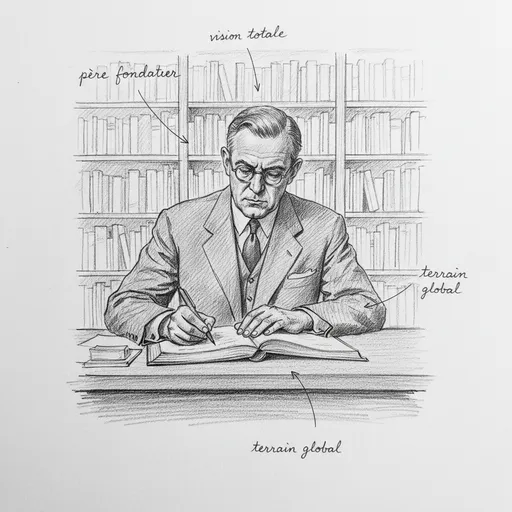
The word comes from the Greek broma, food, and logos, science. It’s the science of food. But be careful, not in the sense of modern dietetics which counts macronutrients and glycemic indexes. Bromatology according to Pierre-Valentin Marchesseau is a much broader, much more subtle, and above all much more individualized discipline. It’s one of the four major techniques of the naturopath, along with physical exercise, hydrology, and psychology. And of the ten techniques in total, it comes first. Not by chance.
Marchesseau broke it down into three distinct axes, and this distinction changes everything.
The first axis is dietetics. Not in the modern sense of the term, but in the etymological sense: diaita, in Greek, means “way of life.” Marchesseau’s dietetics is about managing time and food restriction. When do I eat? How much time do I give my digestive system to rest? And above all, to what degree of restriction do I bring my diet in a curative logic? This is where fasting, monodiet, juice cures, and targeted restrictions come in. The objective is always the same: detoxification. Limited in time, targeted, progressive. With two possible directions depending on the type of overload you accumulate: eliminating colloidals (mucus, oxidized fats) or eliminating acids (crystals, uric acid, lactic acid). This is an aspect I developed in depth in the article on toxemia according to Marchesseau, because dietetics only makes sense if you first understand what your body is trying to eliminate.
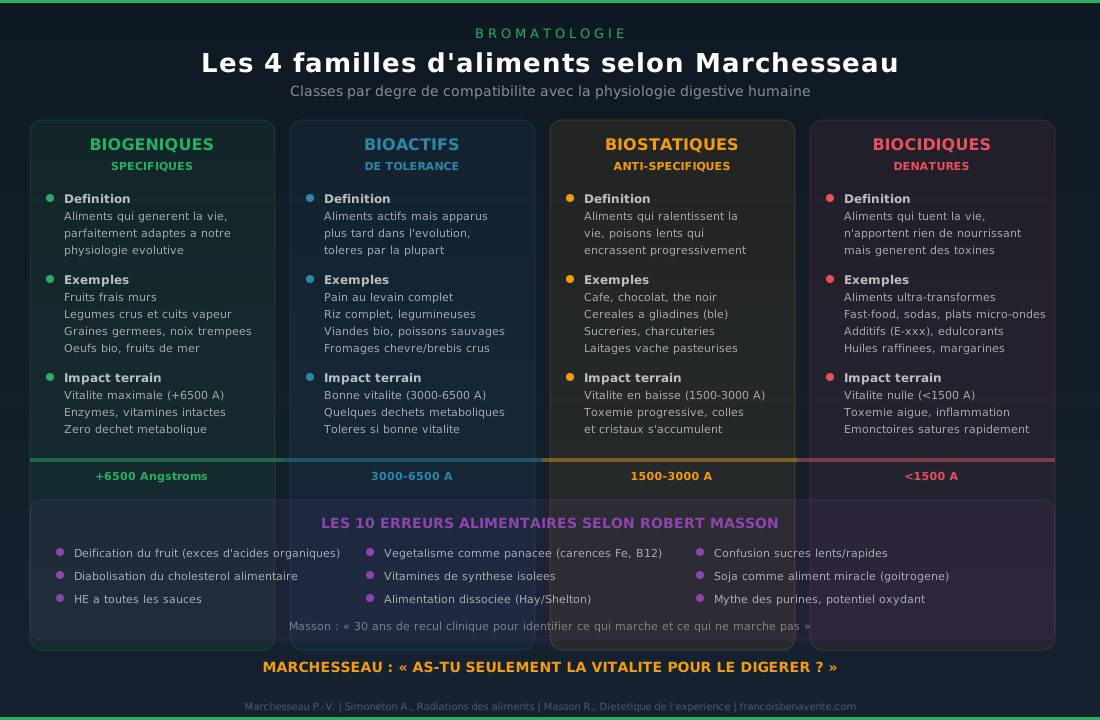
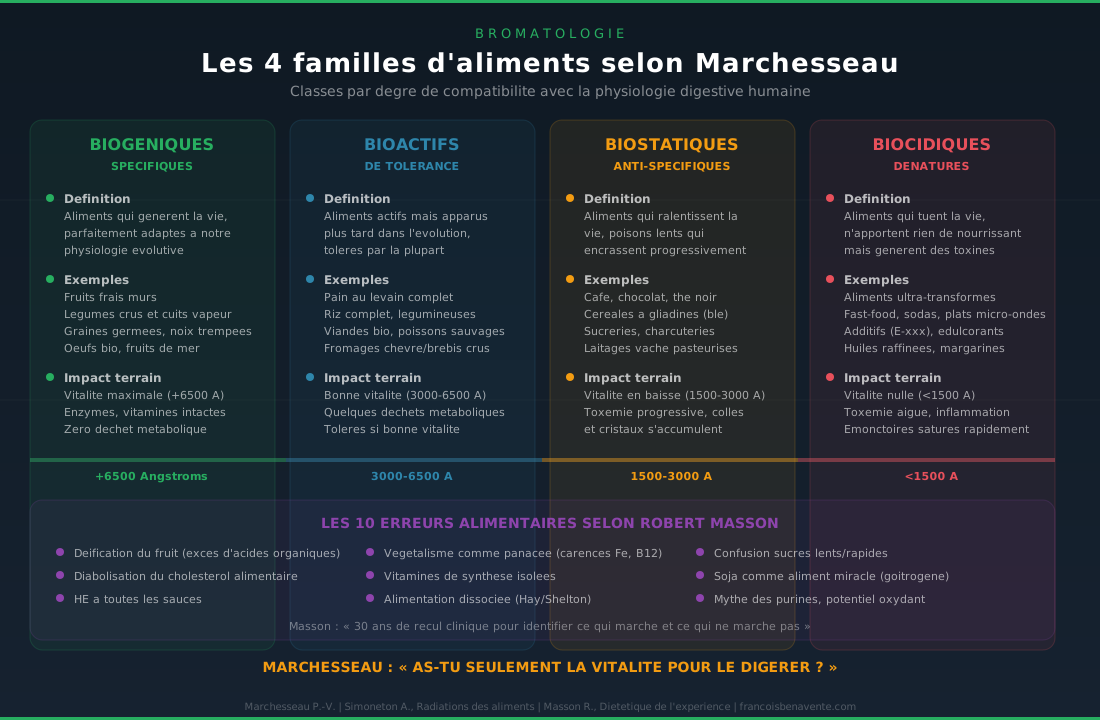
The second axis is nutrition. It’s the art of distribution. What do I put on my plate? Which nutrients actually reach my cells? And above all, does my diet cover all my needs in vitamins, minerals, trace elements, essential fatty acids, and essential amino acids? Nutrition in Marchesseau’s sense integrates a notion that modern dietetics completely ignores: the radioactivity of foods. I’m not talking about Chernobyl. I’m talking about the work of engineer André Simoneton, who measured the radiation of foods in the 1930s in Angströms. A fresh fruit picked from a tree radiates above 6,500 Angströms. A canned fruit falls below 3,000. An irradiated or ultra-processed food goes below 1,500. For Marchesseau, this vibratory energy is a real component of a food’s nutritional value. You can smile, but when a patient tells me they “feel” the difference between a garden tomato and a supermarket tomato, it’s not just a matter of taste. It’s a matter of transmitted vitality.
The third axis is the art of eating. These are digestive rules, both universal and individual. Universal because certain laws apply to everyone: don’t eat in a state of stress, chew thoroughly, respect favorable food associations, don’t drink during meals. Individual because each temperament, each terrain, each level of vitality imposes adjustments. A plethoric sanguine type can skip a meal and feel better. A hypoglycemic nervous type will faint if you ask them to do the same. A lymphatic type digests slowly but solidly. A bilious type digests quickly but poorly tolerates cooked fats. The art of eating is what is sorely lacking from the standardized protocols you find on the Internet.
The four families of foods
This is one of the most elegant classifications in naturopathy. Marchesseau didn’t look at foods through the prism of calories or macronutrients. He classified them according to their degree of compatibility with human digestive physiology. And this compatibility, he read it in the evolutionary history of our species.
Specific foods are those that humans consumed for millions of years, those for which our enzyme system, our intestinal length, our gastric acidity, and our bacterial flora are perfectly adapted. Fresh fruits, raw and cooked vegetables, sprouted seeds, soaked nuts and almonds, eggs (preferably raw yolk), shellfish. These are the most vitality-generating foods, those that require the least energy to digest and that return the most. Marchesseau called them the foods of original man, of the gatherer-gleaner who lived in a warm temperate environment. If you were to take away only one thing from this article, it would be this: the more specific foods your plate contains, the more your terrain cleanses itself.
Tolerated foods come next. These are foods that humanity learned to consume over evolution, through migration to colder climates, sedentarization, and the development of agriculture. True sourdough bread (long fermentation), semi-complete rice, buckwheat, quinoa, sweet potatoes, well-soaked and long-cooked legumes, biologically high-quality meats, wild fish. These foods are not toxic. They simply require more digestive energy than specific foods, and they tolerate excessive consumption poorly. A person in full vitality will assimilate them without problem. A person exhausted, with a suffering digestive system, will need to limit them temporarily to let their organism recover. You’ll notice that I don’t demonize either meat or grains: what counts is quality and quantity, relative to your current digestive capacity.
Anti-specific foods constitute the third category, and this is where things become uncomfortable. Chocolate. Coffee. Black tea. Gliadine grains (modern wheat, rye, barley, uncertified oats). Sweets, pastries, industrial processed meats. These aren’t foods in the biological sense. Their pleasant taste doesn’t come from compatibility with our physiology; it comes from an artificial assembly of flavors that stimulate the brain’s reward centers without nourishing cells. Marchesseau called them “slow poisons.” The word is strong, but clinical experience vindicates him. Coffee exhausts the adrenals over time. Chocolate overloads the liver with oxalic acid. Modern wheat, with its 42 chromosomes and aggressive gliadins, maintains chronic intestinal permeability in a considerable proportion of the population, including non-celiac individuals. These are anti-specific because they work against your physiology, not with it.
Denatured foods form the last category, the most recent in human history and the most deleterious. These are ultra-processed products: industrial prepared meals, sodas, candy, packaged snacks, reconstituted sauces, “fake cheeses,” recomposed meats, breakfast cereals puffed and coated with sugar. These pseudo-foods didn’t exist a hundred years ago. Our enzyme system hasn’t evolved to break them down. The additives, preservatives, emulsifiers, colorants, and flavor enhancers they contain disturb the microbiota, inflame the intestinal lining, and overload the liver with xenobiotics. I won’t waste time arguing further on this category. If it’s wrapped in plastic, if the ingredients list goes for more than five lines, if your grandmother wouldn’t recognize what’s inside, it’s a denatured food.
What Robert Masson saw that nobody wanted to hear
Robert Masson was one of the greatest clinicians of French naturopathy. Trained by Marchesseau, he later developed his own approach, nourished by more than thirty years of practice and thousands of patients. What distinguishes him is his critical eye. Masson never hesitated to question the trends, dogmas, and beliefs of the naturopathic field itself. His “ten dietary errors” are an electrifying wake-up call that every naturopathy student should read in the first year.
The first error, Masson called the deification of fruit. Fruits are specific foods, no question. But excess fruit, especially in people with a neuro-arthritic temperament (nervous, cold-sensitive, demineralized), causes a massive influx of organic acids: citric acid, tartaric acid, malic acid. These acids, when the liver doesn’t have the capacity to buffer them properly, saturate the terrain. Chronic rhinitis, dry cough, progressive decalcification, worsening cold sensitivity, joint pain. I’ve seen people in consultation eating five to six fruits a day and not understanding why they hurt everywhere. Fruit is a magnificent food, but it’s a food for the vital. The more devitalized you are, the more you must moderate your raw fruit consumption and prefer them cooked (unsweetened compotes) or in the form of warm juice. This isn’t heresy, it’s physiological common sense.
The second error concerns veganism presented as a panacea. I deeply respect ethical choices. But Masson, as a rigorous clinician, observed in many strict vegetarians deficiencies in hemic iron (which is only found in animal products and is six to eight times better absorbed than non-hemic iron), in vitamin B12 (which has no reliable vegetable source outside supplementation), and a progressive decrease in gastric hydrochloric acid, itself responsible for a cascade of poor assimilation of minerals and proteins. This isn’t an argument for meat at every meal. It’s a reminder that human physiology, that of an omnivore, has its requirements. I also discuss this in the article on anemia, because many women I see in consultation combine significant menstrual losses with a diet poor in assimilable iron.
“There is not a single man on earth capable of understanding the exact fate of a meal in the human body.” Robert Masson
The third error is the confusion between slow sugars and fast sugars. This simplistic classification was taught for decades, even in medical schools. Masson put the figures on the table: an aliment’s glycemic index varies considerably depending on the total dietary load: a carbohydrate food consumed alone doesn’t behave at all like the same food consumed with fiber, lipids, and proteins. Steamed potato has a high glycemic index when consumed alone and warm. Cooled and accompanied by olive oil and vegetables, its glycemic index drops drastically. Metabolic reality is infinitely more complex than the binary slow/fast classification.
The fourth error concerns the demonization of dietary cholesterol. Masson insisted on a fact that cardiology now acknowledges: the liver synthesizes approximately 70% of circulating cholesterol. What you eat represents only a tiny fraction of your blood level. And cholesterol is essential: it constitutes the membrane of every cell in your body, it’s the precursor to vitamin D, steroid hormones (cortisol, DHEA, testosterone, estrogens, progesterone), and bile salts that allow you to digest fats. Eliminating eggs for fear of cholesterol is a nutritional absurdity that Masson denounced forcefully.
The fifth error involves isolated synthetic vitamins. Masson observed that vitamin A taken without vitamin D, or vitamin D without vitamin A, or calcium without magnesium, unbalanced the organism more than they supported it. Nutrients function in synergy, in networks. Isolating them in a capsule is ignoring the architecture of life. This is, moreover, a fundamental principle of micronutrition that I apply in consultation: never a single nutrient, always a network of cofactors. Zinc doesn’t function without vitamin B6 and without copper. The thyroid needs simultaneously iodine, selenium, zinc, iron, tyrosine, vitamin D, and vitamin A. Isolating a single one of these nutrients is like pulling a thread from a spider web hoping the rest doesn’t move.
The sixth error is soy presented as a miracle food. Masson was categorical on this point, and clinical experience confirms his warnings. Soy contains phytates that chelate minerals, lectins that irritate the intestinal lining, trypsin inhibitors that disrupt protein digestion, and above all isoflavones (genistein, daidzein) that are powerful phytoestrogens. Masson cited a striking figure: a baby fed soy milk receives the equivalent in phytoestrogens of five contraceptive pills per day. The thyroid isn’t spared: soy isoflavones are goitrogenic, they disrupt iodine uptake and slow the conversion of T4 to T3. For people suffering from Hashimoto’s, it’s a food to strictly avoid. However, traditional fermented products (miso, tempeh, tamari) pose fewer problems because fermentation breaks down some of the anti-nutrients.
The seventh error concerns essential oils used for everything. Masson reminded that essential oils are biochemical concentrates of considerable power. The lemon you squeeze in your morning water and lemon essential oil have strictly nothing to do with each other. Some essential oils are hepatotoxic at repeated doses, neurotoxic at high doses (peppermint can cause bulbar paralysis at 2 grams), and disturb the intestinal microbiota when ingested regularly. Just because it’s “natural” doesn’t mean it’s harmless. The death cap mushroom is natural. Curare is too.
The eighth error is dissociated eating promoted by Hay and Shelton. The principle: never mix proteins and carbohydrates in the same meal. Masson, with his clinician’s eye, observed that this systematic dissociation caused excessive glucagon secretion (the catabolic hormone that breaks down reserves) at the expense of insulin, leading over time to muscle wasting and chronic fatigue. The human body is designed to digest complete and varied meals. Digestive enzymes are secreted in a coordinated manner, not sequentially. Dissociation can have a point, therapeutic interest, in the context of digestive recovery after fasting. But in permanent use, it weakens the terrain.
The ninth error involves the myth of purines. We often hear that red meat is the great culprit in excess uric acid. Masson put the figures on the table: soy contains twice as many purines as pork, and brewer’s yeast contains fifty times more than red meat. Uric acid doesn’t come solely from diet. It comes mainly from the catabolism of endogenous purine bases, that is, from the cellular renewal of your own organism. Reducing red meat when your problem is an excess of brewer’s yeast as a supplement is looking for the leak in the wrong pipe.
The tenth error, the most fundamental perhaps, is ignorance of oxidative potential. Masson summed up this error with his most famous statement: “There is not a single man on earth capable of understanding the exact fate of a meal in the human body.” It’s a call for humility. We don’t control everything. Nutritional biochemistry is of a complexity that exceeds our models. What an aliment “should” do in theory and what it actually does in your organism, with your microbiota, your enzymatic capacity, your stress level, your hormonal status, and your vitality at the moment, these are often two very different realities. The oxidative potential of an isolated nutrient can prove pro-oxidant in a context of cofactor deficiency. That’s why naturopathy works on the terrain before working on the molecule.
Eating according to your vitality
Marchesseau had a phrase I often repeat in consultation: “The more exhausted a person is, the less capable they are of digesting large meals. Do as babies do.”
Digestion is the most energy-consuming activity of the organism. It mobilizes blood, enzymes, nervous energy, time. When your vitality is at its lowest, when your adrenals are at the third stage of exhaustion, when your sleep no longer recovers anything, the last intelligent thing to do is to load your plate like a holiday Sunday. It’s not a question of willpower or discipline. It’s a question of raw metabolic capacity. Sophie, my patient from the beginning, understood this the day I asked her to replace her midday raw vegetables with a gentle steamed vegetable soup, lukewarm, with a drizzle of raw olive oil and a spoonful of gomasio. In two weeks, her bloating had decreased by half. Not because raw vegetables were bad, but because her digestive system didn’t have the energy to break them down.
The strategy is simple. When you’re exhausted, you direct your energy dispatch toward recovery: rest, nature, long sleep. You choose the most vitality-generating foods possible, those that require the least digestive energy and return the most: gently steamed vegetables, bone broth, ripe seasonal fruit, soft-boiled eggs, small oily fish. You’re kind to your liver: you eliminate anti-specific foods (coffee, alcohol, chocolate, gliadine grains, sweets) while the organism reconstitutes itself. And above all, you listen to your biofeedback. Gas after a meal tells you that something is fermenting in your intestine. Bloated belly tells you that you ate too much or made poor associations. Skin odor tells you about the state of your humoral terrain. Doctor Paul Carton recommended to his patients measuring their belly circumference before and after the meal with a tape measure. If the circumference increased by more than two centimeters, then the meal was inadapted. Primitive? Maybe. Effective? Terrifyingly so.
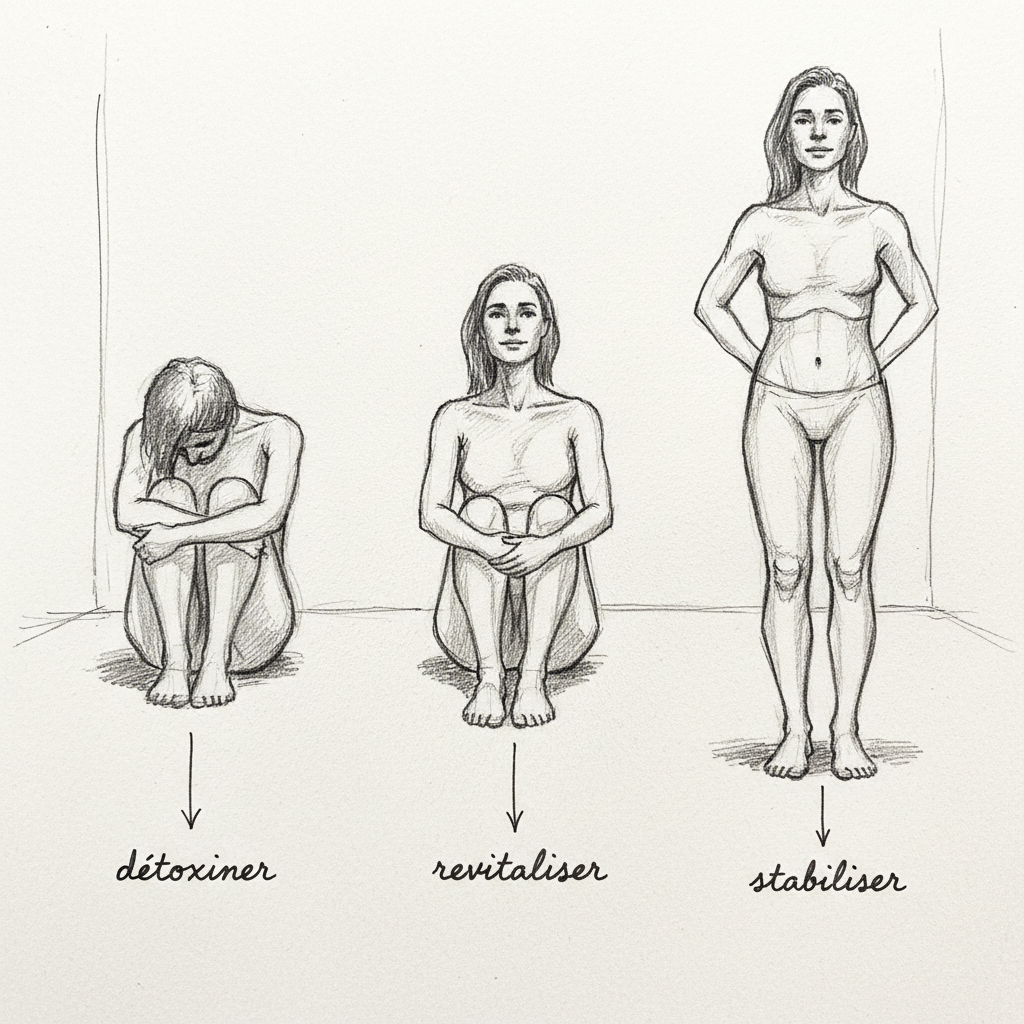
And then you gradually rebuild. You introduce raw slowly, when the digestive system has recovered enough strength to transform it without bloating. You return to specific foods, you increase the share of fresh and living things on your plate. It’s a path, not a switch.
Dietetics and nutrition: two disciplines everyone confuses
I regularly receive people in consultation who confuse dietetics and nutrition. It’s normal; the two terms are used interchangeably in everyday language. But in naturopathy, the distinction is fundamental, and Marchesseau held to it like his life depended on it.
Dietetics is about managing time and restriction. When do I eat? How much time do I fast between meals? Do I do a monodiet once a week? Sixteen-hour intermittent fasting? A three-day juice cure? It’s the tool of detoxification, limited in time, targeted at eliminating overloads. Dietetics is the armed wing of toxemia: it reduces intake to allow the emunctories to catch up on their elimination lag. But it doesn’t nourish. It cleanses.
Nutrition is the art of nourishing. It’s the choice of foods, their quality, their preparation, their associations. It’s ensuring that every cell in your body receives what it needs to function, repair itself, and defend itself. Essential amino acids for protein synthesis and neurotransmitters. Omega-3 fatty acids for cell membranes and resolution of inflammation. Vitamins and minerals that serve as cofactors in hundreds of enzymatic reactions. As I explain in the article on anti-inflammatory nutrition, the quality of what you eat directly conditions the quality of your terrain. And how you prepare your food matters as much as its nature: gentle cooking below 110°C preserves enzymes, heat-sensitive vitamins, and molecular structures that frying and oven cooking destroy.
“Let your food be your medicine, and your medicine your food.” Hippocrates
The most frequent error I observe is doing dietetics (restriction) when you need nutrition (rebuilding), and vice versa. The exhausted person who fasts three days “to detoxify” when their adrenals are flat and their ferritin is at 12. The overloaded person piling on superfoods and enriched smoothies when their liver is begging to be left alone. The key is always the same: assess vitality first. Adapt the tool afterward.
Instinct: The sixth sense you’ve unlearned
There’s an aspect of bromatology that Marchesseau addressed with particular insistence and that I find too often neglected: food instinct. Before nutrition books, before calorie charts, before apps that scan barcodes, humans knew how to eat. They instinctively knew what they needed, when, and in what quantity. Wild animals don’t consult nutritionists. A sick cat seeks out grass. A dog with an upset stomach spontaneously fasts. Instinct is a survival tool honed by millions of years of evolution.
The problem is that we’ve buried it under layers of conditioning. Ultra-processed foods hijack our taste receptors with salt-sugar-fat combinations that don’t exist in nature. Food marketing creates artificial cravings. Social schedules make us eat when we must, not when we’re hungry. Chronic stress derails satiety signals via leptin and ghrelin. And after twenty or thirty years of this treatment, you no longer know if you’re genuinely hungry or if you’re eating out of habit, emotional compensation, or boredom.
Recovering food instinct is work that takes time. It starts by listening to the signals your body sends you after each meal. You feel light, energetic, mentally clear? The meal was adapted. You feel heavy, sleepy, bloated, with mental fog? Something didn’t suit you. That’s pure biofeedback, and it’s an infinitely more reliable tool than any standardized nutritional chart. Marchesseau recommended keeping a food journal not to count calories but to note sensations after each meal. In a few weeks, patterns become obvious. And you no longer need anyone to know what suits you.
What bromatology is not
I want to be clear on this point, because the natural health field is gangrened by extremes. Marchesseau’s bromatology is not a diet. It’s not a rigid protocol with forbidden and allowed foods. It’s not a food religion. It’s a reading grid that allows you to understand the relationship between what you eat and the state of your terrain. It’s a tool for permanent evaluation and adaptation, not a dogma.
Marchesseau himself warned against food fanaticism. He believed that the convivality of the meal, the pleasure of eating, the joy shared at table were integral parts of the nutritional value of a meal. An imperfect meal eaten with joy nourishes better than a perfect meal eaten with anxiety and guilt. The stress of “eating poorly” is sometimes more toxic than what you actually eat. Masson also repeated it: fear of food is a poison more powerful than the food itself.
Your body is more intelligent than any protocol. It knows what it needs. The naturopath’s job is to help you hear again what your body is telling you. Not to give you a list of foods to check off.
The last word
Bromatology is the first technique of the naturopath because it touches each of us three times a day, seven days a week, from birth to death. It’s not the most spectacular. It’s not the one that makes followers dream. But it’s the one that, patiently, silently, transforms the terrain in depth. Marchesseau knew it. Masson knew it. And if you take the time to read this article, to ask yourself the right questions, to observe your own biofeedback with honesty, you’ll know it too.
“Man becomes sick, ugly, and mad because he does not obey the laws of his species.” Pierre-Valentin Marchesseau
If you want to understand the foundations on which bromatology rests, I invite you to read the article on the basics of naturopathy. If you want to go further on the notion of terrain, the article on toxemia according to Marchesseau is the natural complement to this one. And if you want to practice with the three naturopathic cures, that’s the logical next step.
Important disclaimer. This article is educational content on natural health. It is in no way a substitute for a medical consultation. Naturopathic bromatology is a complement, not a substitute for medical care. If you suffer from eating disorders, diagnosed digestive pathologies, or severe deficiencies, consult your primary care physician and, if you wish, a trained naturopath who can adapt these principles to your individual situation.
Want to evaluate your status? Take the free vitality-toxemia questionnaire in 2 minutes.
To go further
- Fasting and monodiets: the naturopath’s ancestral tools
- Toxemia according to Marchesseau: the real cause of your illnesses
- The 3 naturopathic cures according to Marchesseau explained
- Vincent’s bioelectronics: the science of terrain
For healthy cooking, PranaCook offers stainless steel utensils without endocrine disruptors.


Laisser un commentaire
Sois le premier à commenter cet article.