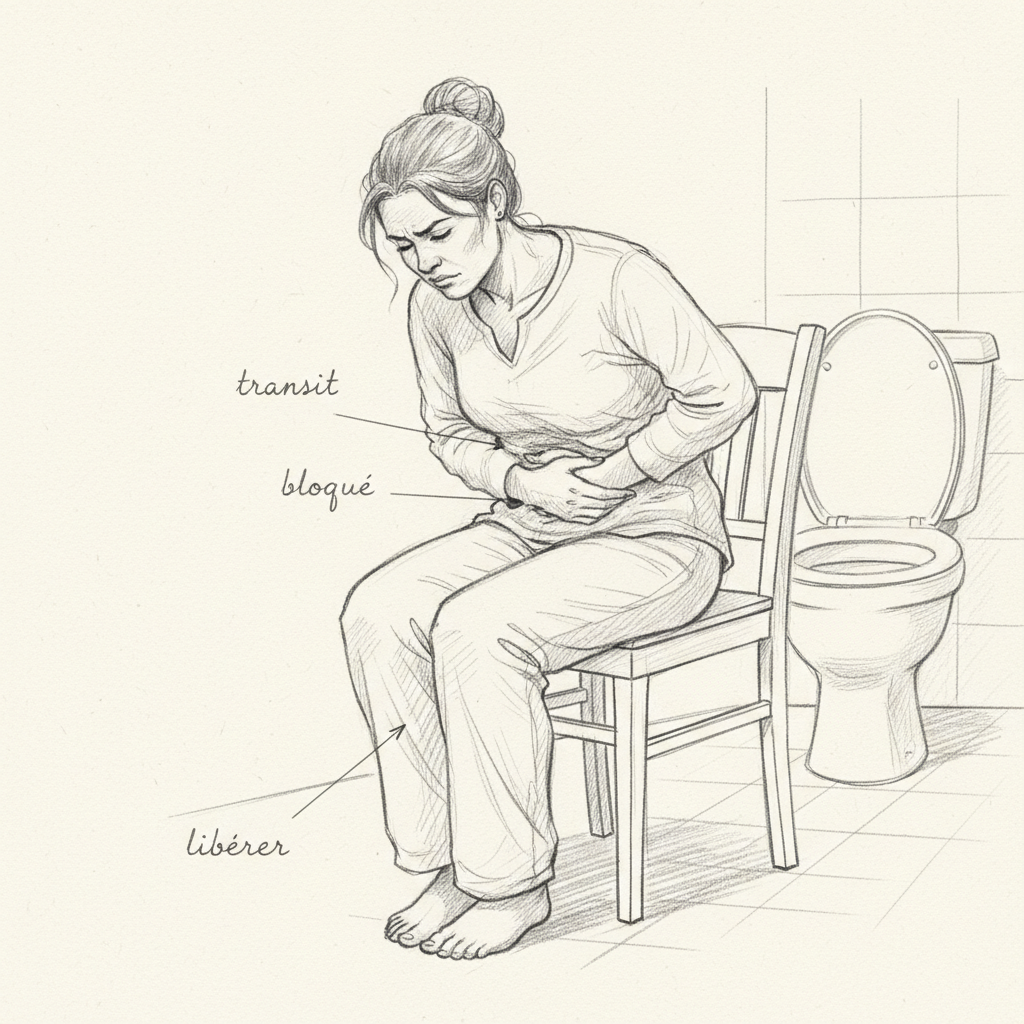
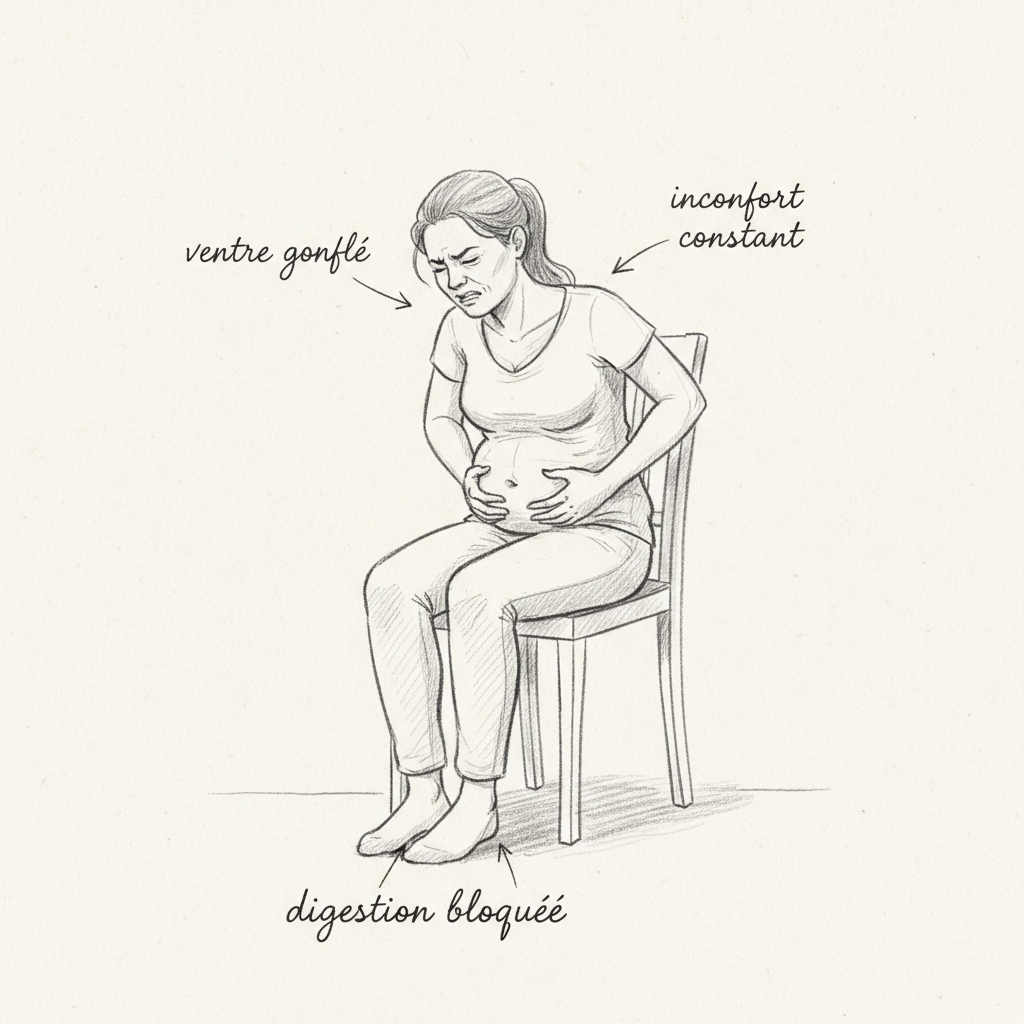
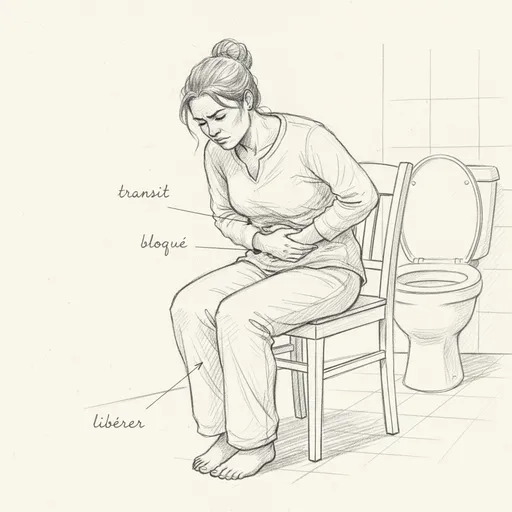
Her name is Nathalie (name changed), she’s 43 years old, two children, a desk job, and when she sat down across from me in consultation, she summed up ten years of struggle in one sentence: “I’ve tried everything, nothing works.” Ten years of chronic constipation. Ten years of laxatives, prune compote, psyllium, gastroenterology consultations that always end with the same verdict: eat more fiber, drink more water, do exercise. As if she hadn’t thought of that. As if it were a matter of willpower.
What no one had looked at in Nathalie was her diaphragm. No one had checked her thyroid. No one had talked to her about intestinal serotonin. No one had examined her dysbiosis. And no one, obviously, had asked her the simplest question in the world: how do you breathe?
“Ensure regular elimination of poisons from the body and especially the speed of intestinal functions with 2 bowel movements per day if possible.” Dr. Paul Carton
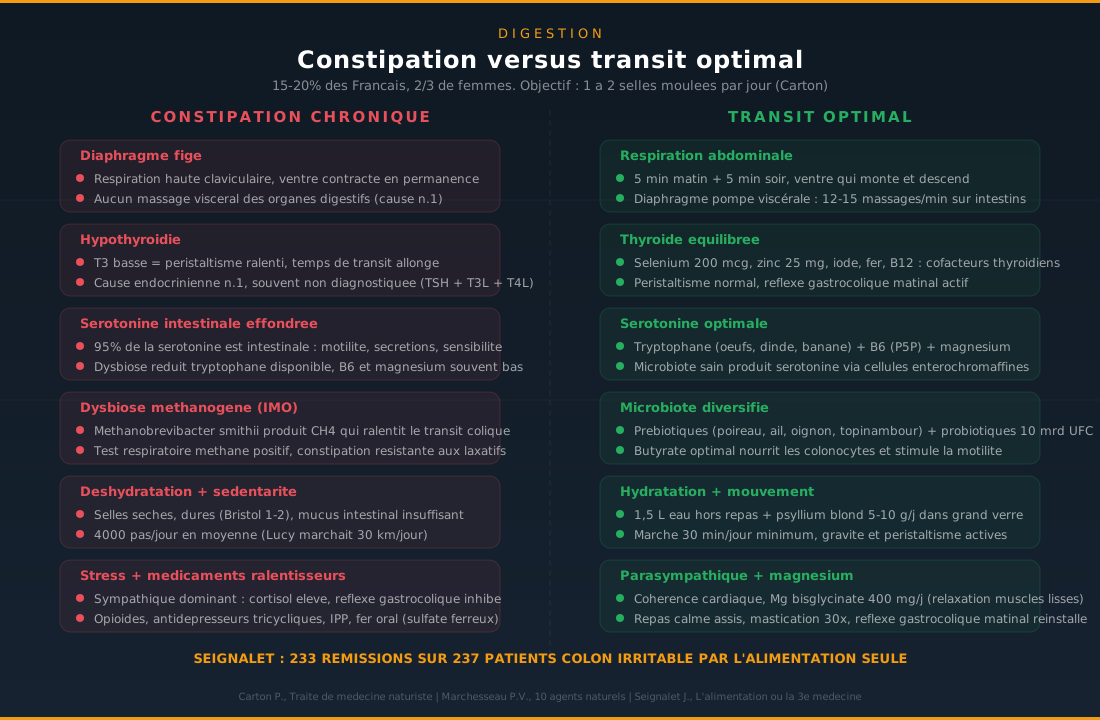
Chronic constipation affects between 15 and 20% of the French population, approximately ten million people. Two-thirds are women. And the majority of them have never received a satisfactory explanation. They’ve been labeled “functional constipation,” which is a polite way of saying: we don’t understand why, but it’s benign, live with it. Naturopathy refuses this resignation. Because behind every chronic constipation, there is terrain that is malfunctioning. And this terrain, when we agree to really look at it, always tells a story.
The diaphragm: the forgotten muscle of your transit
It’s the number one cause I search for in consultation. And it’s the one nobody ever looks for.
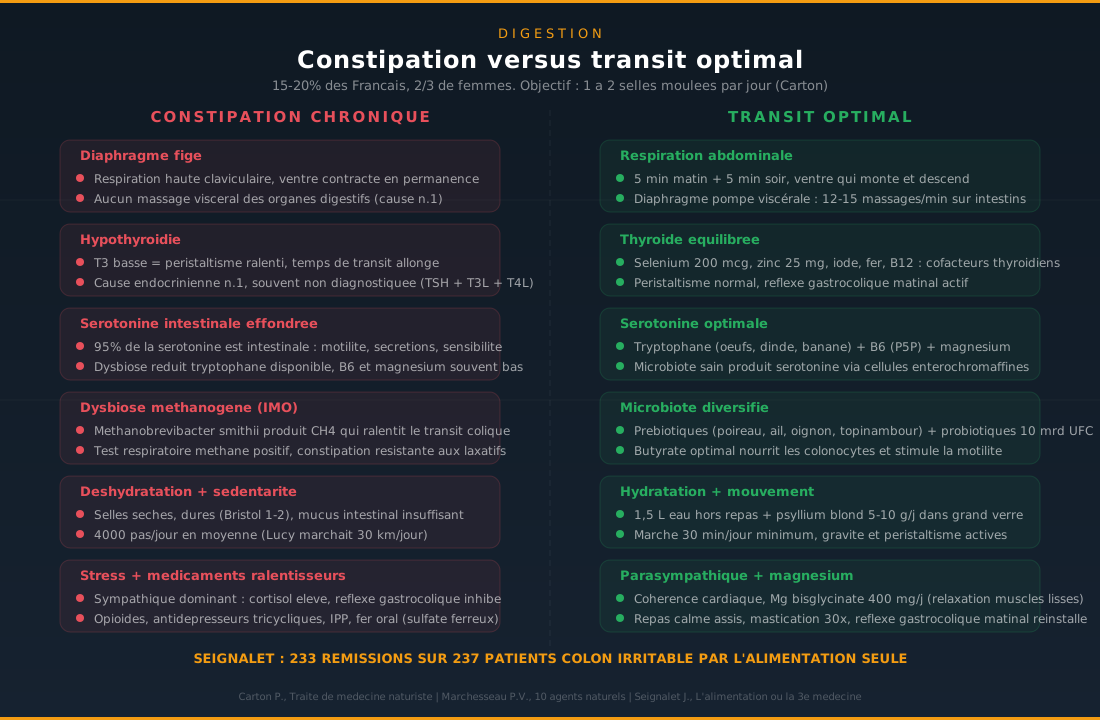
The diaphragm is a dome-shaped muscle that separates the thoracic cavity from the abdominal cavity. When you breathe correctly, it descends and compresses everything below it: the liver, stomach, spleen, kidneys, pancreas and especially the intestines. This mechanical massage, repeated twelve to fifteen times per minute, is the most powerful motor of peristalsis. Dr. Paul Carton already knew this at the beginning of the twentieth century. Marchesseau taught it as one of the ten natural agents of health. And yet, in 2026, we continue to prescribe Movicol without ever looking at how the patient breathes.
There are three types of breathing. Clavicular breathing, high, short, the breathing of chronic stress, that of the person who lives with their head in their shoulders and belly contracted. It’s the worst for transit, because the diaphragm barely descends. Costal breathing, lateral, slightly better, the kind sometimes taught in yoga. And abdominal breathing, deep, that of the newborn, that of the sleeping person, that which nature had planned. It’s the only one that truly massages the digestive organs.
In consultation, I do a simple test. I ask the patient to place one hand on the thorax and one hand on the belly, then breathe normally. With eight chronically constipated people out of ten, it’s the upper hand that moves. The belly hand doesn’t move. The diaphragm is frozen, the visceral massage doesn’t happen, and the intestine stagnates.
The problem is cultural as much as physiological. Women have been taught to hold in their bellies. They’ve been told that a flat belly is a sign of health, beauty, control. The result is an entire generation of women who breathe from the upper thorax, who permanently compress their abdominal girdle, and whose diaphragm no longer fulfills its function as a visceral pump. It’s one of the great paradoxes of our time: we sacrificed physiology on the altar of aesthetics.
Working on your diaphragm is the first thing I prescribe. Five minutes of conscious abdominal breathing in the morning and five minutes in the evening. Lying down, knees bent, one hand on the belly, inhale through the nose while expanding the belly, slow exhale through the mouth while letting the belly return. Nothing revolutionary. And yet, for Nathalie, two weeks of this daily practice was enough to go from three bowel movements per week to one per day. Before any dietary change. Before any supplement. Just by breathing.
Movement and gravity
Lucy, our Australopithecus ancestor, walked approximately 30 kilometers per day. Paleolithic Homo sapiens covered 15 to 20 kilometers daily. Modern man averages 4,000 steps, barely 3 kilometers. And he’s surprised his transit is at a standstill.
The human body is designed for bipedal movement. Walking mobilizes deep abdominal muscles (transverse, obliques), which mechanically compress the intestinal loops and propel the fecal bolus toward the sigmoid and rectum. Gravity does the rest. When you walk, the fecal mass descends. When you sit at a desk for eight hours a day, it stagnates. That’s elementary physics, not medicine.
Studies confirm it: moderate physical activity of 30 minutes per day reduces colonic transit time by 15 to 20%. No need to run a marathon. Walking, climbing stairs, biking, dancing, gardening. Anything that puts your body in vertical movement activates peristalsis. Sedentary life is constipation unaware. Buy a pedometer, aim for 8,000 steps per day, and observe what happens in two weeks.
Muscular tensegrity: your intestine needs pressure
Here’s a fact that always surprises my patients: the small intestine of a living, muscular person measures approximately 4.5 meters. That of a corpse, 6 to 7 meters. The difference is muscle tone. The abdominal muscles, pelvic floor, and diaphragm form a pressure chamber around the digestive tract. This chamber compresses the intestine, reduces its functional length, and increases the propulsive force of the fecal bolus.
This is the principle of tensegrity: a structure that maintains its form and strength through the balance between tension and compression. When the abdominal belt muscles are weak, relaxed, hypotonic, the intestine dilates, elongates, loses its ability to propel. Transit slows. Material stagnates. Fermentation settles in.
Core bracing, pelvic floor exercises, Pilates, yoga, swimming, anything that strengthens the deep trunk musculature, are direct allies of transit. Not for aesthetic reasons. For mechanical reasons. A toned abdomen is an abdomen that propels. Marchesseau insisted: physical exercise is not a luxury, it’s one of the ten natural agents of health, on the same level as nutrition, air, water, or light.
Hydration: your colon is thirsty
The large intestine measures approximately 1.5 meters long and 4 centimeters in diameter. Its main function, too often forgotten, is water reabsorption. Each day, the colon recovers between 1.5 and 1.8 liters of water from the food bolus to return it to the bloodstream. It’s a survival mechanism: the body prefers to recover water from the colon rather than lose it in stools.
When you’re dehydrated, the colon increases this reabsorption. Stools become dry, compact, hard, difficult to evacuate. It’s the most basic constipation there is, and yet the most common. The majority of French people drink less than one liter of water per day. Some drink almost only coffee, which is a diuretic.
The benchmark I give in consultation is simple: observe the color of your urine. If it’s dark yellow, you’re dehydrated. The goal is to achieve pale yellow, almost transparent urine throughout the day. This corresponds to approximately 1.5 to 2 liters of water per day, more if you exercise or it’s hot. Low-mineralized spring water is ideal. And the simplest gesture to restart lazy transit is to drink a large glass of warm water first thing in the morning, on an empty stomach. Warm water stimulates the gastro-colic reflex and triggers morning peristalsis. Kousmine already recommended it in her protocols.
Nutrition and season: chew, listen, respect
Robert Masson, in his Dietetics of Experience, hammered home a principle that I’ve made my own: each mouthful should be chewed until it becomes liquid before being swallowed. Thirty to forty jaw movements per bite. It’s an exercise in patience that modern life has completely abandoned. We eat quickly, standing, while walking, in front of a screen, between two meetings. And we’re surprised that digestion is chaotic.
Chewing isn’t just for fragmenting food. It triggers the secretion of salivary amylase, which begins the digestion of starches. It sends a signal to the brain, which prepares the stomach for receiving the food bolus. It activates the vagus nerve, which coordinates the entire digestive peristalsis, from the esophagus to the rectum. When you swallow without chewing, you skip the first step of the digestive cascade. And all the following steps suffer for it.
The environment of the meal matters as much as the content of the plate. Eating in calm, seated, without screens, taking time to smell the food, look at it, savor it. This isn’t wellness folklore. It’s physiology: the parasympathetic nervous system, that of digestion and rest, can only activate in a context of safety and relaxation. If you eat in stress, it’s the sympathetic system that dominates, and it inhibits peristalsis. Eating stressed means eating constipated.
And then there’s the question of fiber. Broccoli, spinach, kiwis, prunes, pears, leeks: these are precious allies of transit. But they must be introduced gradually in chronically constipated people, especially if the intestinal flora is unbalanced. A dysbiotic intestine that suddenly receives an avalanche of fiber won’t transit better. It will ferment, bloat, cramp. Progressivity is key. Start with one kiwi in the morning and a vegetable soup in the evening. Increase week after week. Let the microbiota adapt. And respect the season: fruits and vegetables in season, grown locally, picked at ripeness, are infinitely richer in nutrients and fiber than their imported equivalents, preserved under controlled atmosphere for weeks.
Sleep and serotonin: when your intestine is knotted
It’s the cause I find most fascinating and most underestimated. Serotonin is not just the neurotransmitter of happiness. It’s first and foremost an intestinal molecule. 95% of the body’s serotonin is produced in the small intestine, by enteroendocrine cells. And its role in the digestive tract is fundamental: it stimulates propulsive peristaltic contractions, those that move the fecal bolus from the small intestine to the colon and from the colon to the rectum.
When intestinal serotonin is low, peristalsis slows. Material stagnates. Constipation settles in. And the vicious circle begins: stagnation promotes the proliferation of putrefactive bacteria (Clostridium, pathogenic E. coli) that degrade tryptophan and tyrosine into toxic substances (indol, skatol, tyramine, histamine). These toxic metabolites cause headaches, migraines, unexplained fatigue, mood disorders. This link between constipation and migraines, which conventional medicine blithely ignores, has been known to naturopaths since Carton.
The link with sleep is direct. Serotonin is the precursor to melatonin, the sleep hormone. If you produce little serotonin during the day, you’ll produce little melatonin at night. Sleep is fragmented, non-restorative, and the deep sleep phase, during which the parasympathetic nervous system dominates and nocturnal peristalsis does its propulsive work, is shortened. As I explain in the article sleeping well naturally, sleep quality depends on a biochemical cascade that begins in the intestine.
Fascias, these connective tissue membranes that envelop each organ, each muscle, each viscera, respond to chronic stress by contracting, stiffening, fibrosis. A stressed patient literally has a knotted intestine. It’s not a metaphor. Chronic stress contracts visceral fascias, reduces intestinal mobility, compresses the myenteric nerve plexuses (the “neurons of the intestine”), and slows transit. Visceral osteopathy has known this for a long time. Naturopathy has known it since Marchesseau. Gastroenterology is only beginning to admit it.
“Every disease begins with a blockage of liquid exchanges at the capillary level.” Dr. Alexandre Salmanoff
Silent hypothyroidism: constipation that resists everything
When a patient tells me their constipation resists fiber, water, exercise, magnesium, and even laxatives, I immediately think of the thyroid. Thyroid hormones T3 and T4 directly stimulate the motility of the digestive tract. They activate smooth muscle cells in the intestinal wall, accelerate peristalsis, and promote mucus secretion that lubricates transit.
In case of hypothyroidism, even mild (high-normal TSH, low-normal T3L), peristalsis slows significantly. Colonic transit time can double or triple. Stools become rare, hard, difficult to evacuate. And no laxative will solve the problem until the thyroid is addressed. It’s a point that Dr. Hertoghe brilliantly documented: stubborn constipation is one of the most reliable clinical signs of hypothyroidism, well before blood tests fall outside “normal” ranges.
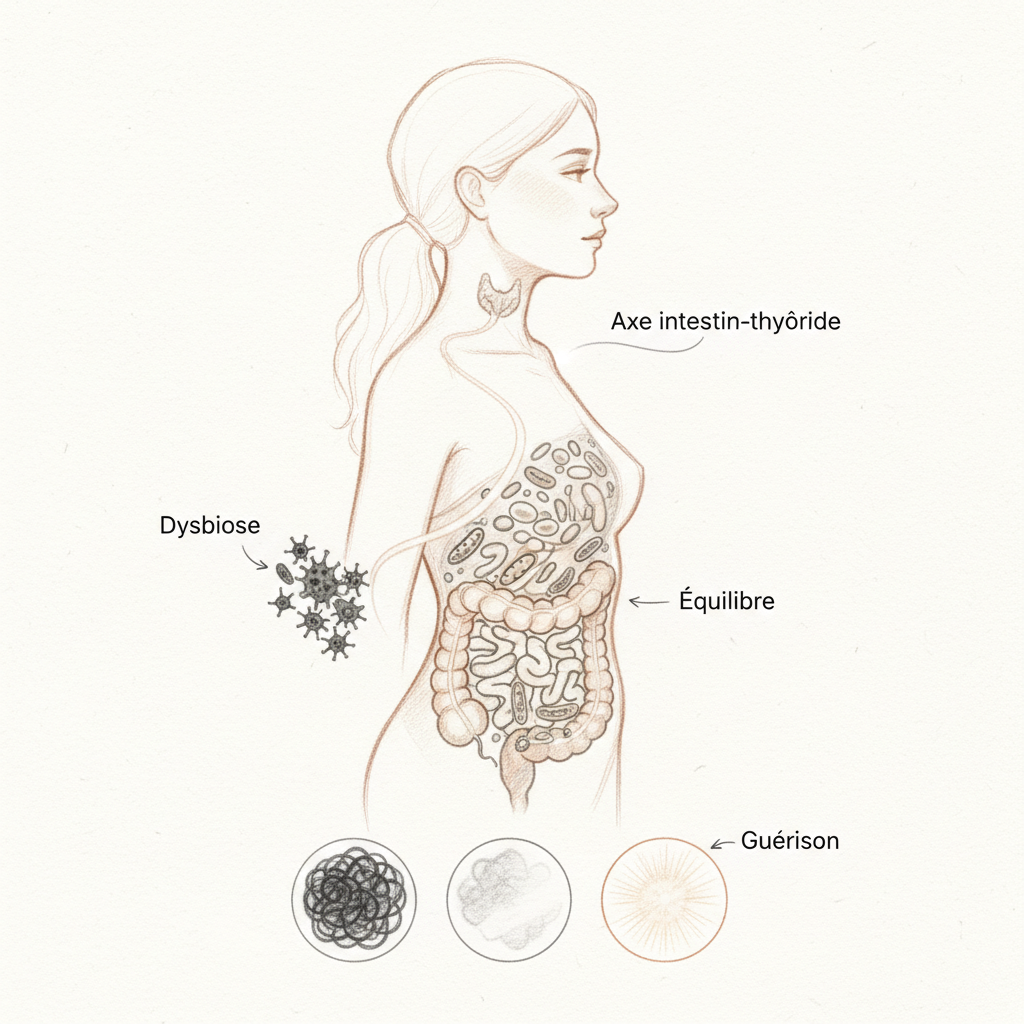
The trap is that laboratory TSH ranges are wide. A TSH at 3.5 mIU/L is considered “normal” by most doctors. For Hertoghe, it’s already functional hypothyroidism. And thyroid cofactors, those that allow conversion of inactive T4 to active T3, are often deficient: zinc, selenium, iodine, iron, tyrosine. As I detail in the article on hypothyroidism and digestion, hypothyroidism doesn’t just slow transit. It also reduces gastric hydrochloric acid secretion, which disrupts the entire digestive cascade downstream.
If your constipation resists everything, ask for a complete thyroid panel: TSH, free T3, free T4, anti-TPO and anti-thyroglobulin antibodies. Not just TSH alone. And interpret results with a practitioner who knows functional ranges, not just laboratory statistical norms.
Probiotics: your reinforcement army
Research over the past twenty years has transformed our understanding of intestinal microbiota. And what it teaches us about constipation is fascinating. Chronically constipated patients consistently show a decrease in Lactobacillus and Bifidobacterium, the two major families of beneficial bacteria that normally populate the colon. This dysbiosis isn’t a consequence of constipation. It’s a cause of it. Beneficial bacteria produce short-chain fatty acids (butyrate, acetate, propionate) that directly stimulate the propulsive contractions of the colon. Fewer good bacteria, less short-chain fatty acids, less peristalsis.
The Dimidi meta-analysis published in the American Journal of Clinical Nutrition in 2014 compiled data from 14 randomized clinical trials on the effect of probiotics on functional constipation. Results are clear: probiotics increase stool frequency by approximately 1.3 stools per week and reduce intestinal transit time by approximately 12.4 hours. It’s not miraculous, but it’s significant, and especially, it’s without the side effects of laxatives.
The best-documented strains are Lactobacillus acidophilus, Lactobacillus casei, Lactobacillus reuteri, and Bifidobacterium bifidum. Effective dosage starts at 10 billion CFU per day, in a mixture of equal strains. Minimum duration is four weeks, ideally two to three months to observe lasting change. In constipated children, the Coccorullo study (2010) in the Journal of Pediatrics showed that Lactobacillus reuteri at 100 million CFU per day for just two weeks doubled stool frequency.
But probiotics aren’t a magic wand. They work better when you prepare the terrain. Eliminate refined sugar, which feeds pathogenic bacteria. Reduce gluten in sensitive people, which maintains intestinal permeability. Provide prebiotics (inulin, FOS, resistant starch) that feed good bacteria. And above all, address upstream causes. Giving probiotics on hypothyroid terrain or a frozen diaphragm is like repainting the facade of a house whose foundations are collapsing.
The naturopathic protocol: acting on all causes simultaneously
Naturopathy doesn’t treat constipation. It treats the constipated person. And each constipated person is different. But here are the broad strokes of the protocol I use in consultation, adapted according to each patient’s terrain and temperament.
Diet is the foundation. Eliminate modern gluten for at least four weeks and observe the effects on transit. It’s not dogma, it’s a therapeutic test. Consume fruits between meals, never as dessert, to avoid fermentation above the food bolus that slows gastric emptying. Favor seasonal vegetables, cooked gently by steam or in soup, for the gentleness of their fibers. And begin each day with a large glass of warm water, twenty minutes before breakfast, to awaken morning peristalsis.
Raw food is wonderful, but it must be introduced intelligently. A chronically constipated intestine often has disturbed fermentation flora. Sending it a giant salad on the first day will cause bloating and cramps that will discourage the patient. I recommend starting with green juices, cold-pressed with a slow juicer, which provide the nutrients of raw (magnesium, chlorophyll, enzymes, potassium) without the insoluble fibers that can irritate a fragile intestine. Chlorophyll, in particular, is an intestinal lining repair agent that Kousmine valued in all her protocols.
For the 4pm snack, a glass of non-pasteurized prune juice, or three to four prunes soaked since morning. Prunes contain sorbitol, a natural polyol that draws water into the intestinal lumen and softens stools, but also chlorogenic acid, which stimulates the contraction of colon smooth muscles. It’s a medicine-food that the ancients knew well.
In supplementation, magnesium is the priority. Magnesium bisglycinate (300 to 400 mg per day) acts at two levels: it relaxes smooth muscles of the intestinal wall (antispasmodic effect) and draws water into the colon by osmotic effect (mild laxative effect). In very constipated patients, I add nigari (magnesium chloride) to drinking water, one level teaspoon in a liter of water, to drink throughout the day. The effect is often spectacular within the first few days.
Blonde psyllium (5 to 10 grams per day in a large glass of water, away from meals and medications) is a mucilage that absorbs eight times its weight in water and forms a viscous gel that lubricates and propels intestinal content. Soaked flax seeds (one tablespoon in a glass of water the evening before, to drink in the morning with the gel that has formed) act by the same mechanism and provide in addition anti-inflammatory omega-3s. Vitamin C at sustained dose (1 to 2 grams per day) has a natural laxative effect often overlooked: beyond the intestinal tolerance threshold, it draws water into the colon.
For nervous temperaments, those Marchesseau called neuro-arthritic, constipation is often spasmodic. The intestine isn’t atonic, it’s cramped. Stools are small, hard, fragmented, like goat pellets. Lemon balm tea (Melissa officinalis), antispasmodic and calming to the nervous system, is the perfect ally for this profile. Sulfur in gluconate form (Oligosol Sulfur, 2 to 3 ampoules per week sublingual) is an old remedy of orthodox naturopaths for nervous constipation and arthritic terrain.
For sanguine-plethoric temperaments, robust, congested people who eat too much and digest poorly, supervised fasting of 16 hours (last meal at 8pm, first meal at noon) can restart clogged transit in a few days.
For pure neuro-arthritic types, the cooked apple monodiet (three days, apples cooked gently by steam with a little cinnamon, at will) is a classic of terrain-based naturopathy. Carton recommended it to clean the intestine and rest the digestive system.
And for severe, stubborn, painful constipation, there’s decoction of marshmallow root. Four tablespoons of dried roots in a liter of cold water, bring to boil, simmer ten minutes on low heat, infuse fifteen minutes, filter, and drink throughout the day. Marshmallow (Althaea officinalis) is the plant for mucous membranes par excellence. Its mucilage lines the intestinal wall, protects it, hydrates it, and facilitates the passage of material. It’s a gentle but powerful remedy, which I reserve for cases that have resisted everything else.
What constipation says about you
Before concluding, a word about the psycho-emotional dimension, because Marchesseau never separated body from mind. Constipation, in holistic naturopathy, speaks of retention. Retention of emotions, letting go, control. It’s not common-sense psychology. It’s a clinical observation that any experienced naturopath can confirm: chronically constipated patients are often people who have difficulty letting go, trusting, accepting the unexpected. Working on breathing is also working on letting go. Heart rate variability coherence (5 minutes, 3 times per day, 6 breaths per minute) acts on both the vagus nerve, the diaphragm, and emotional state. It’s a free tool, without side effects, and devastatingly effective.
When to see a doctor
Naturopathy never replaces medical diagnosis. Certain warning signs require urgent medical consultation: blood in stools (bright red or black), sudden-onset constipation in someone who never suffered from it, unexplained weight loss, intense abdominal pain, alternating constipation-diarrhea with fever. These signs may mask organic pathology (tumor, obstruction, inflammatory disease) requiring comprehensive medical evaluation.
Stimulant laxatives (bisacodyl, senna, buckthorn) should never be used long-term. They create addiction, irritate the colonic lining, and worsen dysbiosis. Osmotic laxatives (lactulose, macrogol) are less aggressive but treat no causes. And probiotics, in immunocompromised patients or those on immunosuppressants, must be used cautiously and under medical supervision.
Putting the intestine at the center of your health
“The intestine is the engine of disease.” Dr. Catherine Kousmine
Chronic constipation isn’t a benign inconvenience. It’s a signal. A signal that says your diaphragm no longer massages your viscera, your muscles no longer compress your intestine, your hydration is insufficient, your flora is unbalanced, your serotonin is lacking, your thyroid is running slow. It’s a global, systemic signal that calls for a global, systemic response.
Naturopathy is made for this. Not to give one more laxative. To go back to the cause of the cause. To get the body back into movement, breathing, hydration, nutrition, rest. To restore the conditions under which transit works naturally, effortlessly, without medication.
Nathalie, the one who had tried everything, restored daily transit in six weeks. The protocol came down to five points: abdominal breathing morning and evening, daily 30-minute walk, magnesium bisglycinate and probiotics, evening vegetable soups, and gluten elimination for two months. Nothing spectacular. Nothing expensive. Just a return to the laws of life.
If you recognize yourself in this article, start with the simplest thing: breathe. Tomorrow morning, before getting out of bed, place your hand on your belly and take ten deep breaths. That’s the first step. The rest will follow. And if you want to go further, the articles on serotonin, thyroid, zinc, and sleep complete the picture.
Based in Paris, I consult by video throughout France. You can book an appointment for personalized support.
To support your transit naturally, a Hurom slow juicer allows you to prepare chlorophyll and magnesium-concentrated green juices without the insoluble fibers that irritate fragile intestines (-20% with code francoisbenavente20). On the supplementation side, Sunday Natural offers magnesium bisglycinate and pharmaceutical-quality probiotics (-10% with code FRANCOIS10). Find all my partnerships with exclusive promo codes.
Want to assess your status? Take the free Braverman serotonin test in 2 minutes.
To go further
- Chronic diarrhea: the deep causes nobody searches for
- Bloating and gas: your belly is trying to talk to you
- Intestinal dysbiosis: when your flora makes you sick
- Intestinal dysbiosis: the 5 profiles sabotaging your thyroid
Sources
- Dimidi, E. et al. “The effect of probiotics on functional constipation in adults: a systematic review and meta-analysis.” American Journal of Clinical Nutrition 100.4 (2014): 1075-1084.
- Coccorullo, P. et al. “Lactobacillus reuteri (DSM 17938) in infants with functional chronic constipation.” Journal of Pediatrics 157.4 (2010): 598-602.
- Carton, Paul. Traité de médecine naturiste. Le François, 1920.
- Kousmine, Catherine. Soyez bien dans votre assiette jusqu’à 80 ans et plus. Tchou, 1980.
- Masson, Robert. Diététique de l’expérience. Guy Trédaniel, 1990.
- Salmanoff, Alexandre. Secrets et sagesse du corps. La Table Ronde, 1958.
“The hygienist does not cure. He teaches the sick person not to poison their cells.” Pierre-Valentin Marchesseau
Healthy recipe: Fruit kefir: Kefir restarts transit naturally.



Laisser un commentaire
Sois le premier à commenter cet article.