Insulin Resistance: When Your Metabolism Gets Trapped
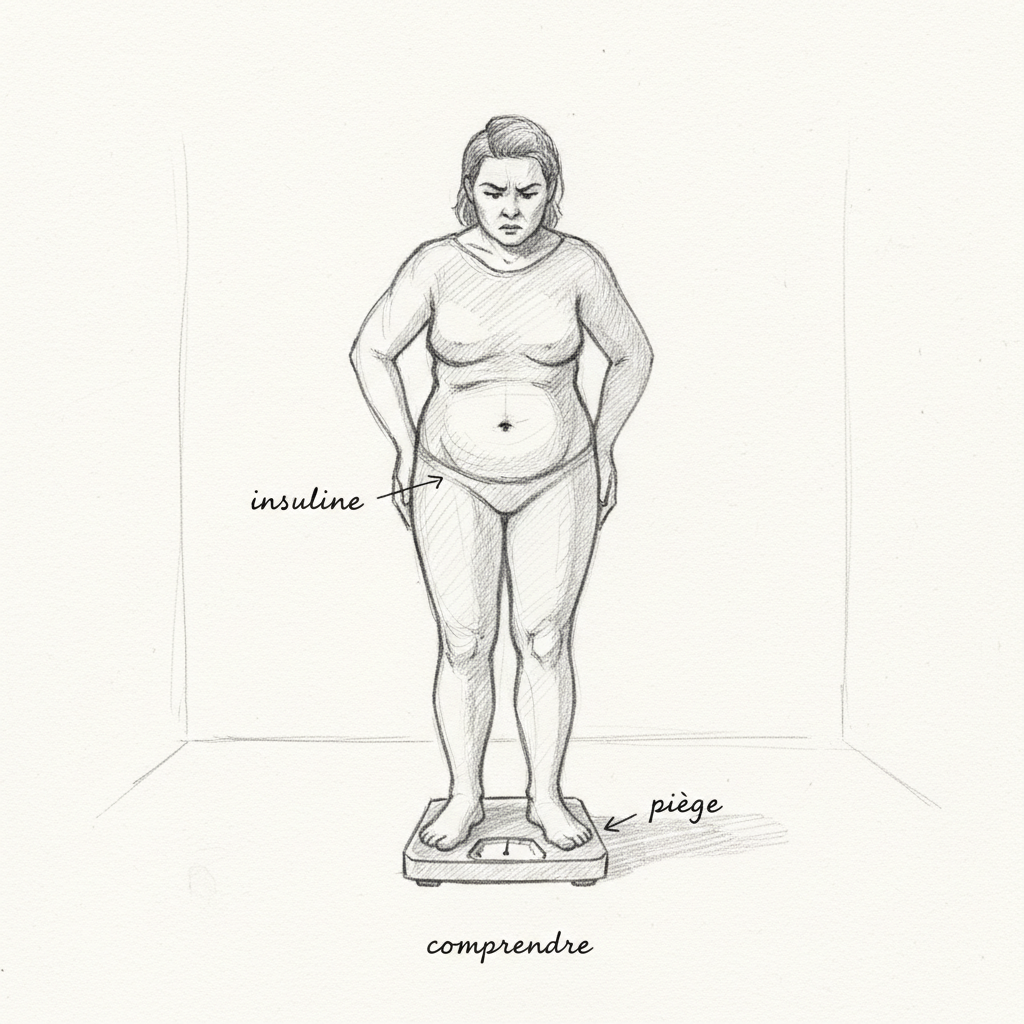
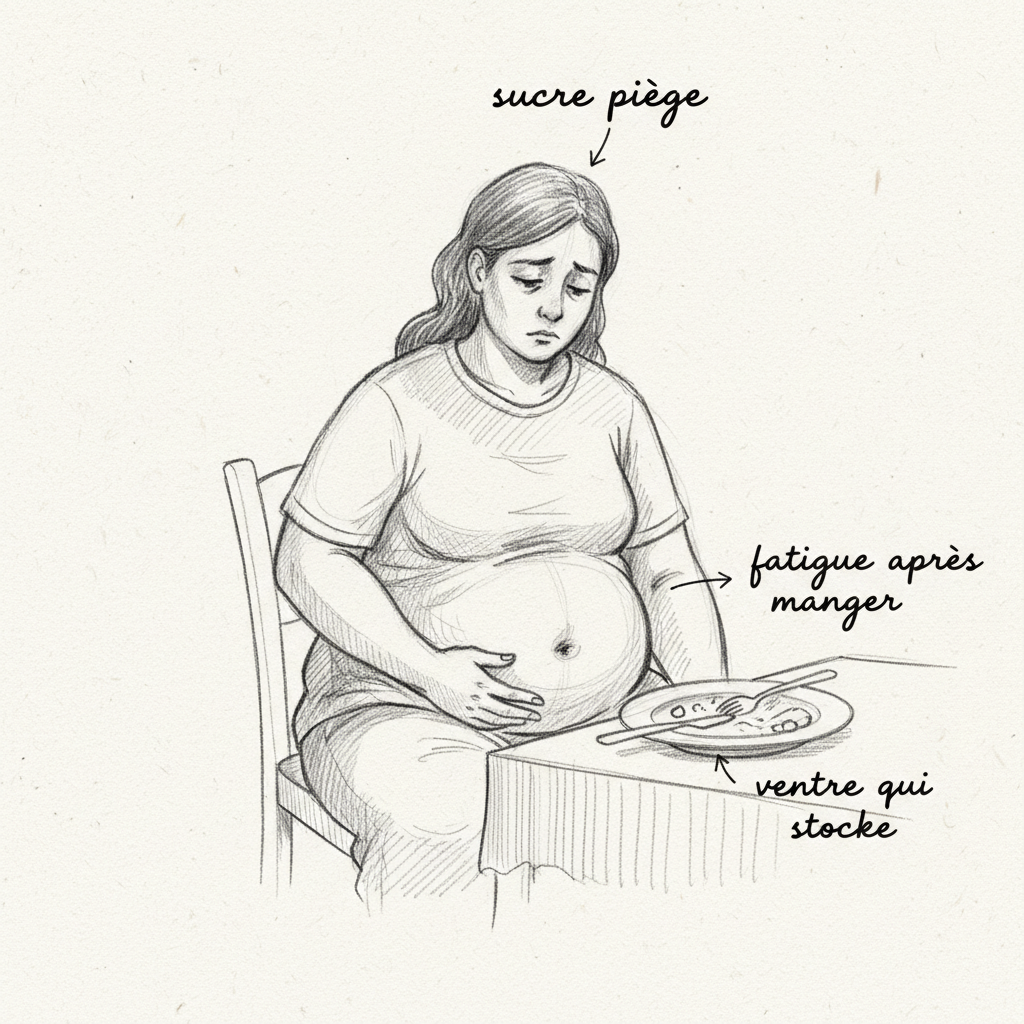
Nathalie is fifty-two years old. She has been careful for twenty years. No fried foods, no sodas, salads at lunch, fish twice a week. She walks thirty minutes every day. Yet since perimenopause, she has gained twelve kilos. Her doctor told her to “eat less and move more.” She tried. For three months, she reduced her portions and added stationary biking. Result: two kilos lost, then four regained. Plus permanent fatigue, uncontrollable cravings at five in the afternoon, and low morale. Her blood work shows fasting glucose at 1.05 g/L, HbA1c at 5.9%, and triglycerides at 1.8 g/L. Her doctor tells her “everything is still normal.” But nothing is normal. Nathalie is in full insulin resistance, and no one has told her.
“The major cause of obesity is hyperinsulinism and metabolic syndrome.” Professor Vincent Castronovo
What Nathalie doesn’t know is that her problem has never been a calorie problem. The simplistic equation “calories consumed minus calories spent equals body fat” is not just reductive, it is false. It rests on incorrect assumptions: that consumed and expended calories are independent of each other, that basal metabolism is stable, that fat mass is not regulated hormonally, and that a calorie of broccoli equals a calorie of white bread. Fifty years of caloric obsession have only produced an explosion of obesity. In France, prevalence rose from 8.2% in 1997 to 12.4% in 2006, affecting nearly six million people, with a relative annual increase of 5.7%. And the numbers continue to climb. For the first time in a thousand years, future generations are likely to die younger than their parents.
Why “Eat Less, Move More” Doesn’t Work
The caloric paradigm is a dead end. I’m not saying this, biochemistry is. Total energy expenditure is divided into three areas: basal metabolism (60%), post-prandial thermogenesis (10%), and physical activity (30% in a sedentary person). When you reduce your caloric intake, your body doesn’t just draw on its reserves. It adjusts its basal metabolism downward. It reduces thermogenesis. It increases hunger signals. It pushes you to move less. This is a survival mechanism inherited from hundreds of thousands of years of evolution, when famine was the norm and abundance the exception. Your body doesn’t know you’re dieting. It thinks you’re starving.
The real question is not how much you eat, but what you eat does to your hormones. And the central hormone in this metabolic drama is insulin.
Insulin Is Not the Hormone of Sugar, It’s the Hormone of Storage
Insulin is synthesized by beta cells of the islets of Langerhans in the pancreas. Each vesicle of secretion contains eight thousand insulin molecules, released by exocytosis when blood glucose exceeds 5 mmol/L. The stimulus for release is hyperglycemia. The faster and higher blood glucose rises, the more insulin is secreted in quantity.
But reducing insulin to a hypoglycemic hormone is like reducing an orchestra conductor to a musician. Insulin is the key regulator of overall energy metabolism. It exerts four major biological actions. First, it stimulates glucose entry into muscle and fat cells via the GLUT-4 transporter, a protein embedded in the cell membrane that only surfaces on insulin’s command. Second, it stimulates glycogenogenesis, meaning glucose storage as glycogen in the liver (capacity limited to 100 grams) and in muscles (capacity limited to 400 grams). Third, it activates glycolysis, the breakdown of glucose into ATP, the energy currency of your cells. And fourth, when glycogen storage spaces are full, it activates de novo lipogenesis: the conversion of excess glucose into triglycerides, that is, fat stored in adipocytes.
It’s this fourth function that changes everything. Insulin is first and foremost the hormone of storage. And as long as its level remains elevated in the blood, lipolysis, the breakdown of fat stores, is blocked. You cannot lose weight, you cannot lose fat if you are in hyperinsulinism. It is biochemically impossible. Glucagon, the antagonistic hormone secreted by alpha cells of the pancreas in hypoglycemic situations, activates glycogenolysis (glucose release from glycogen), lipolysis (hydrolysis of triglycerides into fatty acids and glycerol), and gluconeogenesis (glucose manufacturing from non-carbohydrate substrates). But glucagon can only act when insulin is low. It’s a seesaw system.
The Vicious Cycle of Insulin Resistance
Here’s what Castronovo teaches and what I’ve been repeating in consultation for years: chronic hyperinsulinism leads to insulin resistance, and insulin resistance leads to hyperinsulinism. It’s a self-destructive vicious cycle. The starting point is hyperinsulinism.
When you consume foods with high glycemic index, particularly ultra-refined cereals and products rich in glucose-fructose syrup, your blood glucose rises quickly and sharply, and your pancreas massively secretes insulin. If this situation repeats three times a day, seven days a week, for months and years, your cells eventually protect themselves. Insulin receptors, those dimeric proteins embedded in the phospholipid bilayer of the cell membrane, become less sensitive. This is resistance. And it’s a protective mechanism: the cell refuses to let more glucose enter because it’s already saturated. But the pancreas interprets this resistance as a signal of insufficiency. It produces even more insulin to force passage. Glucose eventually enters, but at the cost of increasingly elevated insulinemia. And this permanent hyperinsulinemia locks fat storage in place.
Insulin resistance is “compartmentalized,” as Castronovo points out. Muscles become resistant first, which reduces glucose entry into myocytes and promotes sarcopenia, this progressive loss of muscle mass. After age thirty, an individual loses an average of 200 grams of muscle per year and gains 200 grams of fat, independent of total weight and therefore BMI. The liver then resists, which disrupts blood glucose regulation between meals and can progress to non-alcoholic fatty liver disease (NAFLD), even steatohepatitis (NASH). Adipose tissue is the last to become resistant, and when it does, free fatty acids overflow into circulation, worsening inflammation and metabolic toxicity.
When Sugar Caramelizes Your Proteins
Chronic hyperglycemia doesn’t just stimulate insulin. It causes a formidable biochemical phenomenon: glycation, which Castronovo calls “carbonyl stress” or “protein caramelization.” It’s the Maillard reaction applied to your own tissues. Excess glucose spontaneously binds to circulating and tissue proteins, modifying their spatial conformation and causing them to lose their enzymatic activity. Advanced glycation end-products, AGE (Advanced Glycation End-products), accumulate and cause cascading damage.
Glycated hemoglobin (HbA1c) that your doctor measures in your blood work is exactly that: hemoglobin “caramelized” by glucose. It’s a marker of average glucose exposure over the last three months. Beyond 5.7%, the risk of microvascular complications increases. Methylglyoxal, a potent hyperglycating agent, is detoxified by glyoxalase, an enzyme that requires glutathione, vitamin B6, and B3 to function. L-carnosine, a dipeptide present in muscles, is a natural scavenger of these carbonyl compounds.
The consequences of glycation are systemic. Microvascular complications affect the retina (retinopathy), kidneys (nephropathy), and nerves (neuropathy). Macrovascular complications, through protein cross-linking and aggregate formation, affect arteries (heart attack, stroke). And AGEs activate NF-kB, the master transcription factor for inflammation, via R-AGE receptors, fueling permanent inflammatory fire. As I explain in the article on anti-inflammatory nutrition, gentle cooking below 110°C limits the formation of these glycotoxins in foods themselves.
How to Choose Your Carbohydrates: GI, Glycemic Load, and Insulin Index
Glycemic index (GI) measures how quickly a food raises blood glucose, on a scale of 0 to 100 where pure glucose is the reference. It’s a useful but misleading tool when used alone. Al dente pasta has a GI of 45, the same overcooked pasta rises to 61. Cooking modifies starch structure and thus its digestibility. But GI doesn’t account for the actual quantity consumed.
This is where glycemic load (GL) makes its full sense. GL is calculated by multiplying GI by the amount of carbohydrates in a real serving, divided by 100. A GL below 7 is considered very low, between 7 and 10 low, between 10 and 20 moderate, and above 20 high. Honey, for example, has a high GI but a GL of only 5 for one to two teaspoons, because we consume little of it. Lentils show a GL of 10 for a 200-gram plate. White rice goes from 51 (white) to 32 (brown) for the same serving. Building your plate with glycemic loads is far more relevant than with raw glycemic indices.
But there’s a third indicator, even more revealing, that almost no one knows about: the insulin index, created by Susanne Holt in 1997. It measures the actual insulin response to a standard portion of food, independent of blood glucose. And the surprise is substantial: 77% of the insulin response has nothing to do with blood glucose. Insulin can increase massively without blood sugar moving. Dairy products are the most striking example. Milk and yogurts have a very low GI, between 15 and 30, which makes them appear to be “safe” foods. But their insulin index is stratospheric: between 90 and 98. Whey, rich in branched amino acids (BCAAs), stimulates insulin via the incretin effect, with a 298% increase in GLP-1 (Glucagon-Like Peptide-1). Plant proteins, in comparison, cause minimal insulin increase. This is data I systematically share in consultation, particularly with women with PCOS whose insulin resistance is often at the heart of the problem.
The Link Between Inflammation and Insulin Resistance
This is one of the most important and least known mechanisms for the general public. The insulin signaling pathway and the inflammation pathway are normally two independent pathways, controlled by distinct kinase cascades. But they have points of convergence. And when one spirals out of control, it drags the other along.
Chronic hyperinsulinism activates NF-kB, the transcription factor that controls the expression of inflammation genes. As Benoliel et al. showed in 1997, insulin directly activates NF-kB transcription, which in turn stimulates the production of TNF-alpha and IL-6, two major pro-inflammatory cytokines. Conversely, inflammation disrupts insulin signaling pathway. Inflammatory kinases IKK and JNK phosphorylate IRS substrate (Insulin Response Substrate) on a serine residue at position 307, which blocks insulin signal transmission. The result is a perfect vicious cycle: more insulin means more inflammation, and more inflammation means more insulin resistance. Shoelson et al. confirmed this in 2003 in the International Journal of Obesity by identifying the IKK-beta/NF-kB pathway as a molecular mediator of insulin resistance.
This is where Marchesseau’s toxemia makes its biochemical sense. The humoral clogging that naturopaths have described for a century finds its molecular translation in this inflammation-insulin convergence. Ultra-processed food, rich in fast sugars, trans fats, and additives, feeds both pathways simultaneously.
The Intestine in the Metabolic Equation
The link between intestinal microbiota and insulin-glucose metabolism is one of the most striking discoveries of the last decade. The passage of bacterial cell wall fragments, lipopolysaccharides (LPS), through a porous intestinal mucosa triggers what Castronovo calls metabolic endotoxemia. These LPS, recognized as PAMPs (Pathogen Associated Molecular Patterns) by TLR-4 receptors, activate the NF-kB pathway and maintain systemic inflammation that worsens insulin resistance. LBP (LPS-Binding Protein) dosing allows clinical assessment of this endotoxemia.
Preclinical data show that microbiota modulation using prebiotics such as oligofructose increases GLP-1 (decreased food consumption and improved type 2 diabetes), increases GLP-2 (improved intestinal barrier function and decreased inflammation), and stimulates the proliferation of Akkermansia muciniphila, a protective bacterium that improves mucus turnover, insulin sensitivity, and body composition. The microbiota composition associated with type 2 diabetes is characterized by a decrease in butyrate-producing bacteria, the fuel of colonocytes that I discuss in the article on the 4R protocol.
It’s a direct bridge between the digestive pillar and the metabolic pillar. Treating metabolic endotoxemia by acting on intestinal microbiota improves the patient’s metabolic profile. This is why I always start with the intestine in consultation, even when the chief complaint is weight gain or metabolic syndrome.
Chromium: A Forgotten Cofactor of the Insulin Receptor
The insulin receptor is a tyrosine kinase receptor. When insulin binds to its extracellular subunit, the two intracellular arms phosphorylate each other (transphosphorylation), triggering the kinase cascade that results in GLUT-4 translocation to the membrane and glucose entry into the cell. This dimeric receptor must be able to move freely within the phospholipid bilayer, highlighting the importance of membrane fluidity and thus omega-3 intake and phospholipids.
Chromium is an indispensable cofactor of this receptor. Chromodulin, a chromium-containing oligopeptide, facilitates autophosphorylation of the insulin receptor. Without sufficient chromium, insulin signaling is compromised, even if insulin is present and the receptor intact. This is a typical case of functional resistance through cofactor deficiency, similar to what I explain for zinc and the thyroid. Chromium dosing is relevant in any patient with insulin resistance. Chromium-enriched yeasts, at 200 to 400 micrograms per day, are the best-absorbed form.
Abdominal Circumference: A Better Marker Than BMI
BMI (Body Mass Index) is the official diagnostic criterion for obesity. A BMI below 25 is considered normal, between 25 and 30 overweight, above 30 obese. But BMI has serious limitations. It doesn’t distinguish fat mass from lean mass. A bodybuilder with a BMI of 35.7 would be classified as “obesity stage II” when he has virtually no visceral fat.
Abdominal circumference (waist measurement at the umbilicus level) is a far more relevant marker of visceral fat, that “metabolic bomb” surrounding abdominal organs and directly correlated with metabolic syndrome. A waist circumference above 88 centimeters in women or 102 centimeters in men indicates at-risk abdominal adiposity. In France, the average waist circumference of women rose from 79.2 cm in 1997 to 83.7 cm in 2006, an additional 4.5 centimeters in nine years. In men, it rose from 90.5 to 92.9 cm. It’s a simple, free indicator, measurable with a tape measure, and far more reliable than the scale for tracking metabolic syndrome progression. I measure it systematically in consultation.
Naturopathic Protocol: Restoring Insulin Sensitivity
“Don’t kill the mosquitoes, dry up the swamp.” Pierre-Valentin Marchesseau
The naturopathic approach to insulin resistance does not involve caloric restriction. It involves correcting hormonal and inflammatory terrain. Two parameters must be controlled for optimal management, as Castronovo teaches: the quality of foods consumed (their insulin impact) and the eating window.
The anti-insulin-resistance plate prioritizes foods with low or moderate glycemic load. Legumes (lentils GL 10, white beans GL 8, split peas GL 6 for a 200-gram plate), brown rice (GL 32 versus 51 for white), quinoa (GL 23), buckwheat, sweet potatoes (GL 18) form the carbohydrate base. Green and colorful vegetables provide prebiotic fibers that nourish butyrate-producing bacteria. Plant proteins (legumes, nuts) are preferred to dairy proteins because of the latter’s elevated insulin index. Good fats (olive oil, rapeseed oil GL 0, walnuts GL 1, fatty fish) have no insulin-stimulating effect and provide anti-inflammatory omega-3s. Dark chocolate (GL 1 for two 10-gram squares) is an ally, not an enemy.
Nutritional chronobiology is the second lever. The eating window (eating period, insulin dominance period) must be balanced with the fasting window (insulin-free period). The ideal is an 8/16 or 10/14 ratio: eat over an 8 to 10-hour window and fast 14 to 16 hours. Concretely, have dinner before 8 PM and don’t eat again until 10 AM to 12 PM the next day. During the fasting window, insulin drops, glucagon takes over, glycogenolysis then lipolysis activate. It’s during this window that the body mobilizes fat. If you eat from morning to evening, with snacks between meals, you keep your insulin elevated permanently and mechanically prevent mobilization.
Micronutrition completes the picture. Chromium (200 to 400 micrograms per day as enriched yeast) supports insulin receptor signaling. Magnesium bisglycinate (300 to 400 milligrams per day) improves insulin sensitivity and reduces stress that stimulates cortisol, which antagonizes insulin. Omega-3 EPA/DHA (2 to 3 grams per day from fatty fish or fish oil) modulates inflammation via resolvins and improves membrane fluidity necessary for insulin receptor function. Alpha-lipoic acid (300 to 600 milligrams per day) is a cofactor of pyruvate dehydrogenase that brings pyruvate into the mitochondria, and additionally has antioxidant and insulin-sensitizing activity. Berberine (500 milligrams two to three times per day) is a plant alkaloid whose efficacy on blood glucose is comparable to metformin in several clinical studies. Prebiotics (resistant starch 7 to 12 grams per day, polyphenols 1.3 to 2.5 grams per day, beta-glucans 3 to 4 grams per day, fructans 7 to 11 grams per day) feed protective microbiota and improve insulin sensitivity via the gut-metabolism axis.
Physical activity, finally, is the only adjustable energy expenditure pole. But its main benefit is not to “burn calories.” It’s to increase muscle mass, thus the number of GLUT-4 receptors, thus glucose absorption capacity without hyperinsulinemia. Muscle is the body’s first “glucose sponge,” with its 400 grams of stored glycogen. Resistance training and resistance exercise are at least as important as cardio from this perspective. As the naturopathic approach to naturopathy basics explains, movement is one of the four fundamental pillars of health.
When to Consult and Limitations of the Natural Approach
Insulin resistance is a continuum. In the early stage, it’s silent and reversible. In advanced stages, it progresses to prediabetes then type 2 diabetes, with vascular, kidney, and neurological complications requiring strict medical monitoring. Fasting blood glucose above 1.10 g/L, HbA1c above 6.0%, elevated triglycerides associated with low HDL, high blood pressure, and excessive waist circumference compose metabolic syndrome, which triples cardiovascular risk.
Naturopathy does not replace endocrinological follow-up. If you’re taking metformin or GLP-1 analogs, never stop them without medical advice. The approach I describe here is complementary: it acts on the terrain that allowed insulin resistance to develop, and it can greatly improve biological markers and quality of life. But certain situations (established diabetes, advanced NASH, severe sleep apnea) require medical management that the naturopath cannot replace.
Insulin Resistance, Mirror of Our Modern Diet
When I look at Nathalie’s journey and so many other patients who walk through my office door, I always see the same story. Industrial food that produces foods with very high glycemic index, particularly due to ultra-refinement of cereals and added glucose-fructose syrup, leads to products rich in empty calories and poor in micronutrients that cause chronic hyperinsulinism. The pancreas fights. The receptors give up. Inflammation sets in. Weight increases. And the doctor says “eat less.”
“Let your food be your only medicine.” Hippocrates
The solution is not to eat less. It’s to eat differently. It’s to understand that your body is not a boiler that burns calories but a finely regulated hormonal system. It’s to respect the fasting windows that your physiology demands. It’s to nourish your microbiota rather than destroy it. It’s to correct deficiencies in chromium, magnesium, omega-3s that sabotage your receptors. In short, it’s to treat the cause, not the symptom. Marchesseau said it seventy years ago: dry up the swamp. Castronovo’s biochemistry confirms it today, receptor by receptor, kinase by kinase.
And you, have you already measured your waist circumference? Have you asked your doctor to test your fasting insulin, not just your blood glucose? This might be the most important question you can ask at your next blood work.
Do you want to evaluate your status? Take the free insulin questionnaire in 2 minutes.
If you want personalized support, you can book a consultation.
To Go Further
- Myo-inositol: mood, blood glucose, and ovaries in one molecule
- Hyperinsulinism: when excess insulin makes you gain weight and tire
- Hypoinsulinism: when the pancreas can’t keep up
- Menopause and weight gain: it’s not a calorie issue
Sources
Castronovo V., Lucas A. Le métabolisme insulino-glucidique, obésité et syndrome métabolique. Cours de médecine nutritionnelle et fonctionnelle, Bruxelles.
Shoelson SE, Lee J, Goldfine AB. Inflammation and insulin resistance. J Clin Invest. 2006;116(7):1793-1801. doi:10.1172/JCI29069
Holt SH, Miller JC, Petocz P. An insulin index of foods: the insulin demand generated by 1000-kJ portions of common foods. Am J Clin Nutr. 1997;66(5):1264-1276. doi:10.1093/ajcn/66.5.1264
Cani PD, Delzenne NM. The role of the gut microbiota in energy metabolism and metabolic disease. Curr Pharm Des. 2009;15(13):1546-1558. doi:10.2174/138161209788168164
Seignalet J. L’alimentation ou la troisième médecine. Paris: Éditions François-Xavier de Guibert, 5e édition, 2004.
Marchesseau PV. Biologie naturopathique. Villebon-sur-Yvette: Éditions de la vie claire.



Laisser un commentaire
Sois le premier à commenter cet article.