Sophie is fifty-four years old, and when she handed me her medical file at our first consultation, I understood I was receiving a textbook case. Multiple sclerosis diagnosed eight years earlier. Three immunosuppressive treatments in succession, each abandoned due to intolerance or ineffectiveness. Crushing fatigue, chronic digestive troubles, recurrent urinary infections, skin that no longer healed properly. Her neurologist monitored the disease. Nobody looked at the terrain. Nobody had ever spoken to her about Catherine Kousmine, the Swiss physician who, from the 1940s onward, had developed a six-pillar protocol precisely for this type of pathology. And when I began explaining the method to her, Sophie looked at me with an expression I know well: “Why didn’t anyone tell me this before?”
Why indeed. Catherine Kousmine was a physician. Not a naturopath, not a guru, not an influencer. A physician. She graduated from the Faculty of Medicine in Lausanne in 1928 and practiced conventional medicine for more than sixty years. But from the 1940s onward, faced with the explosion of cancers in her patient base, she posed a question that her colleagues refused to ask themselves.
“In the ’40s, the rate of cancer patients was increasing so much that I thought it might be useful to seek different explanations.” Catherine Kousmine
This question led her into territory that academic medicine did not want to explore: that of food as both the cause and cure for degenerative diseases. She spent decades testing the impact of each food on her patients’ health, verifying across thousands of cases that her observations held true, and she built, brick by brick, a six-pillar method that remains today one of the most complete and rigorous approaches in nutritional medicine. Naturopaths know it. Integrative doctors know it. The general public has almost forgotten it. This article is meant to correct this injustice.
A woman who changed nutritional medicine
Catherine Kousmine was born in 1904 in Khvalynsk, Russia. Her family emigrated to Switzerland after the Bolshevik revolution, and it was in Lausanne that she studied medicine, at a time when female physicians could be counted on the fingers of one hand. She opened her practice in Lutry, on the shore of Lake Geneva, and practiced there until an advanced age. She died in 1992, at eighty-eight, leaving behind her a considerable body of work that official medicine continues to view with a mixture of distrust and unease.
What distinguished Kousmine from other nutrition pioneers was her rigor. She did not have Carton’s prophetic tone, nor the systematic ambition of Marchesseau. She was above all a clinician. She observed, she tested, she noted, she verified. Every patient was a case study. Every food was weighed, analyzed, evaluated in its short and long-term effects. She kept follow-up notebooks with exemplary meticulousness, where every dietary modification was correlated with the patient’s clinical evolution. And when she saw that her observations held true across hundreds, then thousands of cases, she published them. Be Well in Your Plate Until 80 and Beyond came out in 1980. It is a book that should be on the bedside table of every medical student and every naturopathy trainee.
Kousmine entered what medicine today calls orthomolecular medicine, the movement founded by Linus Pauling which affirms that chronic diseases result largely from nutritional deficiencies and imbalances, and that they can be prevented or improved through optimal nutrition and targeted supplements. Before the term existed, Kousmine practiced its principles. And her six-pillar method remains, in my view, the most coherent architecture ever proposed for linking nutrition, the intestine, acid-base balance, immunity, and the psychological dimension in a unified protocol.
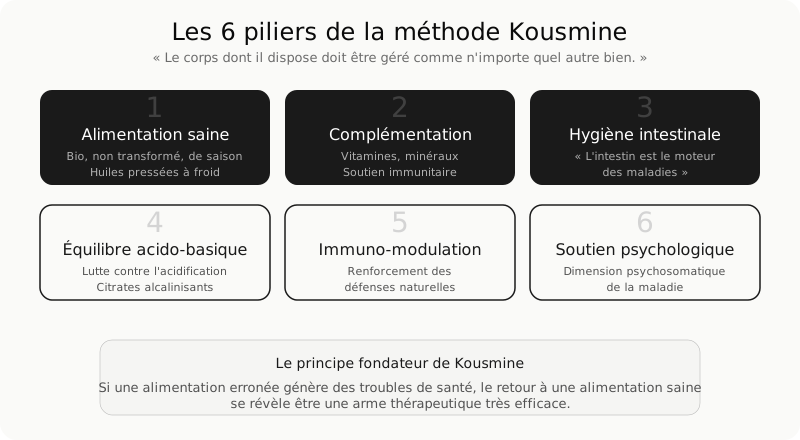
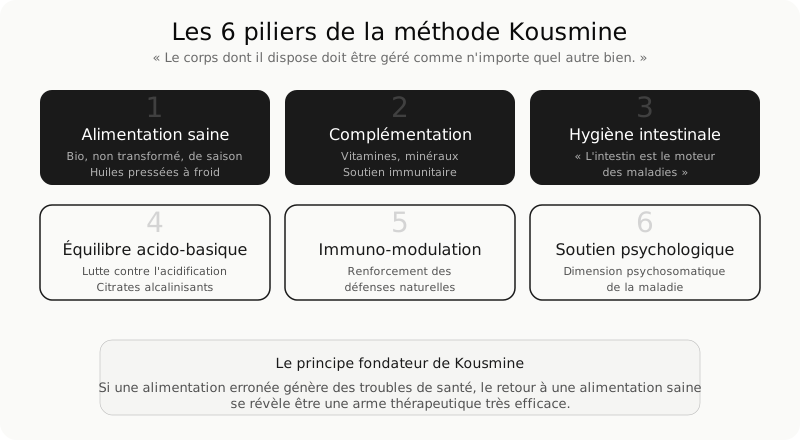
First pillar: healthy food
If you retain only one thing from this article, retain this. Kousmine spent her life demonstrating that modern food is the primary cause of degenerative diseases. Not one cause among others. The primary cause. And her demonstration rests on a simple, verifiable, repeatable observation: when she profoundly modified the diet of her patients with multiple sclerosis, rheumatoid polyarthritis, cancers, the results were incomparably better than those from medications alone.
Her dietary principle fit into a formula that Marchesseau would have endorsed: “Breakfast like a king, lunch like a prince, dinner like a pauper.” It is not a slogan. It is a chrono-nutritional principle that modern science has largely validated. In the morning, the body is coming out of a night fast, digestive enzymes are at their maximum, cortisol is at the peak of its circadian cycle, metabolism is in full anabolic activity. This is when the body best assimilates dense nutrients: proteins, quality lipids, complete carbohydrates. In the evening, metabolism slows, insulin secretion becomes less efficient, digestion is slower. Eating heavily in the evening is like forcing an idle engine to run at full throttle. It is the recipe for insomnia, reflux, weight gain, and morning fatigue.
Kousmine insisted on four non-negotiable dietary requirements. The first is the choice of organic. Not by ideology, but by biochemistry. Pesticides, herbicides, fungicides are xenobiotics that the liver must neutralize. Every chemical residue on the plate is an additional burden for the hepatic cytochrome P450 enzymes. And when the liver is busy detoxifying pesticides, it has less capacity to conjugate spent hormones, neutralize free radicals, and produce the bile necessary for absorbing fat-soluble vitamins. It is an energetic trade-off that Marchesseau described in his vitality formula, and that Kousmine had observed empirically in her practice.
The second requirement is the rejection of processed foods. Kousmine would not tolerate white flours, refined sugars, industrial canned goods, prepared meals. Not because they are “bad” in a moral sense, but because they are denatured in the biochemical sense. The refining of wheat removes the germ and the grain envelope, that is, 80% of B-group vitamins, 90% of magnesium, nearly all zinc and fiber. What remains is pure starch, a fast carbohydrate that provides nothing but a glycemic load and surcharges to eliminate. White sugar, refined from beet or cane, has lost all its metabolizing cofactors. To metabolize it, the body draws on its own reserves of B1, chromium, magnesium. It is a food with a negative nutritional balance. And it is what fills the cupboards of 80% of my clients.
The third requirement is freshness and seasonality. Kousmine wanted fresh vegetables, picked ripe, eaten quickly. A vegetable that has traveled for ten days in a refrigerated truck has lost a significant amount of its vitamin C, its polyphenols, its enzymes. Gentle cooking, below 110 degrees, preserves what transport and storage have not yet destroyed. Gentle steaming, braising, low-temperature cooking are the only cooking methods compatible with the Kousmine method.
The fourth requirement, and perhaps her most original contribution, concerns oils. Kousmine was among the first to understand the vital role of polyunsaturated fatty acids in cellular membrane health. Omega-3s (alpha-linolenic acid, EPA, DHA) and omega-6s (linoleic acid, GLA, arachidonic acid) are structural components of every cellular membrane in your body. When you replace these essential fatty acids with hydrogenated fats, trans fatty acids from industrial oil refining, your membranes become rigid, impermeable, dysfunctional. Cellular communication deteriorates. Membrane fluidity drops. Hormone receptors and ion channels function poorly. Kousmine advocated exclusively for virgin oils from the first cold pressing: flax, rapeseed, walnut for omega-3s, olive for omega-9s, unrefined sunflower for omega-6s. And she required that they be consumed raw, never heated, to preserve the integrity of their chemical double bonds. This is a point I develop in the article on anti-inflammatory nutrition, because the quality of fats directly determines the inflammatory balance of the organism.
Second pillar: dietary supplements
Kousmine was not a fundamentalist about “everything through diet.” She knew that depleted soils, early harvests, prolonged storage, and aggressive cooking significantly reduce the micronutrient content of foods, even organic ones. And she knew that certain pathologies create increased needs that diet alone cannot meet. A patient with multiple sclerosis cannot obtain the doses of vitamin D, vitamin E, and omega-3s they need solely from their plate. Targeted supplementation is a therapeutic tool in its own right, provided it is based on a precise understanding of the biochemical mechanisms involved.
B-group vitamins occupied a central place in Kousmine’s pharmacopoeia. B1 (thiamine), a cofactor in the Krebs cycle, is essential for cellular energy production. B6 (pyridoxine), a cofactor of the decarboxylase that converts 5-HTP into serotonin, is essential for mood, sleep, and pain modulation. B9 (folic acid) and B12 (cobalamine) participate in the methylation cycle, this biochemical machinery that regulates gene expression, hepatic detoxification, and neurotransmitter synthesis. The Val de Marne study, a key reference in French nutrition, showed that 90% of women were deficient in B6 and 80% of the population in B1. These are not marginal figures. It is a silent pandemic of deficiencies that explains a considerable portion of the fatigue, depression, immune disorders, and chronic pain I see coming through my office.
Zinc, vitamin D, vitamin C, magnesium, selenium were also part of Kousmine’s arsenal. Each prescription was individualized. Kousmine did not give the same doses to a cancer patient and to a simply fatigued patient. She constantly adjusted, monitored biological markers, reevaluated protocols. This is what orthomolecular medicine calls the “individual optimal dose,” as opposed to the standard RDA dose, which represents only the minimum to avoid frank deficiency diseases (scurvy, beriberi, pellagra) and not the intake necessary for optimal body function.
Third pillar: intestinal hygiene
This is the pillar that struck me most when I discovered Kousmine during my studies at ISUPNAT. This sentence, I heard it for the first time in a Robert Masson class, and it hit me like a punch.
“The intestine is the engine of disease.” Catherine Kousmine
Kousmine had understood, decades before research on the microbiota exploded, that the state of the intestine determines the health of the entire organism. And she did not speak of it in a vague or metaphorical way. She detailed the mechanisms with a precision that anticipates what science took fifty years to confirm.
The intestine is a selective barrier of 300 to 400 square meters, folded in on itself in a space of a few meters. When this barrier functions correctly, it lets through properly digested nutrients (amino acids, fatty acids, monosaccharides, vitamins, minerals) and blocks macromolecules, bacterial toxins, incompletely degraded food fragments. When the tight junctions between enterocytes relax, under the effect of modern gluten, chronic stress, antibiotics, anti-inflammatories, or alcohol, the barrier becomes porous. This is intestinal hyperpermeability, the leaky gut of English-speaking medicine, which Kousmine described clinically well before zonulin was identified as a biological marker.
What crosses this porous barrier is toxic to the organism. Incompletely digested food peptides, bacterial lipopolysaccharides (LPS), fungal antigens. These foreign substances trigger a chronic low-grade immune response, silent inflammation that exhausts the immune system and opens the door to autoimmune diseases. This is the mechanism that Seignalet described later in Nutrition or the Third Medicine, and that I detailed in the article on intestinal dysbiosis. Kousmine had sensed it forty years earlier.
Her approach to intestinal hygiene rested on several complementary axes. First, eliminate mucosal irritants: industrial foods, refined sugars that feed pathogenic yeast, pasteurized dairy products whose A1 casein irritates the mucosal lining, modern hypergluten-containing cereals. Next, rebuild the mucosa through the provision of repair nutrients: glutamine, the preferred amino acid of enterocytes, zinc, a cofactor in cell regeneration, anti-inflammatory omega-3s, vitamin A which supports mucosal integrity. Finally, reseed the flora with fermented foods and, if necessary, targeted probiotics.
Kousmine also practiced intestinal lavages, which she considered an essential cleansing tool for patients whose intestines were very clogged. This is a subject that makes many doctors cringe, and I understand the reservation. But colon irrigation, when practiced under good conditions and in properly selected patients, can dislodge old fecal matter encrusted in the colon’s haustra, and reduce the toxic load that maintains systemic inflammation. Marchesseau indeed included it in his minor techniques of naturopathic hygiene.
Fourth pillar: fighting acidosis
Acid-base balance is a subject that conventional medicine considers perfectly regulated by the body’s buffering systems (bicarbonates, phosphates, plasma proteins). And it is true for blood pH, which remains strictly maintained between 7.35 and 7.45 on pain of death. But what Kousmine described is not blood acidosis. It is tissue acidosis. The accumulation of metabolic acids in connective tissues, muscles, joints, when the buffering systems are overwhelmed and the emunctories can no longer evacuate the acid load.
Christopher Vasey, Swiss naturopath and heir to Kousmine’s thinking, devoted an entire book to this question. Chronic tissue acidosis manifests through joint pain, muscle cramps, underlying fatigue, excessive chilliness, dry and irritable skin, progressive demineralization (bones and teeth release their alkaline minerals to buffer excess acids). These are exactly Marchesseau’s “crystals”: these acidic wastes (uric acid, oxalic acid, lactic acid) that saturate tissues when the kidneys and skin can no longer keep up.
The causes of this acidification are multiple, and Kousmine had identified them all. Acidifying diet (excess animal proteins, refined cereals, sugars, coffee, alcohol, sodas) is the first source. Chronic stress, which releases cortisol and increases protein catabolism (thus acid production), is the second. Sedentary lifestyle, which prevents the evacuation of lactic acid through movement and perspiration, is the third. And deficiency in alkalinizing minerals (magnesium, calcium, potassium, organic sodium) is the fourth, because these minerals are the raw materials of buffering systems.
Kousmine’s strategy for correcting acidosis rested on a massive dietary reform favoring alkalinizing foods: green vegetables, potatoes, bananas, almonds, ripe fruits, bicarbonate mineral waters. She added alkalinizing supplements (citrates of calcium, magnesium, and potassium) and lifestyle measures: moderate daily physical exercise to eliminate lactic acid and CO2, stress management to reduce cortisol production, sufficient hydration to support kidney filtration. She used morning urine pH control as a monitoring tool: a morning urine pH below 6.5 signals tissue acidosis that needs correcting.
This vision of acidosis closely parallels what I observe in consultation with patients suffering from fibromyalgia, where the acidic clogging of muscles and tendons explains a significant portion of diffuse pain. And it joins the notion of toxemia that Marchesseau had formalized on his side: when the body fluids are acidic, the terrain is sick, whatever medical diagnosis is imposed on it.
Fifth pillar: immunomodulation
This is the most controversial pillar of the Kousmine method, and also the most unknown. Kousmine had observed that many chronic diseases, particularly multiple sclerosis, were accompanied by a profound immune system dysregulation. Not simple immunodeficiency, but complex dysfunction where the immune system attacks its own tissues while being incapable of effectively fighting opportunistic infections. It is the paradox of autoimmunity: an immune system both overactivated and incompetent.
Kousmine used different approaches to rebalance this immune response. Some fall within conventional medicine (specific vaccinations with immunomodulating aims), others within natural medicine. In naturopathy, we have powerful tools to modulate immunity without suppressing it: medicinal mushrooms (reishi, shiitake, maitake), vitamin D at optimal dose (2000 to 4000 IU daily, or more under biological monitoring), zinc (cofactor of thymulin, the thymus hormone that supervises T lymphocyte maturation), immunomodulating probiotics (Lactobacillus rhamnosus GG, Saccharomyces boulardii), and herbal medicine (echinacea, astragalus, elderberry).
The link between intestine and immunity is at the heart of this fifth pillar. 70% of the immune system resides in the gut-associated lymphoid tissue (GALT). Peyer’s patches, these clusters of immune cells dispersed in the small intestine wall, are the sentinels that decide what is “self” and what is “non-self.” When the intestine is porous, when dysbiosis sets in, these sentinels malfunction. They allow antigens through that trigger aberrant immune reactions. This is the mechanism of molecular mimicry I described in the article on Hashimoto: a bacterial or food protein resembles a self protein enough that the immune system confuses the two and attacks its own tissues.
Kousmine had understood that treating immunity without treating the intestine was illusory. This is why pillars three and five of her method are inseparable. Restoring the intestinal barrier, rebalancing the microbiota, reducing mucosal inflammation: it is not just digestive hygiene, it is natural immunotherapy.
Sixth pillar: psychological support
“I would like everyone to understand that they can only count on themselves, that they are responsible for their own person.” Catherine Kousmine
This sixth pillar is often dispatched in a few lines in works addressing the Kousmine method. That is a mistake. Kousmine valued it as much as the other five, and for a simple reason: a patient who does not understand his disease does not heal. A patient who undergoes his protocol without deep adherence will abandon it at the first difficulty. A patient who has not made the connection between his emotional history and his physical symptoms will remain imprisoned by a blind spot that all the flax oil in the world cannot illuminate.
Psychological support according to Kousmine is not psychotherapy in the sense we understand it today. It is first and foremost education. Explaining to the patient why he is sick. Showing him the mechanisms. Giving him the keys to understanding his own body. It is the Hippocratic principle of Docere, “teach,” which Marchesseau took up as a pillar of naturopathy. And it is exactly what I do in consultation when I take the time to draw on a piece of paper the circuit of fatty acids, the immune cascade, the cycle of intestinal permeability. When the patient understands why one oil is better than another, why this white sugar steals his B vitamins, why his porous intestine feeds his autoimmunity, he is no longer following a protocol out of obligation. He follows it by conviction. And the difference is enormous in terms of compliance and long-term results.
Kousmine also included in this pillar the relational and existential dimension. Chronic stress, unresolved conflicts, unprocessed grief, deep professional dissatisfaction are factors of acidification, immune depression and adrenal exhaustion that I observe in a majority of my clients with serious pathologies. Marchesseau distinguished three sources of toxemia: dietary, metabolic, and psycho-emotional. Kousmine would have agreed. Body and mind are not two separate entities that we treat each on its own. It is a whole, and the sixth pillar reminds us that no nutritional protocol will compensate for unaddressed existential malaise.
What modern science confirms
It is fascinating to see how much the six pillars of Kousmine anticipate the most recent scientific discoveries. The revolution of the intestinal microbiota, initiated in the 2000s with the MetaHIT project and the Human Microbiome Project, confirms point by point the third pillar: the intestine is indeed the “engine of disease.” Studies on chronic low-grade inflammation (silent inflammation) validate the link between industrial food, intestinal permeability, and degenerative diseases. Research on epigenetics demonstrates that food modulates gene expression, exactly as Kousmine observed clinically.
Fasano’s study (2012) on zonulin objectified the mechanism of intestinal hyperpermeability that Kousmine described empirically. Turnbaugh’s work (2006) on the microbiome and obesity showed that the composition of intestinal flora influences energy metabolism, fat storage, and systemic inflammation. Anemia, which Kousmine saw as a consequence of intestinal malabsorption, is today recognized as frequently linked to intestinal permeability and chronic inflammation that blocks iron metabolism via hepcidin.
Nutritional psychiatry, an emerging discipline, confirms the sixth pillar by demonstrating that food directly influences mood, anxiety, and cognitive functions via the gut-brain axis. Jacka’s SMILES study (2017) showed that a Mediterranean-type dietary intervention significantly improved depression scores in diagnosed patients, with a “Number Needed to Treat” of 4.1, a result comparable to, or even better than, certain antidepressants. Kousmine did not have the terminology, but she had the results.
How to integrate the method into daily life
In consultation, I do not apply the Kousmine method as a rigid protocol. I integrate it into the naturopathic reading grid of Marchesseau, which offers a broader framework with its ten techniques and its three cures. But the six pillars of Kousmine constitute a remarkable checklist to ensure that no angle has been overlooked in accompanying a patient.
The first concrete step is the reform of fats. Throw out the refined sunflower and rapeseed oils from the supermarket and replace them with organic virgin oils from the first cold pressing. Flax oil for omega-3s (keep refrigerated and consume within three weeks of opening), extra virgin olive oil for omega-9s and very gentle cooking, walnut or camelina oil for dressing. This single change, applied over several months, modifies the composition of cellular membranes and reduces inflammation in a measurable way.
The second step is the Budwig cream, this breakfast that Kousmine developed and which concentrates the philosophy of her first pillar in a single bowl. Lean cottage cheese beaten with flax oil to create a Budwig-type emulsion (lipids bound to the sulfur-containing proteins of the cottage cheese are better absorbed, according to the work of Johanna Budwig), fresh lemon juice, a ripe banana mashed, freshly ground whole grains (buckwheat, oats, brown rice), oleaginous seeds (walnuts, almonds, hazelnuts), and seasonal fruits. It is a complete meal, rich in essential fatty acids, B-group vitamins, fiber, minerals, and antioxidants. I recommend it regularly in consultation, adapting it to each patient’s intolerances and temperaments.
The third step is monitoring urine pH. A roll of pH paper from a pharmacy costs a few euros and provides precious information about tissue acidosis. The second morning urination (the first is always acidic, that is normal) should be between 6.5 and 7.5. Below 6.5, you need to alkalize. Above 7.5, you need to look for a cause (urinary tract infection, diet too rich in citrates).
Kousmine and the founding fathers of naturopathy
What has always struck me is the profound convergence between Kousmine’s thinking and that of the great naturopaths I teach at Naturaneo. Kousmine was a physician, Marchesseau was a biologist, Hippocrates was a clinician, Seignalet was an immunologist. Their trainings were different, their vocabularies were different, their eras were different. Yet they all arrive at the same conclusions.
Food is the first medicine. The intestine is the root of most chronic diseases. Terrain trumps symptom. The acidification of tissues is a factor in clogging and degeneration. The immune system can function correctly only if the internal environment is clean. And the patient must become an actor in his own healing, otherwise every protocol will remain superficial.
When I read Kousmine’s six pillars, I find Marchesseau’s ten techniques. When I read Marchesseau, I find Hippocrates. When I read Hippocrates, I find what research on the microbiome, inflammation, and epigenetics is discovering today. Naturopathy is not a parallel medicine. It is a medicine that has always been right too soon.
Sophie, my patient at the beginning of this article, gradually integrated Kousmine’s six pillars into her daily life. Within six months, her digestive troubles had disappeared. Her urinary infections did not return. Her fatigue, without completely disappearing, had receded significantly. Her neurologist noted a stabilization of her disease. It is not a miracle. It is what happens when you stop viewing disease as fate and begin rebuilding the terrain on which it developed.
Warning
This article is a work of education and popularization. It in no way replaces medical supervision. The Kousmine method is a complement to conventional medicine, not a substitute. If you suffer from an autoimmune disease, a cancer, or any serious pathology, never modify your treatment without the advice of your physician. Naturopathy accompanies. It does not replace. Kousmine herself, a physician to her fingertips, never said otherwise.
Want to assess your status? Take the free Vasey acidosis test in 2 minutes.
To go further
- Marchesseau’s bromatology: eating according to your terrain
- Vincent’s bioelectronics: the science of terrain
- Hippocrates: 15 lessons from the father of natural medicine
- Kneipp, Salmanoff, and hydrology: the healing power of water
References
Catherine Kousmine, Soyez bien dans votre assiette jusqu’à 80 ans et plus, Tchou, 1980.
Catherine Kousmine, Sauvez votre corps !, Robert Laffont, 1987.
Christopher Vasey, L’équilibre acido-basique, Jouvence, 1991.
Jean Seignalet, L’alimentation ou la troisième médecine, Editions François-Xavier de Guibert, 2004.
Felice N. Jacka et al., “A randomised controlled trial of dietary improvement for adults with major depression (the SMILES trial)”, BMC Medicine, 15:23, 2017.


Laisser un commentaire
Sois le premier à commenter cet article.