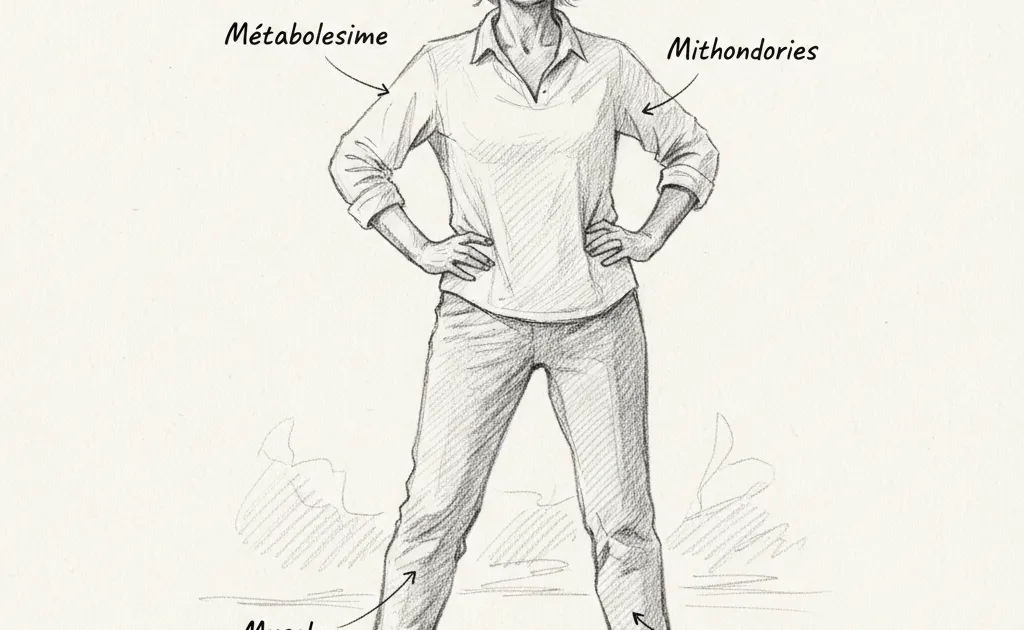
Marie-Claire is fifty-seven years old and she is angry. Not sad. Angry. Because for four years, she has been doing exactly the same thing as before : she eats balanced meals, she walks thirty minutes a day, she avoids sugar, she is careful. And despite that, she has gained twelve kilos. Twelve kilos that have settled essentially around her belly, hips and arms. Her doctor told her to eat less. Her dietitian put her on a 1200 calorie diet. She lost three kilos in one month, then gained five kilos in two months. And the more she restricts, the more she gains weight. It’s a vicious cycle, and no one has explained why.
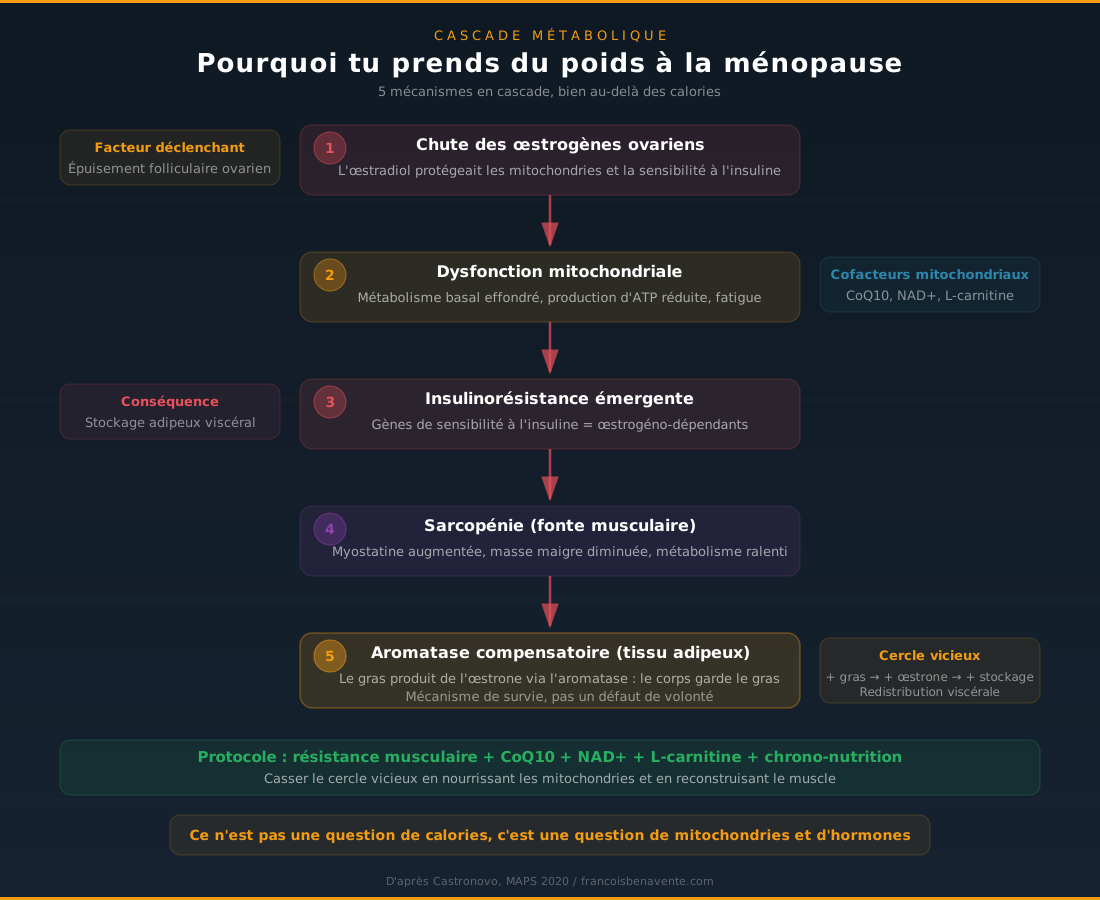
The reason is simple, and it has nothing to do with calories. Weight gain during menopause is not a food problem. It’s a hormonal, mitochondrial and muscular problem. Estrogens protected mitochondria, maintained sensitivity to insulin, supported muscle mass and regulated fat distribution. When they drop, five cascading mechanisms are triggered, and all converge toward the same consequence : weight gain, despite identical caloric intake.
“We don’t gain weight because we eat too much. We gain weight because we burn poorly. And we burn poorly because mitochondria no longer have the hormonal signals that kept them active.” Georges Mouton
The metabolic cascade in five stages
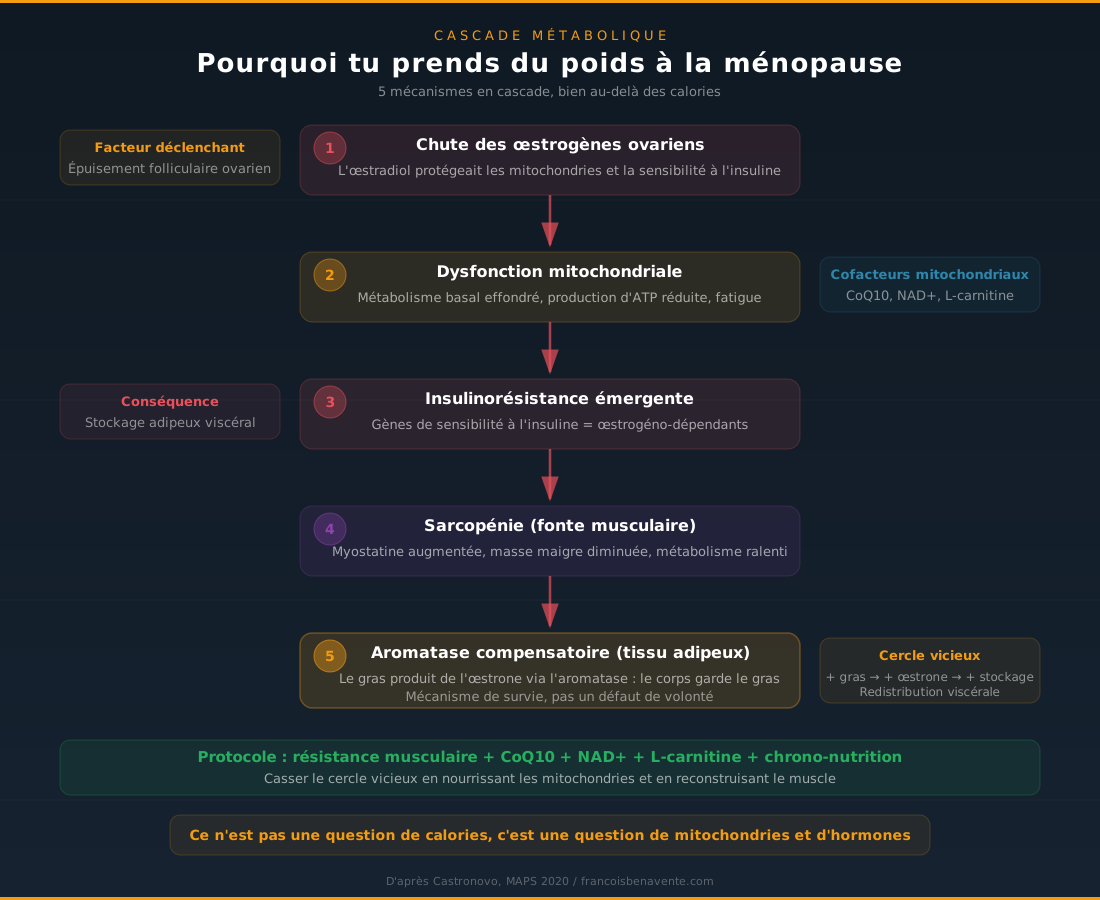
The first stage is follicular ovarian depletion. The ovaries gradually stop producing estradiol, and this is the beginning of the cascade. Estradiol is not just a reproductive hormone. It plays a direct role in energy metabolism.
The second stage is mitochondrial dysfunction. Estrogens protected mitochondria through several mechanisms : they stimulated mitochondrial biogenesis (the creation of new mitochondria), they protected mitochondrial membranes against oxidation, and they regulated the expression of genes in the respiratory chain. When estrogens disappear, mitochondria become fewer, less efficient, and more vulnerable to oxidative stress. The result : ATP production (cellular energy) decreases, basal metabolism collapses, and you burn significantly fewer calories at rest than before menopause. Castronovo teaches in his course that this mitochondrial dysfunction is the central mechanism of fatigue and post-menopausal weight gain.
The third stage is emerging insulin resistance. The genes that code for insulin sensitivity are estrogen-dependent. When estrogens drop, insulin receptors become less sensitive, and the pancreas must produce more insulin to achieve the same effect. Now insulin is the storage hormone : the higher it is, the more the body stores carbohydrates as fat. This is the beginning of a vicious cycle where each carbohydrate-rich meal causes a disproportionate insulin spike, followed by excessive fat storage, followed by reactive hypoglycemia, followed by an irresistible craving for sugar. Anti-inflammatory nutrition and chrono-nutrition (no sugar in the evening) are the dietary tools to break this cycle.
The fourth stage is sarcopenia. This term refers to the progressive loss of muscle mass. Myostatin, a protein that inhibits muscle growth, increases when estrogens decrease. Simultaneously, muscle protein synthesis slows down. The result is muscle loss that can reach 3 to 8 percent per decade after age 30 and accelerates at menopause. Now muscle is the main consumer of calories at rest. Each kilo of muscle lost reduces basal metabolism by approximately 30 to 50 kilocalories per day. Ten years of uncorrected sarcopenia represents a loss of two to four kilos of muscle, or a reduction of 60 to 200 kilocalories per day in basal metabolism. Even eating exactly the same thing, you gain weight.
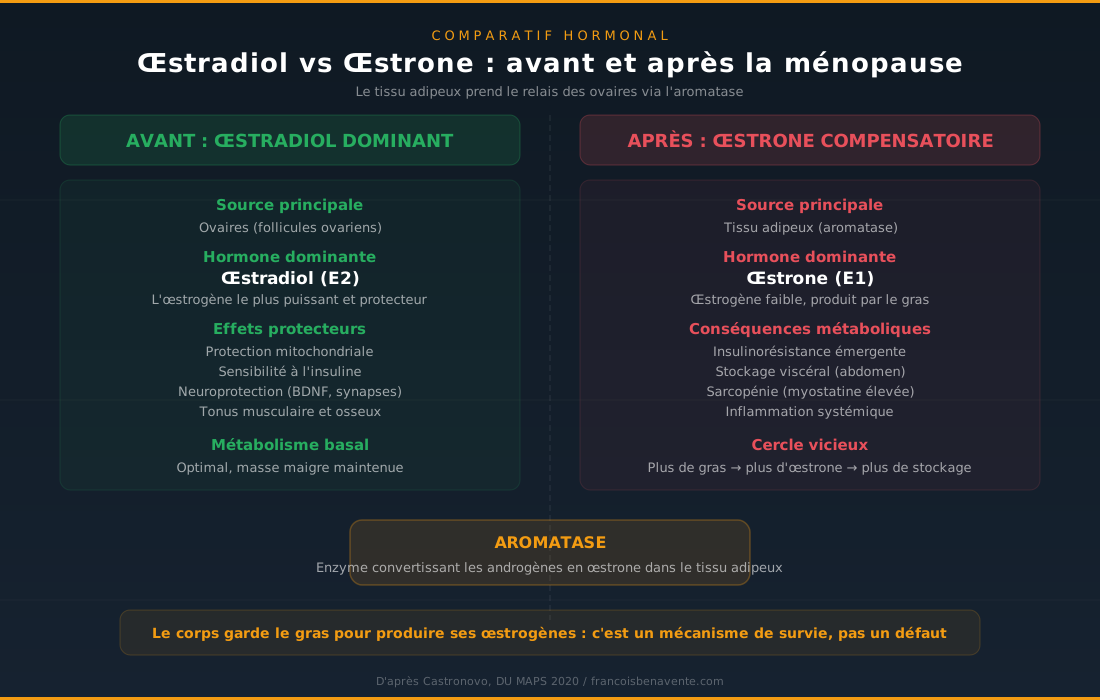
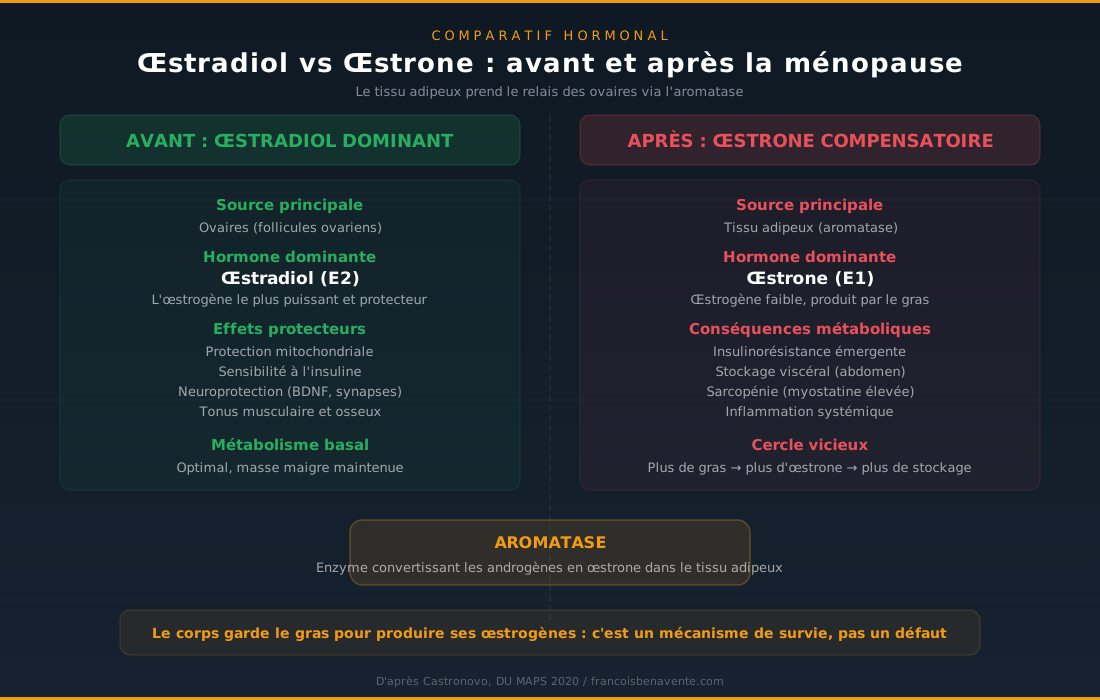
The fifth stage is the most fascinating compensatory mechanism : aromatase in adipose tissue. After menopause, adipose tissue (especially visceral) contains an enzyme called aromatase that converts adrenal androgens into estrone, a weak estrogen. This is how the body compensates for ovarian loss : it uses fat to produce its replacement estrogens. The corollary is relentless : the body will resist fat loss because it needs that fat for its residual hormone production. It’s not a lack of willpower. It’s a survival mechanism.
Why diets don’t work
This metabolic cascade explains why restrictive diets systematically fail during menopause and even worsen the problem. When you restrict calories, your body must choose which tissue it will sacrifice to save energy. Between muscle (metabolically costly) and fat (metabolically inexpensive and hormone-active), the body chooses to keep the fat. Caloric restriction therefore accelerates sarcopenia. You lose muscle, not fat. Basal metabolism collapses even further. And when you eat normally again (because restriction is not sustainable long-term), you regain fat faster than before, with less muscle to burn it. This is the yo-yo effect, and at menopause, each yo-yo cycle worsens the situation.
Cortisol amplifies the problem. Caloric restriction increases cortisol, the stress hormone. Cortisol promotes visceral storage (abdominal fat), degrades muscle, increases insulin resistance and inhibits the thyroid. This is exactly the opposite of what we want. Chronic stress, poor sleep and food restriction form a triad that locks menopausal weight gain into a vicious cycle that only body recomposition can break.
The protocol : rebuild rather than restrict
The naturopathic strategy for menopausal weight gain does not involve restriction. It involves body recomposition : increasing muscle mass, nourishing mitochondria, restoring insulin sensitivity, and supporting thyroid function.
The first lever is progressive strength training. It is the only stimulus capable of reversing sarcopenia. Resistance exercises (squats, deadlifts, presses, bench press, rowing) stimulate muscle protein synthesis, increase the number of mitochondria in muscle fibers (mitochondrial biogenesis), and improve skeletal muscle insulin sensitivity. Two to three sessions of 45 minutes per week, with progressively increasing loads, are the minimum effective. Cardio alone (running, cycling, swimming) is insufficient and can even worsen sarcopenia if practiced in excess without adequate protein intake.
The second lever is mitochondrial micronutrition. CoQ10 (ubiquinol preferably, 100 to 200 mg per day) is the cofactor of the mitochondrial respiratory chain. It is what transports electrons between complexes I and III of the chain, enabling ATP production. CoQ10 levels naturally decrease with age and are even lower in women on statins. NAD+ precursors (nicotinamide mononucleotide, 250 to 500 mg per day, or nicotinamide riboside) support cellular energy metabolism and activate sirtuins, proteins involved in mitochondrial longevity. L-carnitine (1 to 2 grams per day) transports long-chain fatty acids into mitochondria for beta-oxidation, allowing your body to burn fats as fuel. And magnesium bisglycinate (300 to 400 mg per day) is necessary for ATP production : ATP always functions in the form of a Mg-ATP complex.
The third lever is chrono-nutrition. The principle is simple : eat the right nutrients at the right time to synchronize eating with hormonal rhythms. In the morning, proteins and good fats (eggs, avocado, nuts, smoked salmon) to support the morning cortisol peak and stabilize blood sugar for the morning. At noon, a complete plate with proteins, vegetables and starches with moderate glycemic index (sweet potato, quinoa, legumes). In the evening, a light meal dominated by vegetables (the famous cellulosic dinner of naturopathy), which relieves the liver, stabilizes nocturnal insulin and facilitates sleep. Total daily protein intake must reach 1.2 to 1.6 grams per kilo of body weight to support muscle mass, compared to the 0.8 g/kg usually recommended.
The fourth lever is thyroid support. The thyroid is often the collateral victim of menopause. The drop in estrogens changes TBG, disrupting the availability of thyroid hormones. Undiagnosed subclinical hypothyroidism alone can explain weight gain of 5 to 10 kilos. Thyroid cofactors (iodine, selenium, zinc, tyrosine, iron) should be systematically evaluated in any menopausal woman gaining weight.
The fifth lever is stress and sleep management. Cortisol is the number one enemy of body recomposition. Cardiac coherence (5 minutes, 3 times per day), ashwagandha (300 to 600 mg per day of standardized extract), magnesium, and respect for the circadian rhythm (bedtime before 11 pm, exposure to natural light in the morning) are the tools to keep cortisol within physiological limits. Deep sleep is when growth hormone (GH) is secreted : without quality sleep, there is no muscle repair or nocturnal fat loss.
What naturopathy does not do
Menopausal weight gain can mask endocrine pathologies (hypothyroidism, Cushing’s syndrome, insulinoma) that require medical diagnosis. If weight gain is rapid (more than 5 kilos in 3 months), asymmetrical, accompanied by edema or unusual endocrine signs, comprehensive medical evaluation is necessary. Naturopathy accompanies body recomposition, it does not diagnose endocrine diseases.
NAD+ and CoQ10 supplementation is generally well tolerated but should be discussed in case of ongoing chemotherapy (antioxidant mechanisms may interfere with certain treatments). L-carnitine is contraindicated in untreated hypothyroidism (it may reduce thyroid uptake of iodine).
Based in Paris, I consult via video throughout France. You can book an appointment for a personalized body recomposition protocol.
A Hurom extractor makes preparing green juice from the alkalizing protocol easier (-10% with code FRANCOIS10). Find all my partnerships with exclusive promo codes.
Scientific References
Want to evaluate your status ? Take the free Hertoghe estrogen questionnaire in 2 minutes.
If you want personalized support, you can book a consultation appointment.
To learn more
- Menopause : what your body is trying to tell you (and what’s being hidden)
- Menopause and brain : why you’re losing your words (and how to find them again)
- Menopause and estrogens : the liver detoxification that no one explains to you
- Menopause, skin and hair : what hormonal decline does to your tissues
Sources
- Castronovo, V. “Supporting the menopausal woman.” DU MAPS, 2020.
- Mouton, Georges. “Mitochondria and metabolism.” Functional medicine conference.
- Hertoghe, Thierry. The Textbook of Nutrient Therapy. International Medical Books, 2019.
- Masson, Robert. Dietetics from experience. Guy Tredaniel, 2003.
- Marchesseau, Pierre-Valentin. Vital hygiene for your health. 1957.
“The body keeps fat because it needs it for its replacement estrogens. It’s not weakness, it’s biochemistry.” Georges Mouton
Healthy recipe: Vegetable and tofu wok : A light and nutritious dish for metabolism.
Laisser un commentaire
Sois le premier à commenter cet article.
Les commentaires ne se chargent pas pour le moment. Réessaie dans quelques minutes.