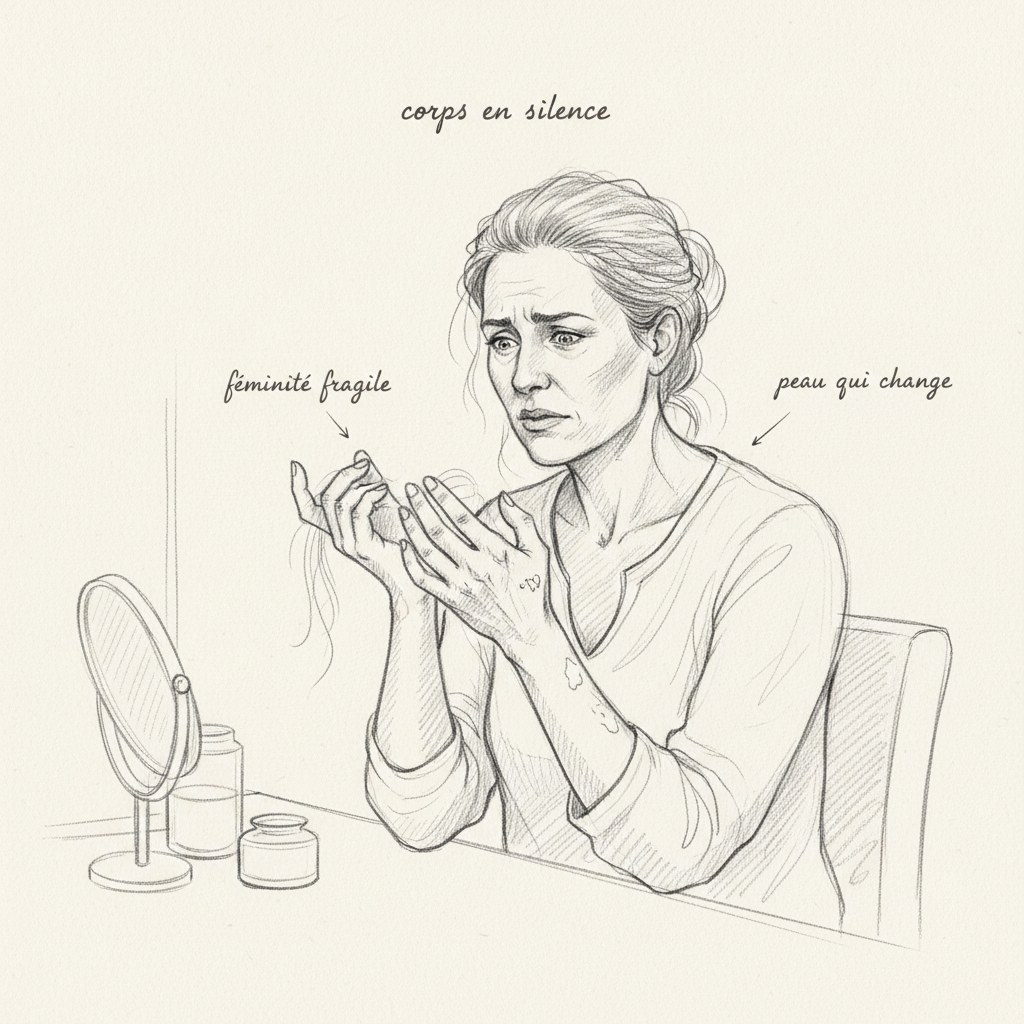
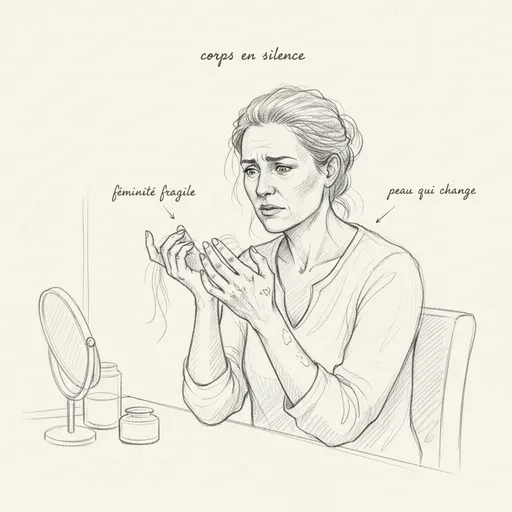
Valérie is forty-two years old and her hair is falling out. Not in handfuls: more insidiously. Her ponytail is less thick than it was two years ago. Her part is widening. The hairdresser uses less and less product. At the same time, small vertical wrinkles have appeared above her upper lip: the famous “barcode.” Her eyes are dry in the morning. Her breasts have lost volume. Her periods have become irregular, sometimes spaced forty-five days apart. And her mood oscillates between irritability and melancholy for no apparent reason. Valérie is not menopausal: she is in perimenopause, and her estrogens are declining.
Estrogens are much more than “female” hormones. They are the guardians of skin, bones, brain, heart, mood, libido and female vitality. When they decline: whether at menopause or prematurely: a woman’s body ages at an accelerated rate.
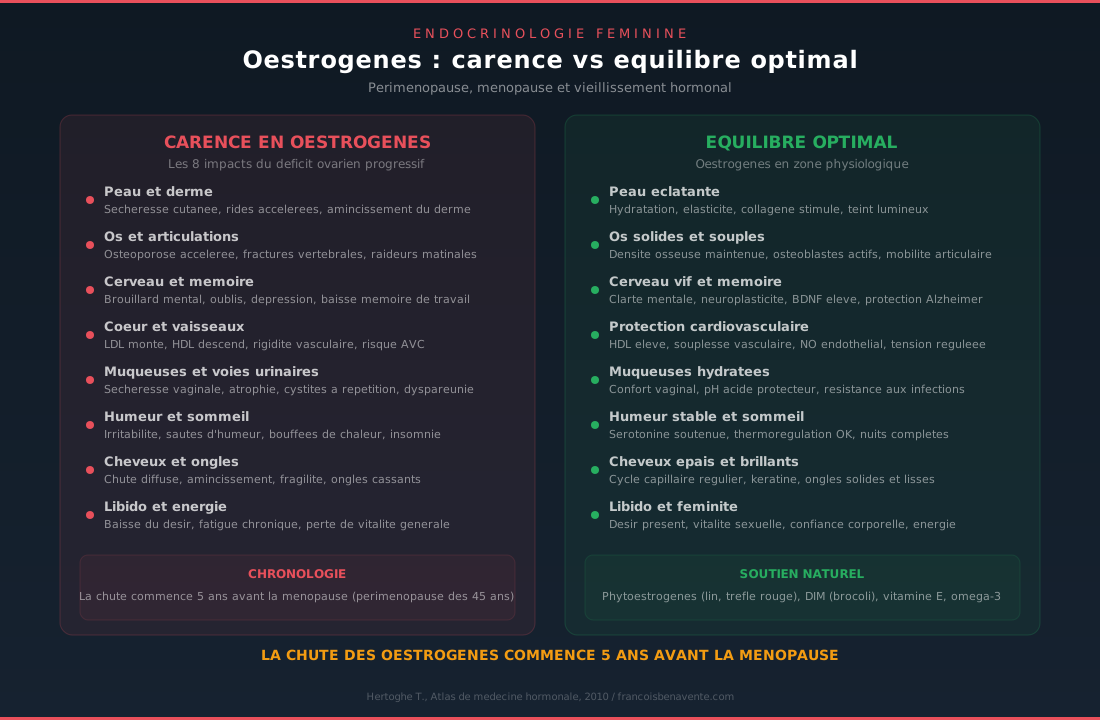
The role of estrogens
Three main forms circulate in the body: estradiol (E2, the most potent and most abundant before menopause), estrone (E1, dominant after menopause, produced by adipose tissue) and estriol (E3, the weakest, dominant during pregnancy).
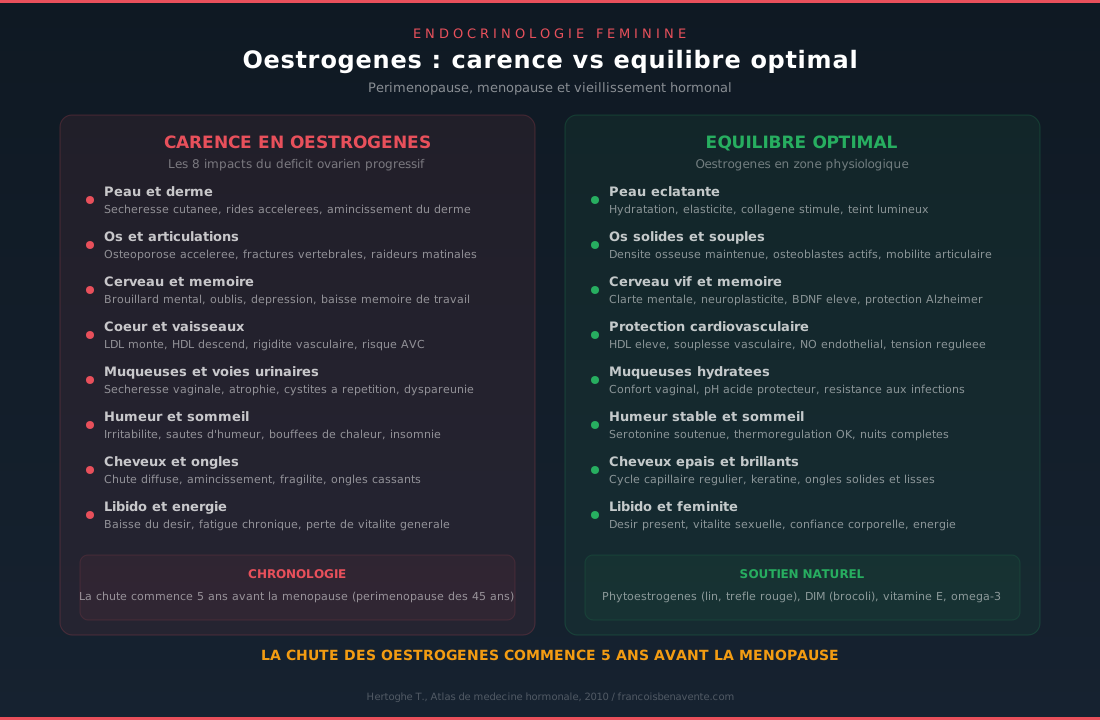
Skin depends on estrogens for its collagen content, thickness, hydration and elasticity. Thirty percent of skin collagen is lost in the first five years after menopause. Hair depends on estrogens for its growth phase (anagen). The deficiency shortens this phase and hair thins.
Bones are protected by estrogens which inhibit osteoclasts (bone resorption cells). Estrogen deficiency is the leading cause of osteoporosis in women. Bone loss accelerates sharply in the five to seven years post-menopause.
The brain is rich in estrogenic receptors. Estradiol supports cognition, memory, mood and neuroprotection. The brain fog of perimenopause is directly linked to the decline in cerebral estradiol. Estrogens stimulate the synthesis of serotonin and GABA: their drop explains perimenopause irritability, anxiety and depression.
The cardiovascular system is protected by estrogens which promote vasodilation (via nitric oxide), reduce oxidized LDL-cholesterol and protect vascular endothelium. This is why cardiovascular disease catches up with women after menopause.
Signs of deficiency according to Hertoghe
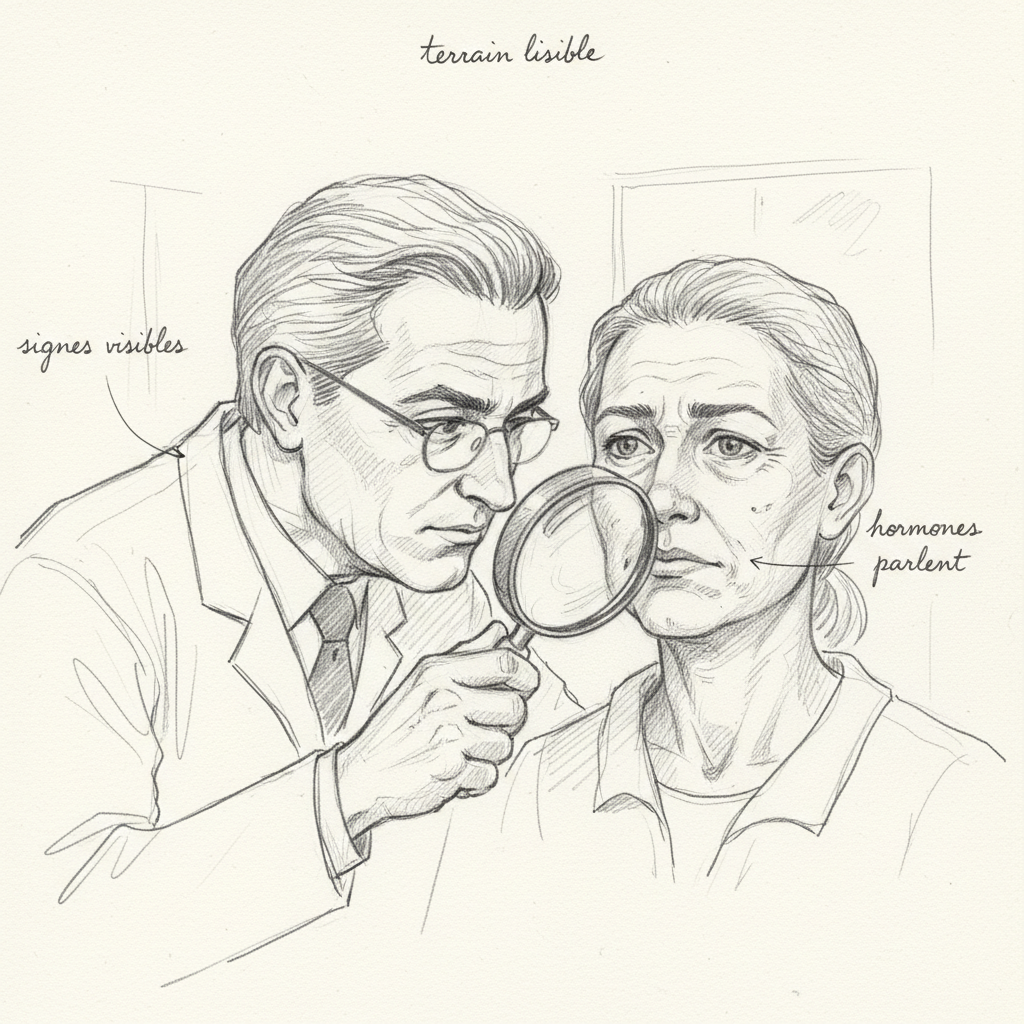
Dr. Hertoghe has established detailed clinical semiology. Cutaneous and mucosal signs are often the first: hair loss on the top of the head, small vertical wrinkles above the lips (a very specific sign), dry and thin skin (especially on the décolleté and hands), dry eyes, vaginal dryness.
Breasts lose volume and become sagging. Facial hair may appear (fine hair on the upper lip, chin) due to an imbalance in the estrogen/androgen ratio.
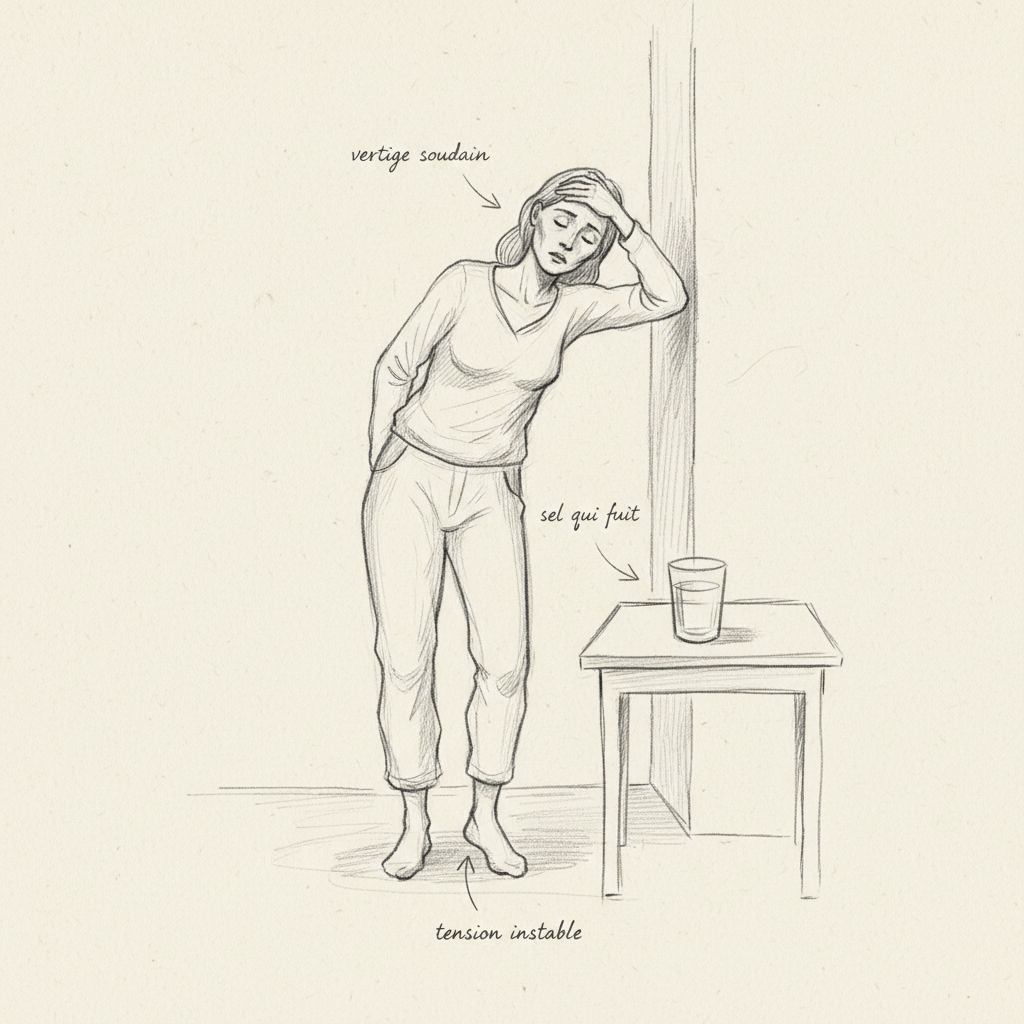
Hot flashes and night sweats are classic vasomotor symptoms, linked to hypothalamic thermostat instability due to estradiol deficiency. Weight gain, especially abdominal and at the hips, reflects metabolic change.
Mood disturbances (irritability, anxiety, melancholy, crying spells for no reason) and cognitive disturbances (memory, concentration, “words on the tip of the tongue”) are frequent and debilitating. Libido decreases. Sleep deteriorates. Fatigue sets in.
Take the Hertoghe estrogen test.
Causes of early deficiency
Menopause and perimenopause are the physiological causes. But many young women have relative deficiency.
Chronic stress and adrenal exhaustion reduce estrogens through pregnenolone stealing (pregnenolone is diverted toward cortisol at the expense of sex hormones). Functional hypothalamic amenorrhea (in athletes, stressed women or those in calorie restriction) is a shutdown of the hypothalamic-pituitary-ovarian axis due to energy deficit.
The contraceptive pill suppresses ovarian production of estradiol and replaces it with synthetic ethinylestradiol. After stopping the pill, the ovaries may take months to resume normal secretion. Premature ovarian insufficiency (menopause before age forty) affects one in one hundred women.
Hypothyroidism slows the conversion of cholesterol to pregnenolone, reducing the production of all steroid hormones, including estrogens.
Restoring estrogens naturally
Phytoestrogens are the first line in naturopathy. Red clover (Trifolium pratense) contains isoflavones (formononetin, biochanin A) which bind to beta estrogenic receptors with favorable tissue selectivity (bones, brain, vessels). The dose is 40 to 80 milligrams of isoflavones per day.
Hops (Humulus lupulus) contain 8-prenylnaringenin, the most potent known phytoestrogen. It is particularly effective for hot flashes and sleep disturbances. Flaxseed lignans (freshly ground flaxseeds, 2 tablespoons per day) are converted to enterolactone by the intestinal microbiota, a protective phytoestrogen.
Adrenal support is essential, especially post-menopause. After the ovaries stop, it is the peripheral conversions of adrenal DHEA that maintain a minimum of estrogenic saturation in tissues. If the adrenals are exhausted, this relay does not occur.
Hepatic detoxification of estrogens is fundamental. The liver metabolizes estrogens through three pathways (2-OH, 4-OH, 16-OH). Cruciferous vegetables (broccoli, cauliflower, kale) contain DIM (diindolylmethane) and I3C (indole-3-carbinol) which promote the 2-OH pathway, the most protective. Vitamin B6, B12, folates and magnesium are cofactors in hepatic methylation of estrogens.
Weight-bearing exercise (walking, running, strength training) stimulates bone production and partially compensates for the lack of estrogens. Vitamin D (4000 IU per day) and calcium (from diet primarily, no isolated supplementation) protect bones.
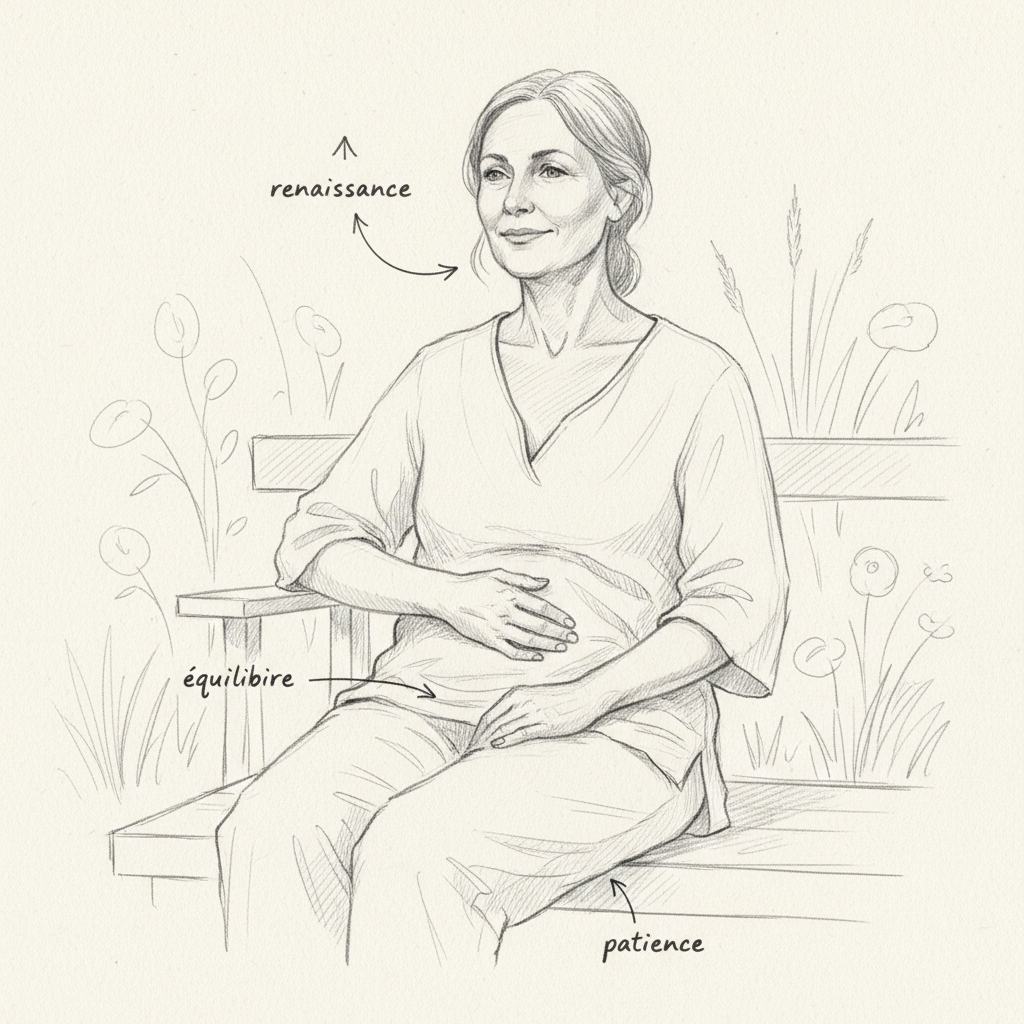
Valérie started red clover, ground flaxseeds, adrenal support (vitamin C, B5, ashwagandha) and strength training. In three months, hot flashes had decreased by half, mood had stabilized and hair was falling out less. She had regained a biochemical femininity that age did not have to steal from her so soon.
If you want personalized support, you can book a consultation.
To go further
- Menopause: what your body is trying to tell you (and what we hide)
- Aldosterone: the forgotten hormone of your blood pressure and salt
- Endometriosis: the hidden terrain nobody looks at
- The Hertoghe method: hormones, micronutrition and terrain medicine
Sources
- Hertoghe, Thierry. Atlas of Hormonal and Nutritional Medicine. International Medical Books, 2006.
- Curtay, Jean-Paul. Nutritherapy: Scientific Bases and Medical Practice. Testez Éditions, 2016.
- Mouton, Georges. Digestive Ecology. Marco Pietteur, 2004.
If you want personalized support, you can book a consultation.
Laisser un commentaire
Sois le premier à commenter cet article.