PCOS: The Metabolic Syndrome Your Doctor Won’t Explain to You
Her name is Sarah, she’s 28 years old, and when she came to see me in consultation, she summed up three years of struggle in one sentence: “Since I stopped taking the pill, nothing works anymore.” Acne all over her chin and jaw. Cycles oscillating between 40 and 90 days. Five kilos that appeared without explanation. Her gynecologist made the diagnosis in three minutes: PCOS, polycystic ovary syndrome. Proposed treatment: restart the pill and metformin. No one asked her how she was eating, if she was sleeping, if she was stressed, if her thyroid had been explored beyond TSH. No one looked at the terrain.
PCOS affects one in ten women of reproductive age. It’s the most common endocrinopathy in women1, and the leading cause of infertility linked to lack of ovulation. Yet the vast majority of women diagnosed leave with a prescription without understanding what’s really happening in their bodies. PCOS is not an ovary disease. It’s a systemic metabolic and hormonal syndrome, and this distinction changes everything.
“Humoral overloads are the mother of disease. The father is temperament, which is merely the neuro-hormonal mode of self-defense through emunctory elimination.” Pierre-Valentin Marchesseau
In naturopathy, we don’t treat symptoms. We trace back to causes. And when you start digging into the causes of PCOS, you discover a metabolic, hormonal, digestive, and nervous crossroads that the pill cannot resolve.
What PCOS Really Is
Polycystic ovary syndrome was first described by Stein and Leventhal in 1935. The name is misleading. These aren’t “cysts” in the surgical sense, but immature follicles that accumulate in the ovaries because ovulation isn’t happening. At the start of each cycle, each ovary normally contains 5 to 10 small follicles about 5 mm in diameter. Only one will become a viable egg. In PCOS, follicle maturation is blocked by excess androgens. Immature follicles accumulate without a dominant follicle emerging. Ultrasound then shows more than 20 follicles with diameter less than 9 mm and ovarian volume greater than 10 ml. But this ultrasound image alone isn’t sufficient for diagnosis.
The Rotterdam criteria2, which are now the standard, require at least two of three following criteria: hyperandrogenism (clinical such as hirsutism or acne, or biological with elevated serum androgens), oligomenorrhea (fewer than 8 periods per year), and polycystic ovaries on ultrasound. Two of three criteria suffice. This means a woman can have PCOS without visible polycystic ovaries, and conversely, ovaries appearing polycystic without PCOS.
Marieb emphasizes in her Human Anatomy and Physiology that it’s the most common endocrinopathy in women. Inserm estimates prevalence between 5 and 10 %. Standard allopathic treatment relies on the pill (to “recreate” an artificial cycle), beta-blockers (for certain associated cardiovascular symptoms) and metformin (to “recreate insulin sensitivity”). But none of these treatments address the terrain. They manage symptoms, not causes.
Why Your PCOS Doesn’t Look Like Your Neighbor’s
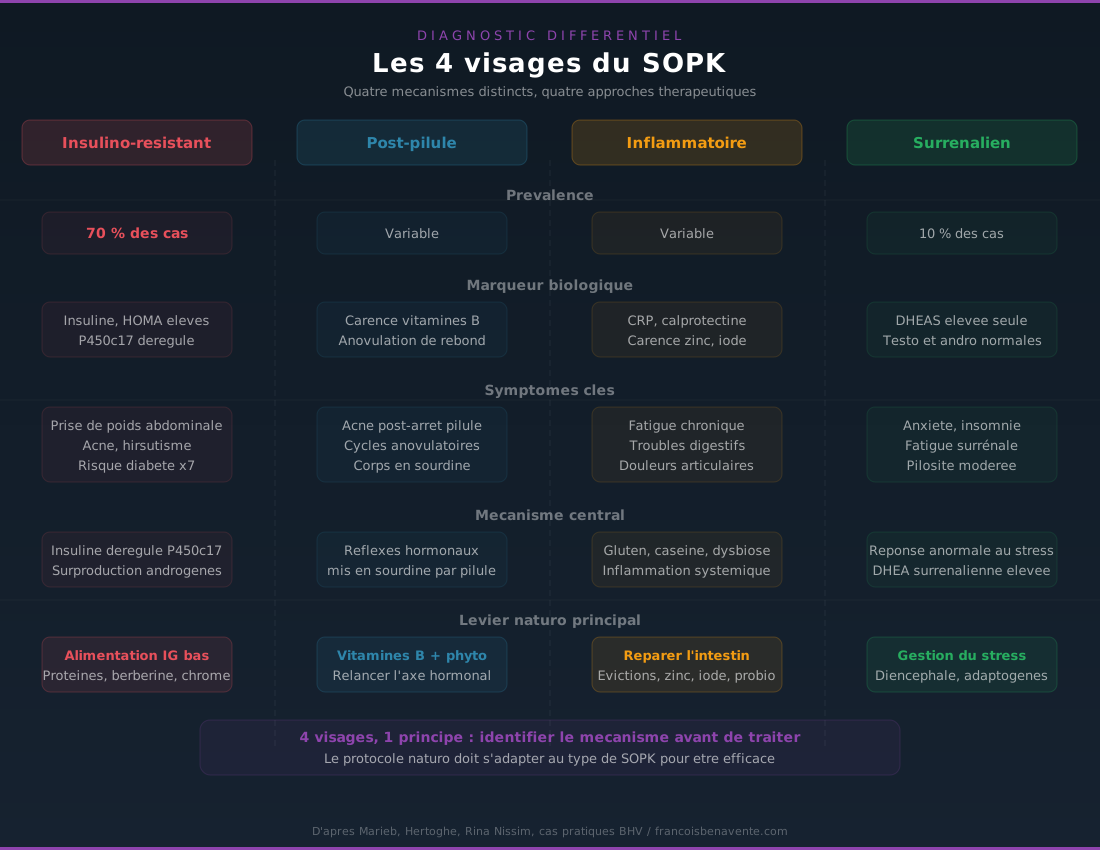
This is probably the most important thing to understand when you receive a PCOS diagnosis. There isn’t one PCOS, but four distinct profiles, with different mechanisms, different biological markers, and therefore different naturopathic strategies. This is what my practical cases in consultation have confirmed year after year. And it’s what Rina Nissim emphasizes in her work on female herbal medicine.
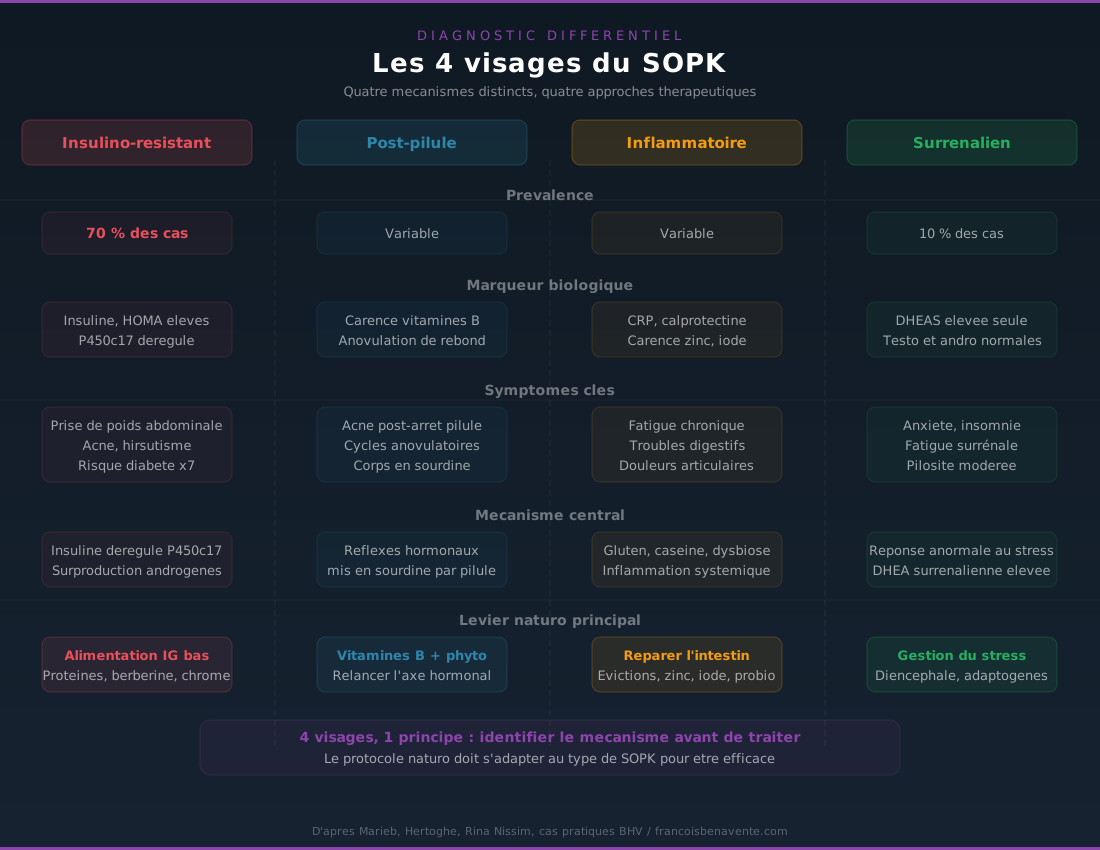
Insulin-resistant PCOS is the most common. It represents about 70 % of cases. Insulin resistance is the central driver. Excess insulin dysregulates the 17-alpha-hydroxylase pathway (cytochrome P450c17), causing ovaries to overproduce androgens. Clinically, we observe weight gain (especially abdominal), acne, hirsutism, hair loss, and a risk of type 2 diabetes multiplied by seven3. Inserm confirms the association with obesity and insulin resistance, but be careful: thin women can also be insulin-resistant. Yo-yo diets and eating disorders establish resistance without visible excess weight.
Post-pill PCOS is Sarah’s type. Synthetic hormones take over from natural hormones for years. Upon stopping, the body must relearn how to function autonomously. As my practical case file summarizes, it’s as if her hormonal reflexes had been muted. It takes time for them to respond again, especially if the pill was taken for years. Rebound anovulation can last for months. Acne often returns stronger than before the pill. And hormonal contraception increases insulin resistance while causing B-vitamin deficiencies4, which worsens the situation when stopping.
Inflammatory PCOS is the great forgotten type. Its origin is neither ovarian nor metabolic in the classical sense. It’s systemic inflammation that disrupts the hormonal axis. Causes include gluten or casein intolerance, intestinal dysbiosis, nutritional deficiencies (especially zinc and iodine), excessive environmental toxin exposure. Biologically, CRP and fecal calprotectin are often elevated. Androgens are sometimes moderately elevated, but it’s inflammation that maintains the dysregulation.
Adrenal PCOS represents only about 10 % of diagnoses, but it’s often confused with other forms. Its distinctive marker: DHEAS (dehydroepiandrosterone sulfate) is elevated, but testosterone and androstenedione remain normal. Since excess androgens are exclusively of adrenal origin, the ovary isn’t the problem. It’s the abnormal response to stress. The hypothalamic-pituitary-adrenal axis is in overdrive, a mechanism I detail in the article on adrenal exhaustion, and the solution comes first through stress management, not a classical dietary protocol.
Insulin Resistance, That Metabolic Trap
In 70 % of PCOS cases, insulin pulls the strings. The mechanism is precise and documented. Insulin resistance causes compensatory hyperinsulinemia. This excess insulin acts directly on the ovaries by dysregulating the P450c17 enzymatic pathway5, the 17-alpha-hydroxylase involved in converting progesterone to androstenedione. Result: ovaries produce too many androgens. Androstenedione transforms into testosterone. Testosterone causes acne, hirsutism, hair loss. And excess androgens block follicle maturation, preventing ovulation.
What’s insidious is that insulin resistance doesn’t necessarily mean excess weight. It can silently develop after yo-yo diets, periods of restriction followed by excess, eating disorders that tire the metabolism. The body loses sensitivity to insulin without the scale showing it. This is why HOMA-IR (insulin resistance index) should be systematically measured in PCOS assessment, not just fasting glucose.
Charles Poliquin, a famous coach, said “earn your carbs.” This phrase sums up a philosophy the BHV protocol applies daily. Low glycemic index nutrition isn’t a diet. It’s metabolic recalibration. And in insulin-resistant PCOS, it’s the most powerful lever even before herbal medicine or micronutrition. The least clogging sources, in order: chestnut, sweet potato, yam, cassava, amaranth, quinoa, buckwheat. We avoid wheat, cornstarch, spelt, industrial starches. We don’t exceed one-third of the food bowl in starches. We integrate anti-inflammatory principles at each meal.
Progression toward type 2 diabetes is faster in PCOS patients than in the general population. This is data that should be systematically communicated at diagnosis. But it rarely is.
What If Your Thyroid Is Sustaining Your Cysts?
It’s the link almost no one makes. Yet Dr. Hertoghe documents it clearly in The Hormone Handbook. Regulating thyroid hormone levels can block ovarian cyst formation through two distinct mechanisms.
The first: hypothyroidism causes elevated TRH (thyrotropin-releasing hormone) from the hypothalamus. The connection between thyroid, estrogen and progesterone is an essential axis to explore in PCOS. TRH doesn’t only stimulate TSH. It also stimulates prolactin secretion. Now hyperprolactinemia is a direct cause of ovarian cysts. By normalizing thyroid hormones, we inhibit TRH secretion, which corrects both TSH and prolactin.
The second: hypothyroidism slows ovulation. No ovulation means no corpus luteum. No corpus luteum means no progesterone in the luteal phase. And progesterone deficiency facing unopposed estrogens is estrogen dominance. Follicular cysts form because follicles fail to mature. The same mechanism described in the article on painful periods. Hertoghe adds that a low dose of estradiol supplemented with a higher amount of progesterone can restore cycle and prevent cyst development in young women.
The third mechanism is adrenal. When cortisol is low (chronic adrenal fatigue), there’s little or no ovulation, and progesterone production drops. The low progesterone/high estradiol imbalance directly promotes ovarian cyst formation. Glucocorticoid correction, or more naturally supporting the adrenals through adaptogenic plants and stress management, helps prevent and reverse this mechanism. This is why complete thyroid panel (TSH, Free T4, Free T3, anti-TPO, anti-Tg) should be integral to PCOS assessment. TSH alone isn’t sufficient.
Stress and the Diencephalon
Marchesseau placed the diencephalon at the center of his physiology. This brain region, which includes the hypothalamus, is the “conductor” of all neuro-hormonal regulation. He said: “Free your diencephalic zone from your cortex.” If energy is entirely mobilized by the cortical brain, by the endless mental chatter, the physiological brain sees its energy recharges diminished. Less energy in the somatic sphere means less hormone production, autonomic nervous system imbalance, poor recovery. This sets the stage for PCOS and all hormonal pathologies.
The biochemical mechanism is pregnenolone steal. Cholesterol is the precursor of all steroid hormones. It transforms into pregnenolone, which is the crossroads. From pregnenolone, two paths open: the cortisol path (via progesterone then cortisol) and the sex hormone path (progesterone, DHEA, testosterone, estrogens). When the body is in survival mode, in chronic stress, pregnenolone is massively directed toward cortisol production. Progesterone and DHEA are sacrificed. Estrogen dominance sets in without the ovaries having changed anything. It’s the same mechanism I describe in the article on endometriosis.
“Disease is the crystallization of a mental attitude.” Edward Bach
I often use this metaphor in consultation: imagine your brain as a computer with twenty Google tabs open. Your computer will lag. Your brain acts the same way with each mental load piled year after year. Every past or present stress is an open tab consuming energy. The introspection through the “to-do list” I propose in the BHV protocol involves identifying each stress source, writing it down, and methodically developing a resolution plan. Visualizing the problem is good. Developing a plan to solve it is better.
Why Your Liver Is Making Your PCOS Worse
The liver is the central organ for detoxifying sex hormones. Circulating estrogens are metabolized by the liver via cytochromes P450, then conjugated and excreted by bile into the intestine. When the liver is overloaded, this detoxification work slows. Estrogens are recycled instead of eliminated. Estrogen dominance worsens.
Hormonal contraception represents a double burden for the liver. On one hand, it suppresses ovulation and thus natural progesterone production. On the other hand, the synthetic hormones it contains must be metabolized by the liver, which overloads it. When you stop the pill after years, the liver is often clogged, B vitamins are deficient (the pill consumes B6, B9, B12 vitamins and zinc), and hepatic detoxification capacity is reduced. All the ingredients are there for PCOS symptoms to explode.
Sleep plays a direct role in hepatic detoxification. In eight hours of sleep, digestion finishes early in the night, and the liver then has several hours to detoxify without being mobilized by other metabolic operations. The more you sleep, the more time and energy your liver has to eliminate excess estrogens. This is why the BHV protocol insists on 8 hours of sleep as non-negotiable. Spring detox isn’t a luxury. It’s a physiological necessity, especially for women with PCOS terrain.
How to Support Your PCOS Naturally
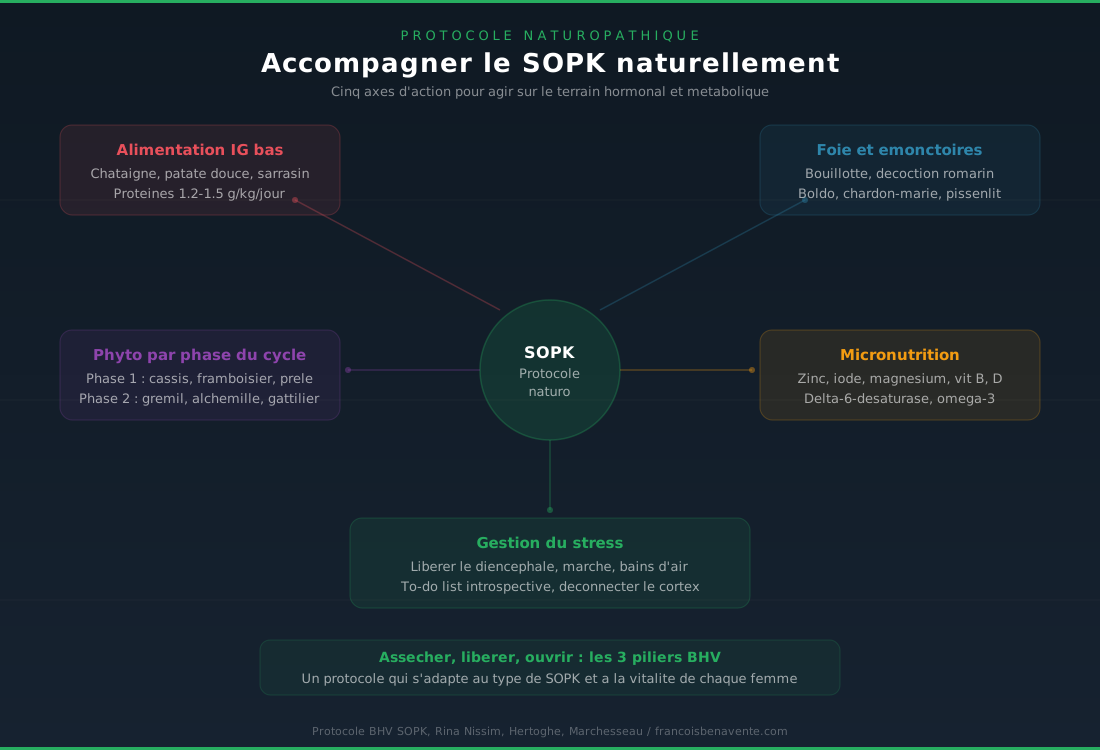
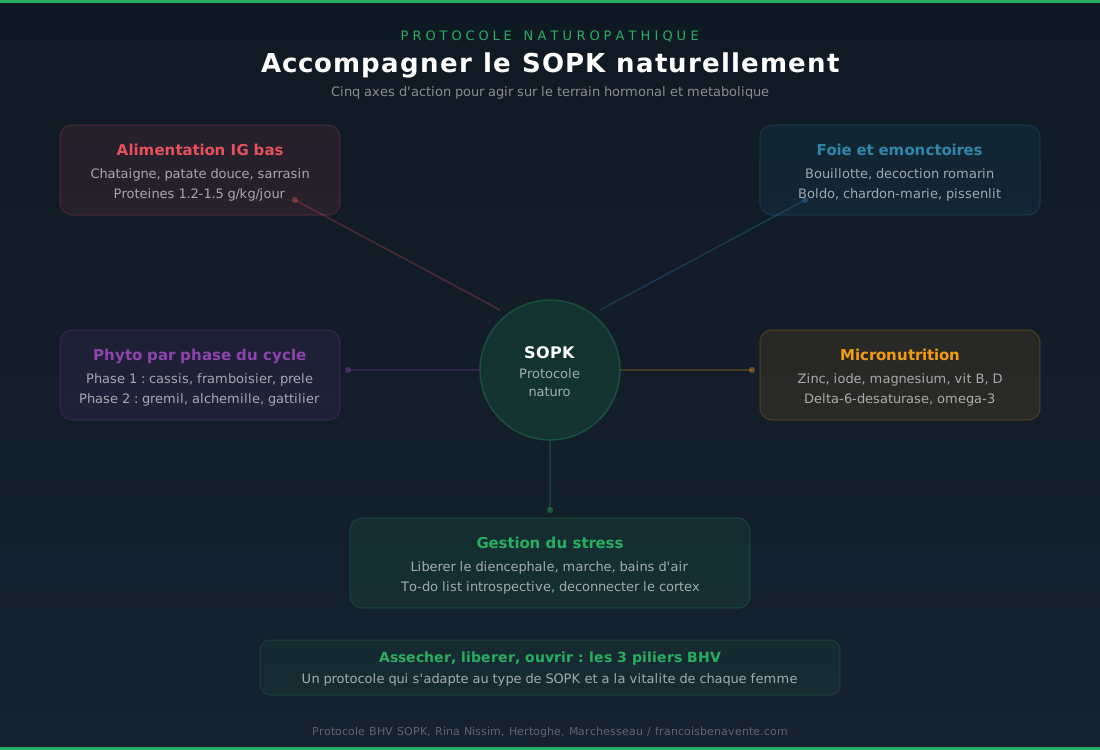
The BHV protocol I use in consultation is organized around three pillars, in a specific order. It’s the strategy Marchesseau taught: dry the overloads, free the diencephalon, open the emunctories. We don’t reverse the order. We don’t supplement a clogged terrain. We clean first.
Pillar 1: Drying the Overloads
Nutrition is the most powerful and immediate lever. In PCOS, the objective is twofold: reduce overall glycemic index to restore insulin sensitivity, and provide the proteins and fats needed for hormone synthesis.
Chronobiology is essential. In the morning, the body needs proteins and good fats to synthesize neurotransmitters and hormones. Organic eggs (blue-white-heart label), small oily fish three times weekly minimum (sardines, mackerel, haddock), nuts (walnuts, almonds, 3 Brazil nuts daily for selenium). The protein objective is 1.2 to 1.5 g per kg of body weight daily, spread across three meals but concentrated at breakfast and lunch. Don’t increase protein too quickly. Increase it progressively as metabolism rises through physical activity. “Every digestion is a battle,” said Paul Carton.
Starches follow strict preference order, from least to most clogging: chestnut, potato, sweet potato, yam, cassava, amaranth, quinoa, buckwheat, rice, millet, oats, sorghum. They don’t exceed one-third of the food bowl. Sweet potato flour and buckwheat flour replace wheat in daily recipes. We eliminate the most clogging sources: wheat (bread, pasta, semolina, biscuits), cornstarch, industrial starches.
Lipids are structural, not optional. Borage oil in bottles (rich in GLA, gamma-linolenic acid) and wheat germ oil (rich in vitamins A and E) as raw seasoning. Olive oil in cooking (maximum 180 degrees) or ghee for high temperatures. Blue-white-heart eggs with an omega-3/omega-6 ratio of 1 to 4.
Morning ginger-rosemary decoction is systematic. Rosemary is hepatoprotective and adaptogenic. Ginger is anti-inflammatory with efficacy comparable to ibuprofen on dysmenorrhea6.
Pillar 2: Opening the Emunctories
“The hygienist becomes a minister of vital energy,” said Paul Carton. Here, we open organs of elimination not sufficiently mobilized and leave tired or worn emunctories in peace.
The liver is the priority in PCOS. Hot water bottle on the liver after each evening meal attracts blood and bile, accelerating hepatic operations. Hepatic herbal medicine is rich and documented: boldo, chamomile, rosemary, artichoke, buckthorn, milk thistle, fumitory, dandelion, black radish. For the hepatic sphere in cooking: carrot, turnip, radish, black radish, butternut, squash, artichoke, garlic, turmeric, ginger.
Physical exercise is chosen for its capacity to mobilize the diaphragm. Walking, cycling, swimming. Diaphragm movement acts as internal liver massage, mechanically activating blood circulation in the liver. The daily objective is 10,000 steps. The hunter-gatherer walked 16 km daily. Our grandparents did 8. Modern humans don’t exceed 3. Weekly air bathing (an entire afternoon outdoors, in forest, at sea, in mountains) allows recharging with negative ions, one of the most abundant antioxidant sources for any living being.
The kidneys are supported by hydration with weakly mineralized water (Mont Roucous, Montcalm) and diuretic garden plants: leeks, watercress, asparagus, parsley. As Louis-Claude Vincent said, “water is more important for what it carries away than for what it brings.”
Pillar 3: Rebalancing Hormones
This is the most PCOS-specific pillar, requiring fine individualization. Herbal medicine by cycle phase, as Rina Nissim teaches it, is the central tool.
During the first cycle phase (follicular, from first day of period to ovulation), we treat the terrain. Black currant mother tincture (adrenal support), raspberry leaf (small pelvic revascularization), horsetail (remineralization) and bramble, in equal quantities, 2 times 40 drops daily.
During the second cycle phase (luteal, from ovulation to next period), we adopt a progesterone-like strategy to reduce still-secreted estrogens. Mother tincture of gromwell, lady’s mantle, yarrow and vitex, in equal quantities, 2 times 80 drops daily. Vitex is one of the best-documented plants on PCOS. It acts by normalizing LH secretion7, which promotes ovulation and progesterone production.
In gemmotherapy, glycerin macerated buds of black currant, raspberry and bramble: 50 drops in the morning, except the week of menstruation. The objective is return toward normalized hormonal cycle.
Hop infusion has a documented anti-androgen action. It’s a specific PCOS ally with no equivalent in other female hormonal protocols.
Micronutrition completes the picture. Zinc bisglycinate is a cofactor of delta-6-desaturase, the enzyme converting essential fatty acids to anti-inflammatory prostaglandins. Without zinc, no conversion. Iodine is essential for thyroid function, and we’ve seen that the thyroid plays a central role in PCOS. Magnesium bisglycinate (300-400 mg/day) supports over 300 enzymatic reactions, including hormone synthesis. B vitamins (especially B6 as P5P form, B9 and B12) are systematically deficient in women who’ve taken the pill. Vitamin D3 (2000-4000 IU/day) is a cofactor for cellular reception of thyroid hormones and an immunomodulator.
Indole-3-carbinol (I3C), derived from cruciferous vegetables, helps the liver orient estrogen metabolism toward the protective 2-OH pathway rather than pro-inflammatory 16-alpha-OH metabolites8. It’s a supplement the BHV protocol frequently integrates in cases of estrogen dominance associated with PCOS.
Want to assess your hormonal terrain? The Hertoghe cortisol test identifies adrenal exhaustion frequently found in PCOS. The Claeys thyroid questionnaire allows screening for subclinical hypothyroidism associated.
What Naturopathy Doesn’t Do
Based in Paris, I consult by video throughout France. You can book an appointment for personalized support.
PCOS requires medical diagnosis. Pelvic ultrasound and hormonal panel between days 2-5 of cycle (FSH, LH, prolactin, testosterone, delta-4-androstenedione, DHEAS, 17-beta-estradiol, 17-hydroxy-progesterone, TSH, glucose, insulin) are essential. Naturopathy provides support. It doesn’t replace the endocrinologist or gynecologist. The two approaches don’t oppose. They complement each other.
A few specific warnings. Vitex is contraindicated if you’re on current hormonal treatment (pill, progestins, GnRH agonists). The interaction is direct. Prolonged fasting is discouraged in PCOS with severe insulin resistance without supervision. Iodine supplementation requires confirmation of deficiency by testing (24-hour iodine), as excess can worsen underlying autoimmune thyroiditis.
Metabolic symptoms worsen with weight gain or metabolism drop. There’s direct correlation between body mass index and infertility associated with PCOS. In 90 % of infertility cases linked to PCOS, excess weight or metabolic syndrome is present. In 70 to 95 % of cases, it’s anovulation causing the issue. The good news is that correcting metabolic terrain through nutrition, micronutrition, and lifestyle can restore ovulation and fertility in most women, often in 3 to 6 months.
For the PCOS protocol, Sunday Natural offers inositol, zinc bisglycinate and pharmaceutical-grade chromium (-10% with code FRANCOIS10). A Hurom juicer facilitates preparation of insulin-sensitizing green juices (-20% with code francoisbenavente20). And the Milerd Detoxer eliminates endocrine disruptors from foods that worsen insulin resistance. Find all my partnerships with exclusive promo codes.
Scientific References
If you want personalized support, you can book a consultation appointment.
To Go Further
- Aldosterone: the forgotten hormone of your blood pressure and salt
- DHEA: the forgotten hormone of your vitality and immunity
- Endometriosis: the hidden terrain no one is looking at
- The Hertoghe Method: hormones, micronutrition and terrain medicine
Want to assess your status? Take the free excess insulin Hertoghe questionnaire in 2 minutes.
Sources
- Hertoghe, Thierry. The Hormone Handbook. 2nd ed. Luxembourg: International Medical Books, 2012.
- Nissim, Rina. Mamamélis. Geneva: Mamamélis, 1992.
“The whole secret of medicine lies in the eliminatory function, inherent to every living organism, and which manifests spontaneously, without the help of any remedy. But in subjects overloaded, without vitality or aging, it’s good to help this function. This is the art of hygienism.” Pierre-Valentin Marchesseau
Footnotes
-
Goodarzi, Mark O., Daniel A. Dumesic, Gregorio Chazenbalk, and Ricardo Azziz, “Polycystic Ovary Syndrome: Etiology, Pathogenesis and Diagnosis,” Nature Reviews Endocrinology 7, no. 4 (2011): 219-231. PMID: 21263450. ↩
-
Rotterdam ESHRE/ASRM-Sponsored PCOS Consensus Workshop Group, “Revised 2003 Consensus on Diagnostic Criteria and Long-Term Health Risks Related to Polycystic Ovary Syndrome (PCOS),” Human Reproduction 19, no. 1 (2004): 41-47. PMID: 14688154. ↩
-
Biyasheva, Aigul, Richard S. Legro, Andrea Dunaif, and Margrit Urbanek, “Evidence for Association between Polycystic Ovary Syndrome (PCOS) and TCF7L2 and Glucose Intolerance in Women with PCOS and TCF7L2,” Journal of Clinical Endocrinology and Metabolism 94, no. 7 (2009): 2617-2625. PMID: 19351735. ↩
-
Palmery, Maura, Antonella Saraceno, Alfredo Vaiarelli, and Giuliana Carlomagno, “Oral Contraceptives and Changes in Nutritional Requirements,” European Review for Medical and Pharmacological Sciences 17, no. 13 (2013): 1804-1813. PMID: 23852908. ↩
-
Nestler, John E., and Daniela J. Jakubowicz, “Decreases in Ovarian Cytochrome P450c17 Alpha Activity and Serum Free Testosterone after Reduction of Insulin Secretion in Polycystic Ovary Syndrome,” New England Journal of Medicine 335, no. 9 (1996): 617-623. PMID: 8687515. ↩
-
Ozgoli, Giti, Marjan Goli, and Fariborz Moattar, “Comparison of Effects of Ginger, Mefenamic Acid, and Ibuprofen on Pain in Women with Primary Dysmenorrhea,” Journal of Alternative and Complementary Medicine 15, no. 2 (2009): 129-132. PMID: 19216660. ↩
-
Milewicz, A., E. Gejdel, H. Sworen, K. Sienkiewicz, J. Jedrzejak, T. Teucher, and H. Schmitz, “Vitex agnus castus Extract in the Treatment of Luteal Phase Defects Due to Latent Hyperprolactinemia,” Arzneimittelforschung 43, no. 7 (1993): 752-756. PMID: 8369008. ↩
-
Michnovicz, Jon J., Herman Adlercreutz, and H. Leon Bradlow, “Changes in Levels of Urinary Estrogen Metabolites after Oral Indole-3-Carbinol Treatment in Humans,” Journal of the National Cancer Institute 89, no. 10 (1997): 718-723. PMID: 9168187. ↩


Laisser un commentaire
Sois le premier à commenter cet article.