
Marc is forty-seven years old. For two years, he has been dragging around a fatigue that won’t let go. Joint pain in the morning, fragmented sleep, brain fog at work, energy crashes after meals. He consulted his general practitioner four times. CBC : normal. Blood glucose : 0.98 g/L, within normal range. Transaminases : normal. TSH : 2.8, within normal range. Lipid panel : “a little cholesterol, nothing serious”. The doctor told him : “Your tests are normal. It’s probably stress.” Marc left with a prescription for Lexomil and the conviction that he needed to “pull himself together”.
When Marc came to consult me six months later, I requested a different panel. Erythrocyte magnesium : 1.6 mmol/L (functional standard > 2.2). Homocysteine : 18 µmol/L (health target < 7). Vitamin D : 14 ng/mL (target 50-80). Ferritin: 28 µg/L with a transferrin saturation coefficient of 15% (functional threshold > 30%). HOMA : 3.8 (threshold < 2). Ultrasensitive CRP : 2.4 mg/L (target < 0.5). Each test told a piece of the story. And together they painted a clear picture : a man with deficiencies in magnesium, functional iron, vitamin D and B vitamins, with early insulin resistance and chronic low-grade inflammation that no one had looked for.
“Micronutrition consultation is a genuine investigation. Clinical history, functional questionnaires, etiopathogenic hypotheses, investigative biology to validate hypotheses, precise and personalized care, efficacy verification through biology.” Dr Anne Lucas, PharmD, DU MAPS 2020, course #22 “Preventive Investigation Biology”1
This course by Dr Lucas transformed my practice. Not because I didn’t know about micronutrition testing. But because she structured the entire panel around the 7 pillars of nutritional and functional medicine, with the rigor of a pharmacist and an unassailable clinical logic. And because she begins with an observation that every naturopath should hammer home to their patients : the contents of your plate DO NOT reflect your biological status.
When diet alone isn’t enough
Dr Lucas opens her course with figures that demolish a myth. Modern food is so depleted of micronutrients that even a “balanced” diet is no longer sufficient to meet needs2.
An orange from the 1950s contained as much vitamin A as 21 oranges today. An apple from back then contained as much vitamin C as 100 apples today. Eighty percent of foods consumed in Europe are processed and manufactured. Pasteurization, sterilization, skimming, ionization, cooking-extrusion, washing, peeling, refining, additives. The blanching of fruits and vegetables in canned or frozen form destroys up to 95% of vitamin C, 60% of vitamin B1 and 40% of vitamins B2, B3 and B9. Two minutes of cooking destroys 80% of vitamin B9. Grinding potatoes results in a 39% loss of vitamin C3.
Three major French surveys converge on the same finding. The ESVITAF study (1996) shows that over 70% of French women have intakes below the Recommended Dietary Allowance (RDA) for vitamin B1, over 60% for B2, over 90% for B9, 60% for vitamin C and over 75% for vitamin E4. The Val-de-Marne survey (1991) confirms these figures and adds that over 80% of women are deficient in magnesium and over 90% in zinc5. The SUVIMAX study (2004), following 18,000 people for 8 years, shows that 70% of the population has intakes below two-thirds of the RDA.
And these figures measure intakes, not biological status. Bioavailability is a fundamental concept that Dr Lucas places at the heart of her teaching. What you eat is not what you absorb. Chewing (the first step of digestion and the only one under our control), intestinal absorption capacity (dysbiosis, leaky gut, PPIs, bariatric surgery, IBD), food preparation methods (gentle cooking preserves nutrients far better), food combinations (iron and phytates, calcium and oxalates, B vitamins and coffee) and medications (PPIs, NSAIDs, oral contraceptives) radically alter actual absorption.
This is why Dr Lucas insists : “Don’t estimate micronutrient needs by comparing plate contents to reference tables. Focus on the functional signs the patient expresses to highlight their real needs.”6 It’s a complete paradigm shift : we move from a quantitative approach of conventional nutrition (how many grams of protein, how many calories) to a functional approach (what isn’t working, and which pillar is failing).
The 7 pillars of nutritional and functional medicine
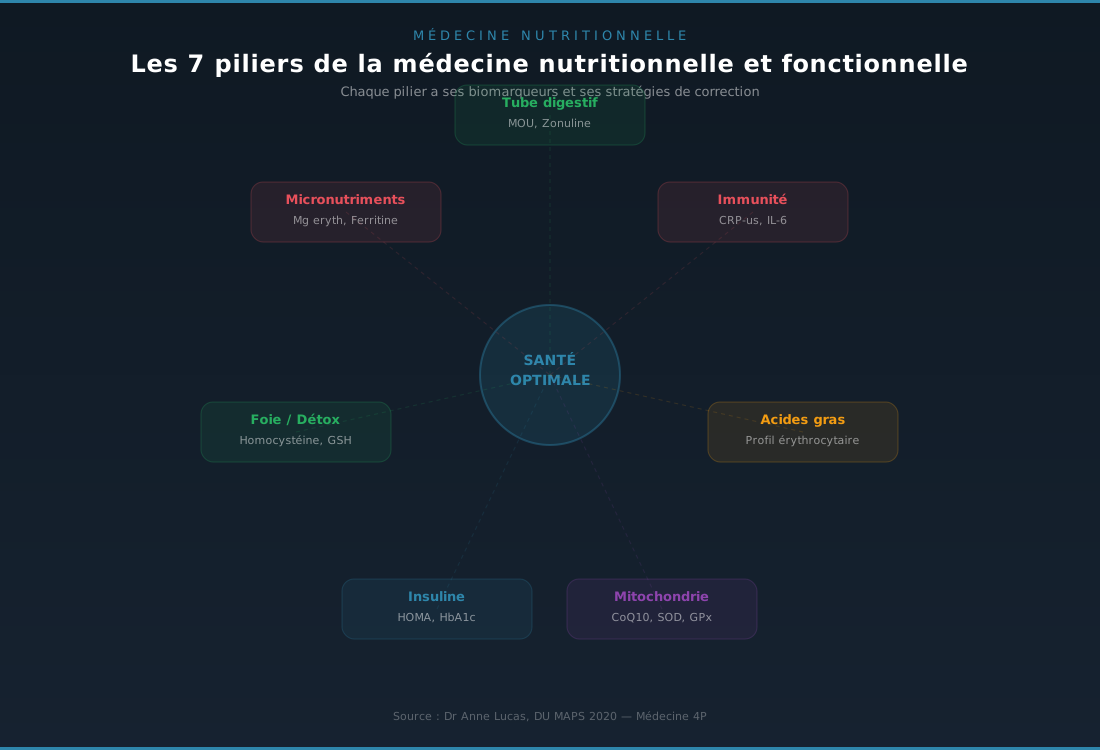
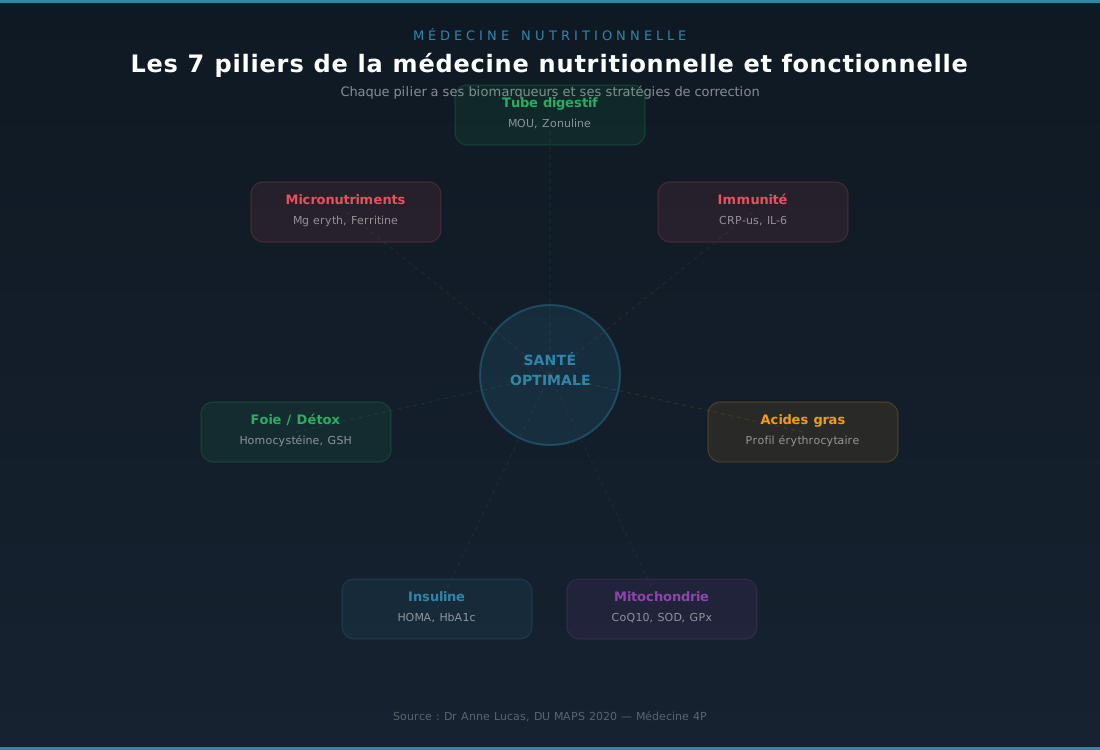
Dr Lucas structures investigative biology around seven pillars on which each individual’s health rests. Each pillar has specific biomarkers, functional questionnaires and correction strategies. When one or more pillars collapse, functional signs appear : fatigue, pain, sleep disturbances, digestive issues, mood changes. The preventive investigative biology panel allows measurement of each pillar’s state and targets correction.
Pillar 1 : Digestive tract and microbiota
The intestinal ecosystem rests on four actors : the microbiota (eubiosis/dysbiosis balance), the intestinal mucosa (barrier and absorption function), the mucus (physical protection) and the intestinal immune system (70% of total immune system)7.
The first-line panel is urinary organic metabolites (UOM), a collection of first morning urine that detects three types of dysbiosis. Fungal dysbiosis (digestive candidiasis) is measured by D-arabinitol, the D/L-arabinitol ratio, arabinose and tartrate. Fermentation dysbiosis is measured by citramalate, D-lactate and tricarballylate. Putrefaction dysbiosis is measured by paracresol, phenol, indican and benzoate. Dr Lucas specifies that a complete meal the previous day containing carbohydrates and proteins is needed to avoid false negatives.
As second-line testing, the metagenome (bacterial genomic identity card) evaluates microbiota diversity and richness. Key species are Faecalibacterium prausnitzii and Roseburia (butyrate producers, anti-inflammatory), Lactobacillus (pH lowering), Bifidobacterium (cross-feeding, mucus production) and Akkermansia muciniphila (barrier integrity). Plasma zonulin evaluates intestinal permeability (leaky gut). If cardiovascular risk is identified, TMAO (trimethylamine N-oxide) evaluates atherotoxic TMAOgenic dysbiosis8.
Pillar 2 : Immunity and inflammation
Ultrasensitive CRP (hs-CRP) is the most accessible marker of chronic low-grade inflammation. The functional objective is below 0.5 mg/L, whereas the “normal” laboratory threshold is often set at 5 mg/L, ten times higher. A patient with CRP at 2 mg/L is considered “within normal range” by conventional medicine, while in functional medicine, it’s a sign of silent inflammation that promotes insulin resistance, atherosclerosis and autoimmune diseases.
The cytokine profile (IL-6, TNF-alpha, IL-10) allows clarification of inflammation type. The omega-6/omega-3 ratio directly influences the pro/anti-inflammatory balance. Secretory IgA measures mucosal immunity. Lymphocyte subpopulation testing (CD4, CD8, NK) evaluates cellular immunity.
Pillar 3 : Fatty acids
The erythrocyte fatty acid profile is one of the most informative panels I discovered through the DU. It measures red blood cell membrane composition over the previous 120 days (lifespan of an erythrocyte), providing a snapshot of the patient’s actual lipid status. It evaluates omega-3 (EPA and DHA), omega-6, the omega-6/omega-3 ratio (ideal < 4, often > 15 in Western diet), saturated, monounsaturated and trans fatty acids. The erythrocyte omega-3 index (EPA + DHA) should ideally be between 8 and 10%9.
Pillar 4 : Mitochondria and oxidative stress
Oxidative stress evaluation includes testing markers of oxidative damage (TBARS, 8-OHdG, isoprostanes) and endogenous antioxidant defenses (SOD, GPx, reduced glutathione, reduced/oxidized glutathione ratio). Plasma CoQ10 evaluates mitochondrial status (particularly important on statins). Alpha-lipoic acid, selenium and zinc are cofactors of antioxidant enzymes.
Pillar 5 : Insulin-glucose metabolism
Fasting blood glucose is a late marker. HOMA (Homeostasis Model Assessment), calculated from fasting glucose and fasting insulin, detects insulin resistance years before glucose rises. HOMA above 2 indicates early insulin resistance. Glycated hemoglobin (HbA1c) reflects average blood glucose over 3 months. C-peptide evaluates residual pancreatic secretion.
Pillar 6 : Liver and detoxification
The standard liver panel (AST, ALT, gamma-GT, alkaline phosphatase) is a minimum. Reduced glutathione evaluates phase II detoxification capacity. Homocysteine is a central marker linking liver, methylation and B vitamins. A level above 7 µmol/L indicates methylation deficiency (B6, B9 or B12 deficiency)10. The urinary heavy metals profile (mercury, lead, cadmium, arsenic) evaluates chronic toxin exposure. The article on exposome details hepatic detoxification mechanisms.
Pillar 7 : Micronutrients (synthesis of the 6 pillars)
Micronutrient testing is the synthesis pillar. Dr Lucas emphasizes a fundamental point : some tests are misleading if you don’t choose the right compartment. SERUM magnesium does NOT reflect actual status (the body maintains blood magnesium at the expense of cellular reserves). You must test ERYTHROCYTE magnesium. Similarly, serum iron alone is insufficient : you need ferritin AND transferrin saturation coefficient to diagnose functional anemia.
Key tests : vitamin D (25-OH-D3, target 50-80 ng/mL), serum zinc, selenium, urinary iodine, serum copper and copper/zinc ratio, B vitamins B6 (active form P5P), erythrocyte B9, serum B12 and holotranscobalamin (more sensitive marker than total B12), vitamin A (retinol).
The laboratory reference range trap
This is the most important point of the course, the one that changes everything in practice. Laboratory reference ranges are statistical norms, not optimal health norms. They represent the average of a given population, including sick, undernourished or overweight people. Being “within the normal range” means being at the population average. When that population is massively undernourished, being within the normal range means being undernourished like everyone else.
The vitamin D example is most striking. The laboratory reference range often begins at 30 ng/mL. Studies show that the immunological and anti-cancer benefits of vitamin D are only observed from 50 ng/mL onwards, and that optimal levels are between 50 and 80 ng/mL. A patient at 31 ng/mL is “within normal range” by conventional medicine standards, yet functionally deficient from a functional medicine perspective.
The magnesium example is equally telling. Serum magnesium (what your doctor tests) is maintained between 0.75 and 1.0 mmol/L by the body, even when cellular reserves are depleted. The body sacrifices intracellular magnesium to maintain blood magnesium, exactly as it sacrifices bone calcium to maintain blood calcium. Testing serum magnesium is like measuring river level to estimate water in aquifers.
The 3-step investigation protocol
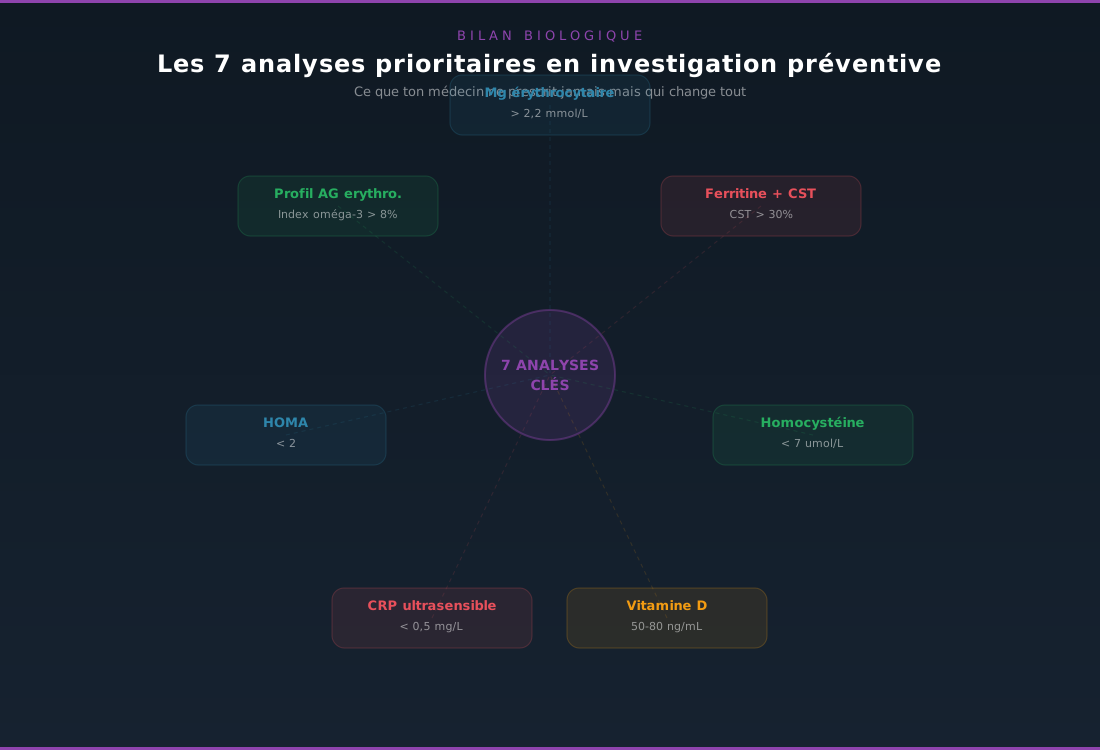
Here is the protocol I use in consultation, directly inspired by Dr Lucas’s teaching.
**Step 1 : Functional history. **Before any testing, an in-depth clinical history and targeted functional questionnaires allow identification of failing pillars. The digestive symptoms questionnaire points to pillar 1. The fatigue and sleep questionnaire points to pillar 4 (mitochondria). The hormonal questionnaire points to pillars 5 and 7. The objective is to formulate ETIOPATHOGENIC HYPOTHESES BEFORE ordering testing.
**Step 2 : Targeted panel. **We don’t order all 7 pillars at once. We target the 2-3 dysfunctional pillars identified by the history. The panel can be prescribed individually (biomarker by biomarker), by condition (cardiovascular pack, fertility pack, metabolism pack) or by pillar. Dr Lucas recommends “structuring for minimal effective prescription, while leaving nothing out”11.
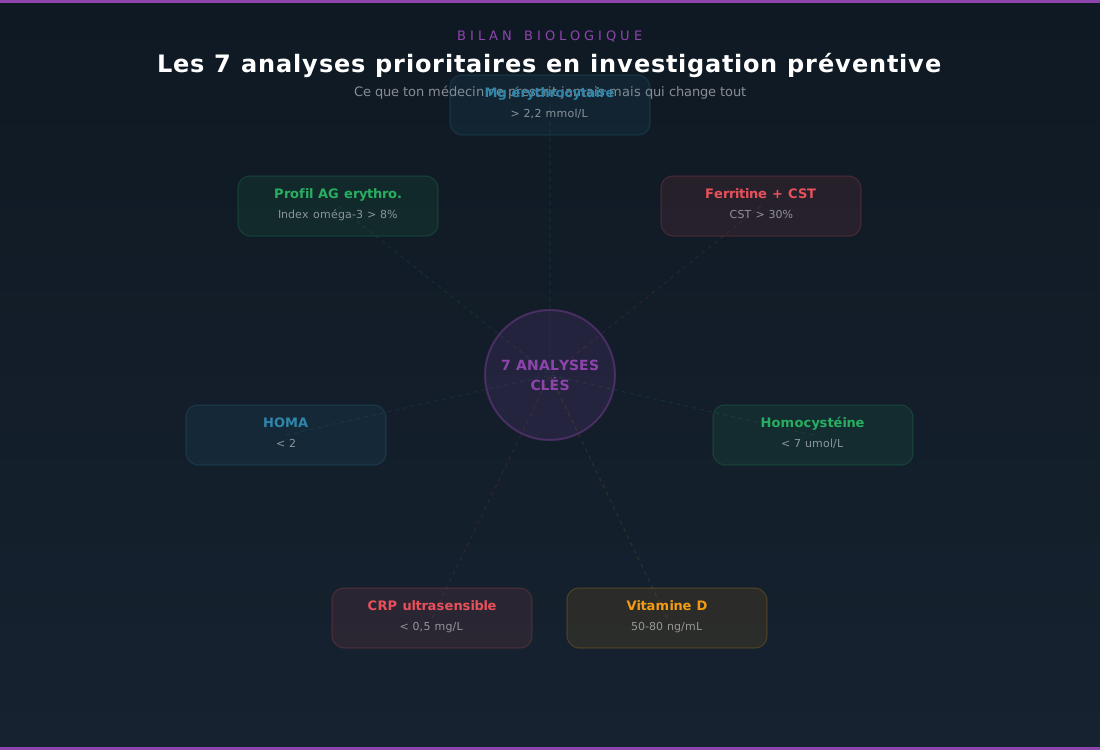
In first-line testing, the 7 analyses I systematically request are:
- Erythrocyte magnesium (not serum) : the most universally deficient mineral
- Ferritin + transferrin saturation coefficient: actual iron status
- Homocysteine: methylation marker and B6/B9/B12 deficiency indicator
- Vitamin D 25-OH-D3: the most deficient hormone in France
- Ultrasensitive CRP: silent chronic inflammation
- Fasting glucose + fasting insulin (HOMA calculation) : early insulin resistance
- Erythrocyte fatty acid profile: membrane inflammatory status
**Step 3 : Targeted correction. **Dr Lucas emphasizes : care must be “precise, accurate, appropriate, personalized”12. No generic multivitamin. Dosages adapted to measured deficiencies, with high-quality bioactive forms. And follow-up testing after 3-6 months to verify correction efficacy.
Each patient is unique : the role of genetic polymorphism
Dr Lucas devotes part of her course to a fundamental concept : biochemical individuality13. Each human being is unique, not only in eating habits, but in genetic heritage. Genetic polymorphism explains why two people eating the same thing can have radically different micronutrient status.
The most well-known example is the MTHFR gene (methylenetetrahydrofolate reductase), which participates in the methylation cycle and folate metabolism. A homozygous C677T polymorphism reduces enzyme activity by 70%, which substantially increases vitamin B9 requirements (in methylfolate form, not synthetic folic acid). Without this genetic test, a patient carrying this polymorphism will receive standard folic acid that converts poorly, and their homocysteine will remain high despite supplementation.
Epigenetics, which Dr Lucas calls the “major revolution of the 21st century,” adds a layer of complexity : the same genome can express itself differently depending on epigenetic modifications (DNA methylation, histone acetylation). No genetic destiny. Lifestyle, diet, stress and exposome continuously modulate gene expression.
The intestinal metagenome constitutes the “second revolution of the 21st century” according to Dr Lucas : 50,000 to 100,000 billion bacteria, an extra-human organism that constitutes a genuine individual identity card. Each person has a unique microbiota that influences micronutrient bioavailability, B vitamin synthesis, neurotransmitter production and immune regulation.
The 4P medicine framework : the thinking framework
Dr Lucas frames her teaching within 4P medicine: preventive, participative, personalized and precise. This is exactly what naturopathy has advocated since its origins under different terms. Preventive : act before disease. Participative : the patient is an actor in their health. Personalized : each patient is unique. Precise : investigative biology enables targeted care, not a standard protocol.
Dr Lucas’s conclusion is unequivocal : “It’s not just about not being sick, but truly achieving optimal health : a state of physical and psychological well-being.”14 That’s the difference between conventional medicine (which waits for disease to act) and nutritional medicine (which seeks functional dysfunctions before they become pathologies).
When to consult and limitations of the approach
Marc, after four months of targeted correction, saw his fatigue disappear. His erythrocyte magnesium rose to 2.3 mmol/L (400 mg/day bisglycinate with taurine and B6). His homocysteine dropped to 6.5 µmol/L (B9 methylfolate complex + B12 methylcobalamine + B6 P5P). His vitamin D went from 14 to 62 ng/mL (4000 IU/day D3 with vitamin K2 MK-7). His HOMA dropped to 1.8 (low glycemic index diet, chrononutrition, physical activity). His ultrasensitive CRP dropped from 2.4 to 0.3 mg/L (2 g/day EPA/DHA omega-3, curcumin, gluten cessation for 3 months to test intestinal permeability).
His doctor, when he saw the follow-up panel results, told him : “I don’t know what you’re doing, but keep doing it.” Marc smiled. What he’s doing is nutritional medicine. The kind Dr Anne Lucas teaches in the DU in Micronutrition. The kind no one had offered him in forty-seven years of medical visits.
The limitation of this approach is its cost (non-reimbursed testing), difficulty finding a trained prescribing physician, and the fact that investigative biology doesn’t replace clinical examination or medical diagnosis. A micronutrition panel doesn’t detect cancer, autoimmune disease or organic pathology. It detects functional dysfunctions that, if uncorrected, can favor emergence of these pathologies. It’s a prevention tool, not a diagnostic tool.
To learn more
- Alzheimer : the metabolic disease you can prevent 20 years before
- Cancer and diet : what micronutrition changes in the equation
- Anemia : understanding root causes and acting naturally
- Brain and cognition : what neurobiology teaches you about protecting your neurons
Sources
Footnotes
-
Lucas A. DU MAPS 2020, course #22 “Introduction to Preventive Investigation Biology”. Introductory slide. ↩
-
Lucas A. DU MAPS 2020, course #33 “The metal man, the mineral man”. Slide : “Increase in empty calories, micronutrient famine.” ↩
-
Lucas A. DU MAPS 2020, course #22. Slide : “Loss of micronutrient density in foods.” Health Guard Switzerland 2002 data. ↩
-
Lucas A. DU MAPS 2020, course #33. Slide : “ESVITAF 1996 : Survey of vitamin status of 3 groups of French adults.” ↩
-
Lucas A. DU MAPS 2020, course #33. Slide : “Val de Marne Survey 1991 : Women 18-50 years : >80% Mg, >90% Zn.” ↩
-
Lucas A. DU MAPS 2020, course #22. Slide : “Focus on the functional signs the patient expresses.” ↩
-
Lucas A. DU MAPS 2020, course #22. Slide : “The intestinal ecosystem : 4 actors.” ↩
-
Lucas A. DU MAPS 2020, course #22. Slide : “TMAO : Trimethylamine N-Oxide, atherotoxic.” ↩
-
Harris WS, Von Schacky C. The Omega-3 Index : a new risk factor for death from coronary heart disease ? Prev Med. 2004 ;39(1):212-220. Cited in Lucas course. ↩
-
Lucas A. DU MAPS 2020, course #22. Slide : “Homocysteine : methylation marker and B6/B9/B12 deficiencies.” ↩
-
Lucas A. DU MAPS 2020, course #22. Slide : “Structure for minimal effective prescription.” ↩
-
Lucas A. DU MAPS 2020, course #22. Slide : “Precise and accurate care.” ↩
-
Lucas A. DU MAPS 2020, course #22. Slide : “Each patient is UNIQUE : genetic polymorphism, epigenetics, metagenome.” ↩
-
Lucas A. DU MAPS 2020, course #22. Slide : “Optimal health state : physical and psychological well-being.” ↩


Laisser un commentaire
Sois le premier à commenter cet article.
Les commentaires ne se chargent pas pour le moment. Réessaie dans quelques minutes.