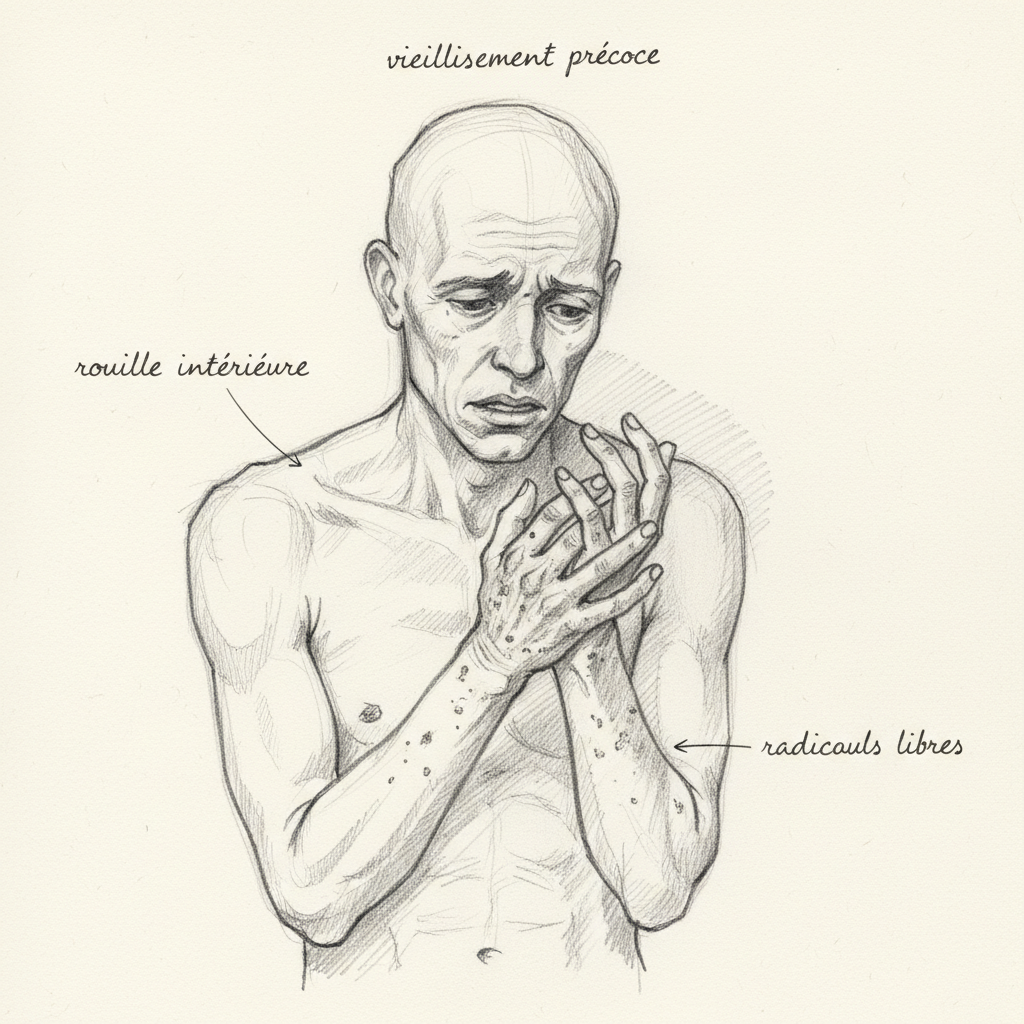
His name is Pierre, he’s 58 years old, and he refuses to age. Not out of vanity. Out of lucidity. His father died at 72 from a heart attack. His mother lives in a nursing home at 81, diagnosed with Alzheimer’s six years ago. Pierre consults me because he wants to understand what’s happening in his cells and what he can do to avoid following the same path. “I don’t want to live to 120,” he tells me. “I want to live well until the end.” That’s exactly the question that the biology of aging poses: not how long, but how. And the answer plays out at the scale of the cell, in three mechanisms that no one explains to you at the pharmacy when you buy your anti-wrinkle cream.
Life expectancy in France reaches 77.5 years for men and 84.4 years for women. It increases by a quarter each year. But life expectancy in good health stagnates around 63 years. A twenty-year gap. Twenty years of chronic diseases, dependence, cognitive decline. Medicine knows how to keep people alive. The question is how to keep them functioning. And for that, you have to understand what breaks down in the cell.
“All men desire to live long, but no one wants to be old.” Jonathan Swift
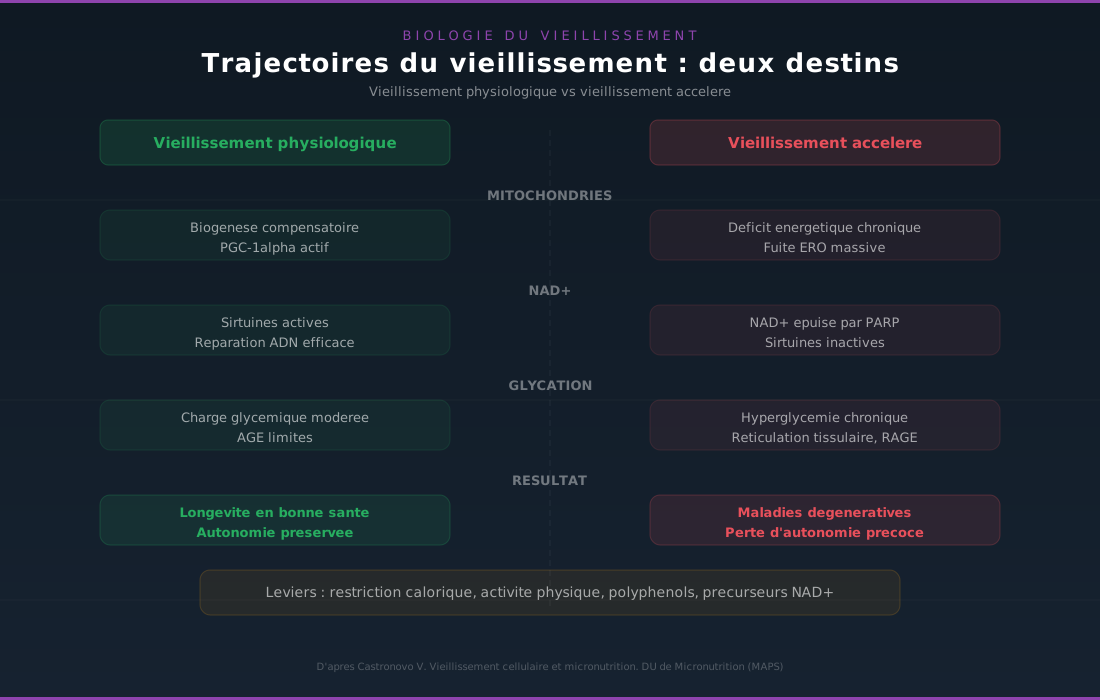
Prof. Vincent Castronovo, in his course on the postgraduate diploma in Micronutrition, distinguishes three aging trajectories: pathological aging (chronic diseases, early dependence), usual aging (the most frequent, with progressive decline of functions), and aging with success, without disability1. What separates these three trajectories is not genes: they account for less than 30% of the process. It’s environmental factors: diet, physical activity, exposure to toxins, stress management. And at the cellular scale, everything converges toward three mechanisms that naturopathy has approached for ages under other names: oxidative stress, accumulation of toxins, and vital energy.
Your mitochondria: the power plants that age first
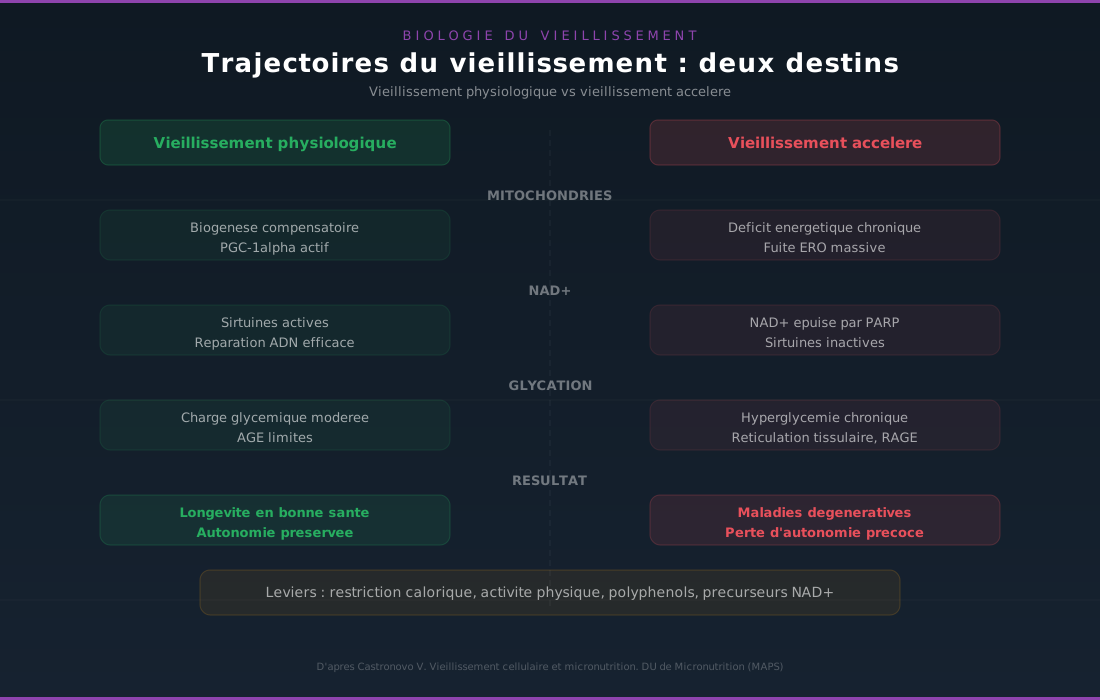
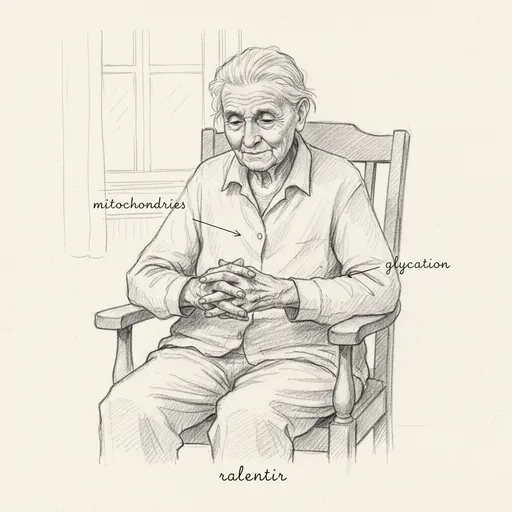
Mitochondria are the energy-producing power plants of your cells. Each cell contains between 500 and 2000 of them. They produce ATP (adenosine triphosphate), the universal energy currency of life, via the respiratory chain and the Krebs cycle. Without mitochondria, no muscle contraction, no hormone secretion, no neurotransmission, no liver detoxification. Nothing works.
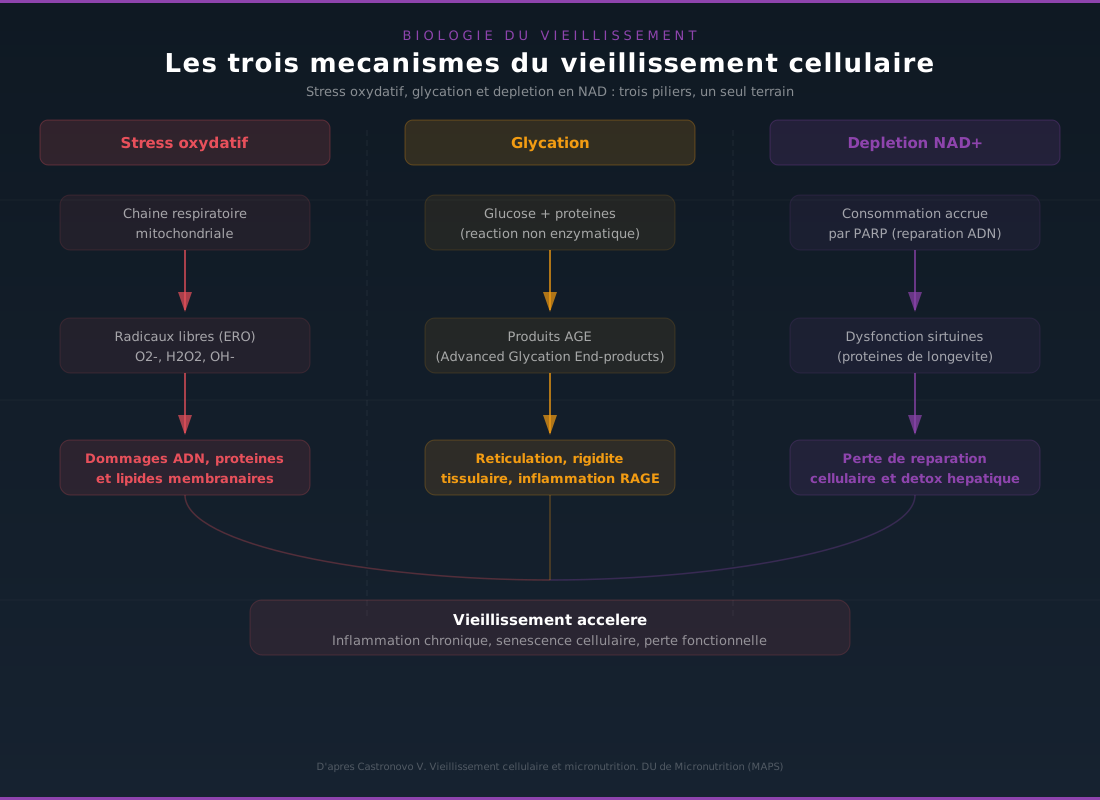
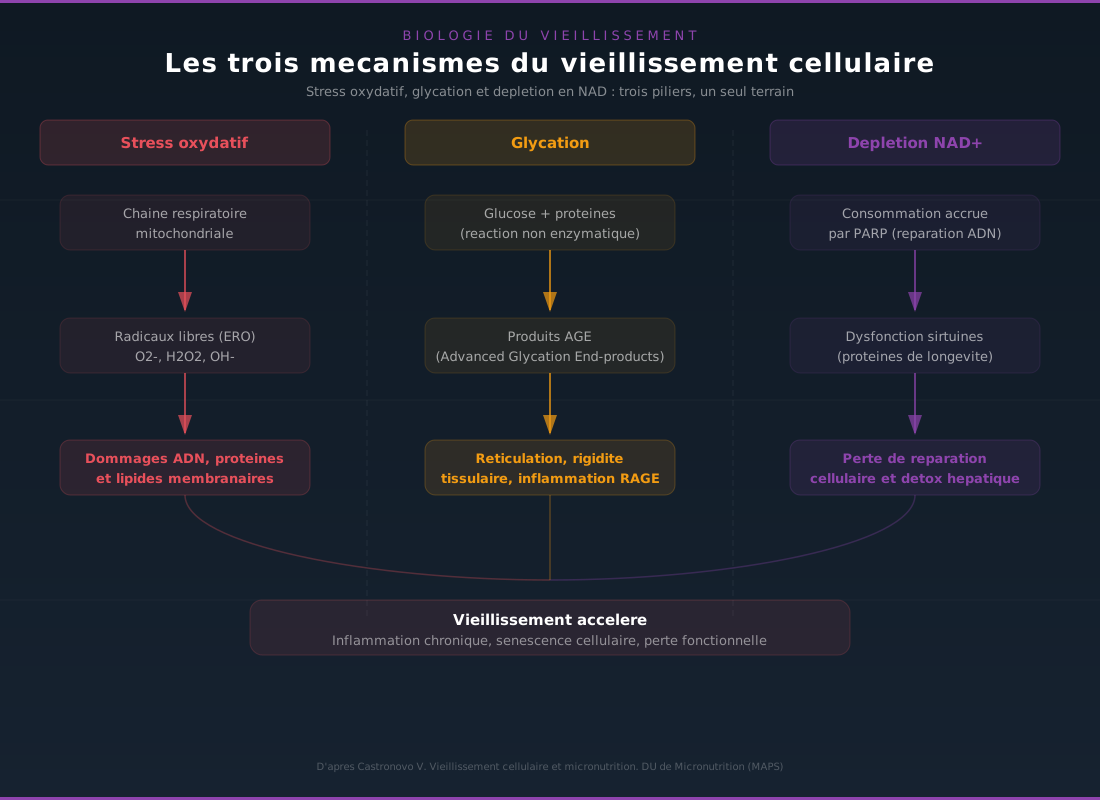
The problem is that mitochondria are also the major endogenous source of free radicals2. The respiratory chain, in transferring electrons from complex to complex to produce ATP, allows between 1 and 3% of these electrons to “leak.” These unpaired electrons react with oxygen to form superoxide anion (O2•-), hydrogen peroxide (H2O2), and hydroxyl radical (OH•), the three most destructive reactive oxygen species (ROS). This is the fundamental paradox of aerobic metabolism: the oxygen that keeps us alive is also what destroys us.
Every day, each cell in your body suffers 73,000 oxidative lesions to its DNA3. Seventy-three thousand. DNA repair enzymes (BER, NER, MMR) correct nearly all of these damages. But with age, the efficiency of these repair systems declines. Mutations accumulate. Mitochondrial DNA, which lacks protective histones and is located closest to the respiratory chain, is particularly vulnerable. Trifunovic demonstrated in 2004 that mice expressing a defective mitochondrial polymerase display spectacular premature aging: at 40 weeks, they resemble 2-year-old mice4. The integrity of mitochondrial DNA directly determines the speed of aging.
The direct clinical consequence of mitochondrial dysfunction is sarcopenia: the progressive loss of muscle mass and function related to age5. Skeletal muscles are the organs richest in mitochondria (after the heart). When mitochondria malfunction, ATP production drops, muscle fibers atrophy, strength decreases. This is a mechanism I’ve already addressed in the article on fibromyalgia, where mitochondrial energy deficit plays a central role. But in age-related sarcopenia, the process is universal: it affects everyone, at different speeds depending on their constitution.
The mitochondrial micronutrients identified by Castronovo are those on which the respiratory chain directly depends: vitamins B1 (thiamine, complex I), B2 (riboflavin, complexes I and II), B3 (niacin/NAD, complexes I to IV), B5 (pantothenic acid, acetyl-CoA synthesis), coenzyme Q10 (electron shuttle between complexes I-II and III), iron (iron-sulfur centers), copper (complex IV), zinc and selenium (mitochondrial antioxidant enzymes), alpha-lipoic acid (cofactor of pyruvate dehydrogenase and alpha-ketoglutarate dehydrogenase), L-carnitine (transport of fatty acids to the mitochondrial matrix), reduced glutathione (protection against ROS), and omega-3 (integrity of mitochondrial membranes)6. Deficiency in just one of these cofactors is enough to slow ATP production and increase electron leakage, thus increasing free radical production. It’s a vicious circle.
Glycation: when sugar caramelizes your proteins
The second major mechanism of cellular aging is non-enzymatic glycation of proteins. Circulating glucose reacts spontaneously with amino groups (NH2) of amino acids: particularly lysine, arginine, and cysteine: to form intermediate products (Schiff bases, Amadori products), which gradually rearrange into terminal products called AGE (Advanced Glycation End-products)7. This process is exactly the same as the Maillard reaction in cooking: it’s the browning of bread crust, the caramelization of meat. Except here it happens in your arteries, your tendons, your eye lenses, and your neurons.
AGEs are rigid structures, resistant to proteolysis (they don’t degrade normally), which accumulate over time in the extracellular matrix. They create cross-links between collagen fibers, stiffening tissues: arteries that harden (atherosclerosis), skin that loses elasticity (deep wrinkles), lens that becomes opaque (cataracts), cartilage that wears away (arthritis). Collagen has a half-life of 15 to 100 years depending on the tissues. Over this period, cumulative glycation is considerable8.
But AGEs are not merely inert structures. They bind to specific membrane receptors called RAGE (Receptor for AGE). RAGE activation triggers an inflammatory cascade via NF-kappaB: production of pro-inflammatory cytokines (TNF-alpha, IL-1, IL-6), activation of oxidative stress, endothelial dysfunction, and tissue fibrosis. This is the direct link between glycation, chronic inflammation, and pathological aging. And this is why diabetes is considered a model of accelerated aging9. All diabetes complications: retinopathy, nephropathy, neuropathy, atherosclerosis: are glycation diseases amplified by chronic hyperglycemia.
Methylglyoxal is one of the most reactive dicarbonyl compounds in this process. It forms from glucose metabolism (glycolysis) and accumulates when two conditions are met: NAD deficiency (which blocks glycolysis at the glyceraldehyde-3-phosphate dehydrogenase level) and reduced glutathione deficiency (which is necessary for glyoxalase I, the enzyme that detoxifies methylglyoxal)10. In other words, aging through glycation is directly related to vitamin B3 status and glutathione precursors. Two correctable deficiencies.
As I explain in the article on anti-inflammatory nutrition, high-temperature cooking of food produces dietary AGEs (glycotoxins) that add to endogenous AGEs. Deep frying, grilling, roasting, and toasting are the cooking methods that produce the most AGEs. Gentle cooking below 110°C, steaming and braising substantially limit their production. What Seignalet recommended through naturopathic good sense, the biochemistry of glycation confirms with figures.
Sirtuins: your longevity proteins
In 1999, researchers discovered an extraordinary family of proteins: the sirtuins11. These are NAD-dependent deacetylases, meaning enzymes that modify other proteins by removing acetyl groups, and which need NAD to function. In humans, seven sirtuins have been identified (SIRT1 to SIRT7), present in the nucleus, cytoplasm, and mitochondria.
Their role is fascinating. SIRT1, the best studied, deacetylates histones H3 and H4. Histones are the proteins around which DNA is wrapped. When they are deacetylated, chromatin closes and genes located in that region are silenced. This is a fundamental epigenetic mechanism. But SIRT1 doesn’t just modify chromatin. It also deacetylates the transcription factor FOXO, a key regulator of cellular longevity. When FOXO is activated by sirtuins, cells under stress are oriented toward repair rather than programmed death (apoptosis)12. This is a crucial biological choice: repair or die. Sirtuins choose to repair.
This is exactly the mechanism by which caloric restriction extends lifespan. In 1935, McCay demonstrated that rats fed 30% fewer calories (but with all necessary micronutrients) live significantly longer13. Since then, the same effect has been observed in yeast, worms, flies, hamsters, mice, and rhesus monkeys. The mechanism works through increasing the NAD/NADH ratio: caloric restriction reduces glycolysis, decreases NAD consumption, and excess available NAD activates sirtuins. More activated sirtuins, more cellular repair, less aging.
The metabolic pathway is elegant: caloric restriction increases NAD/NADH ratio, which activates sirtuins, which activate FOXO, which stimulates DNA repair, resistance to oxidative stress, and autophagy (recycling of damaged cellular components). Insulin, conversely, inhibits FOXO. Chronic excess insulin (hyperinsulinism, insulin resistance) diverts cells from repair toward proliferation, accelerating aging. This is the biochemical link between metabolic syndrome and accelerated aging.
NAD: the molecule you lose as you age
NAD (nicotinamide adenine dinucleotide) is at the crossroads of all aging mechanisms14. It’s a derivative of vitamin B3 (niacin) that participates in at least five vital processes: energy production (glycolysis, Krebs cycle, respiratory chain), DNA repair (via PARPs, poly-ADP-ribose polymerases), sirtuin activation (longevity proteins), liver detoxification (cytochromes P450), and recycling of reduced glutathione and alpha-lipoic acid.
With age, NAD levels decline. Why? Because oxidative DNA damages accumulate, and repair enzymes (PARPs) consume more and more NAD to do their work. It’s a tragic equation: the older you get, the more damaged your DNA, the more NAD PARPs consume to repair it, and the less remains for sirtuins, energy production, and detoxification. Mitochondria slow down for lack of NAD. Sirtuins, deprived of their substrate, no longer protect cells from stress. Glutathione no longer recycles correctly. Liver detoxification collapses. Everything is linked to this single molecule.
The NAD/NADH ratio is a fundamental indicator of the cell’s metabolic state. When it’s high (NAD abundant), the cell is in “repair and longevity” mode. When it’s low (NAD consumed, NADH accumulated), the cell is in “degraded survival” mode. Niacin (vitamin B3), nicotinamide riboside (NR), and nicotinamide mononucleotide (NMN) are direct NAD precursors. Their dietary intake or supplementation is a major lever against cellular aging.
As I detail in the article on liver detoxification, phase I (cytochromes P450) and II (conjugation) of liver detoxification are also dependent on NAD. A liver lacking NAD detoxifies poorly. Reactive intermediates from phase I accumulate and cause damage to DNA, RNA, and proteins. This is an overlooked cause of accelerated liver aging.
The four nutrients that slow the clock
Prof. Castronovo identifies four key nutrients capable of slowing the mechanisms of cellular aging. These are not exotic molecules. They are natural compounds, present in food or available in supplementation, and their action converges toward the three fundamental mechanisms: oxidative stress, glycation, and NAD deficit15.
The first is alpha-lipoic acid (ALA). It’s a natural dithiol, cofactor of two key enzymes in energy metabolism: pyruvate dehydrogenase (which brings pyruvate into the mitochondrion for the Krebs cycle) and alpha-ketoglutarate dehydrogenase (which drives the Krebs cycle itself)16. Without alpha-lipoic acid, there’s no entry of glucose fuel into the mitochondrion. Vitamin B1 (thiamine) is its indispensable partner in this reaction. But alpha-lipoic acid has a unique property among antioxidants: it is both water-soluble and fat-soluble. It can cross cell and mitochondrial membranes, trap free radicals in all cellular compartments, and recycle other antioxidants (vitamin C, vitamin E, reduced glutathione, coenzyme Q10). Castronovo calls it the most powerful antioxidant. It also stimulates SIRT2 activity by increasing the NAD/NADH ratio17, creating a direct bridge between antioxidant protection and sirtuin activation.
The second is vitamin B1 (thiamine). It’s the cofactor of pyruvate dehydrogenase and transketolase (pentose phosphate pathway). It’s essential for pyruvate entry into the mitochondrion. Without thiamine, glucose is degraded to lactate (anaerobic fermentation) instead of entering the Krebs cycle (aerobic respiration). ATP production drops. Lactic acidosis sets in. And incomplete glycolysis generates methylglyoxal, the AGE precursor. B1 deficiency thus simultaneously accelerates energy deficit and glycation.
The third is vitamin B3 (niacin), the direct precursor of NAD. With more than 1120 publications on the NAD-aging link, it may be the most documented nutrient in this field. Niacin feeds the five NAD-dependent functions: glycolysis, mitochondrial respiratory chain, liver detoxification, sirtuin activation, and recycling of alpha-lipoic acid and glutathione18. Vitamin B3 deficiency, even subclinical, compromises all these functions simultaneously. The forms most studied for their ability to increase cellular NAD are nicotinamide riboside (NR) and nicotinamide mononucleotide (NMN), which bypass the rate-limiting steps of NAD synthesis from dietary niacin.
The fourth is carnosine (beta-alanyl-L-histidine), a dipeptide naturally concentrated in skeletal muscles and the brain19. Its properties are fourfold: antioxidant (traps hydroxyl radicals and superoxide anion), anti-glycation (traps reactive dicarbonyl compounds like methylglyoxal and glyoxal before they form AGEs), pH buffer (protects muscles from acidosis during exercise), and chelator of divalent metals (copper, zinc) that catalyze Fenton reactions producing free radicals. Boldyrev demonstrated in SAM mice (accelerated senescence model) that carnosine supplementation attenuates the development of senile features, improves physical and behavioral parameters, and increases mean lifespan20. The main dietary sources are red meat and poultry.
Resveratrol: the sirtuin activator
Resveratrol deserves its own paragraph. This polyphenol from red grapes, identified in the context of the “French paradox” (low cardiovascular mortality despite a diet rich in saturated fats), is the most powerful natural sirtuin activator known in vitro. Howitz and colleagues, screening a library of ligands, discovered that resveratrol multiplies SIRT1 activity by 1321. In yeast, it increases maximum lifespan by up to 80%, an effect comparable to caloric restriction. On cultures of human cells irradiated with gamma rays, it allows 30% of cells to survive versus 10% for untreated cells, and reduces the frequency of DNA debris by 60%.
Resveratrol thus mimics the effects of caloric restriction without caloric restriction. It activates sirtuins, stimulates mitochondrial biogenesis (via PGC-1alpha), reduces inflammation (via NF-kappaB inhibition), improves insulin sensitivity, and protects neurons from amyloid toxicity. However, its oral bioavailability is low (less than 1% reaches systemic circulation in free form) and effective doses in humans remain debated. Clinical studies generally use doses of 150 to 500 mg per day. Dietary sources (red wine, grapes, blackberries, peanuts) provide much lower quantities.
The naturopathic approach to cellular aging
Naturopathy has always spoken of aging, but in different terms. Marchesseau’s toxemia, that’s glycation and oxidative stress. Vital energy, that’s mitochondrial ATP. Detox cures, that’s NAD-dependent liver detoxification. What changes with Castronovo’s biochemistry is not the direction, it’s the precision of the levers.
The first lever is caloric restriction with optimal nutrition. Not deprivation. Not radical fasting. A reduction of 15 to 25% of total caloric intake, while maintaining maximum micronutrient intake. It’s the Budwig cream of Kousmine, it’s the protein-rich breakfast of chrononutrition, it’s 16:8 intermittent fasting which naturally increases the NAD/NADH ratio and activates sirtuins. Caloric restriction is the only treatment that, to date, has demonstrated lifespan extension in all species tested, from yeast to primates22.
The second lever is mitochondrial protection. Daily intake of coenzyme Q10 (100 to 200 mg in ubiquinol form), alpha-lipoic acid (300 to 600 mg, preferably R-lipoic form), L-carnitine (500 to 1000 mg in acetyl-L-carnitine form, which crosses the blood-brain barrier), magnesium (300 to 400 mg in bisglycinate form), vitamins B1, B2, B3, and B5 (complete B complex), and omega-3 EPA/DHA (2 to 3 g per day for mitochondrial membrane integrity). This is direct support of the respiratory chain. This is exactly what I prescribe in cases of chronic fatigue and sarcopenia.
The third lever is anti-glycation diet. Gentle cooking below 110°C (steaming, braising, low temperature). Reduction of fast sugars and glycemic load. Sufficient intake of glutathione precursors (sulfur-containing amino acids: cysteine, glycine, glutamate: N-acetyl-cysteine at 600 mg per day is a direct precursor). Carnosine supplementation (500 to 1000 mg per day) to trap methylglyoxal. And control of fasting blood glucose and glycated hemoglobin (HbA1c), which is literally a measure of hemoglobin glycation over three months.
The fourth lever is NAD support. Vitamin B3 in the form of niacin (50 to 100 mg per day) or nicotinamide riboside (250 to 500 mg per day) or NMN (250 to 500 mg per day). Resveratrol (150 to 300 mg per day, standardized to trans-resveratrol). Alpha-lipoic acid (which increases NAD/NADH ratio). And regular physical activity, which is a powerful stimulant of mitochondrial biogenesis and NAD production via AMPK activation.
What Pierre taught me
Pierre had nothing special in his standard tests. His blood glucose was at 1.02 g/L (normal but not optimal). His cholesterol was at 2.30 g/L (“a bit high” according to his doctor, who offered him a statin). His ferritin was fine. But when you dig deeper, you always find something. His HbA1c was at 5.8%: not diabetic, but in the zone of accelerated glycation. His homocysteine was at 14 µmol/L: an indirect marker of B vitamin deficiency. His serum coenzyme Q10 was in the lower third of normal. And his diet, while apparently balanced, was poor in fatty fish, in offal (source of carnosine and CoQ10), and in fermented foods.
The protocol lasted six months. Gentle 15% caloric restriction through 16:8 intermittent fasting. Complete B complex with B3 as nicotinamide riboside. R-lipoic acid 300 mg morning and evening. Carnosine 500 mg twice a day. Ubiquinol CoQ10 200 mg. Three sardines a week. Steaming cooking systematically. Resveratrol 200 mg at dinner with half a glass of organic red wine.
At six months, his HbA1c had dropped to 5.3%. His homocysteine to 8.5 µmol/L. His fatigue had disappeared. His working memory had improved (he found proper names without searching). And most importantly, for the first time, he understood that aging is not a genetic fatality. It’s a biochemical process, modifiable, whose levers are on his plate and in his lifestyle.
“Don’t kill the mosquitoes, dry up the swamp.” Pierre-Valentin Marchesseau
Naturopathy has always said that disease comes from accumulation of toxins and vital energy deficit. The biochemistry of aging says the same thing with different words: glycation, mitochondrial oxidative stress, NAD depletion. Castronovo’s four key nutrients: alpha-lipoic acid, vitamin B1, vitamin B3, carnosine: are not magic pills. They are cofactors of the reactions that keep your cells functioning. And when your cells function, you don’t age less. You age better.
To go further
- Oxidative balance: the Brack test to measure your oxidative stress
- Carnitine and thyroid: the molecule no one tests
- Marchesseau’s oxidative balance: free radicals, aging and antioxidant defenses
- Vitamin B2 (riboflavin): your mitochondria don’t run without it
Footnotes
-
Castronovo V. Aging. Postgraduate Diploma in Micronutrition, Food, Prevention and Health (MAPS). Slide 12: “Pathological aging, usual aging, successful aging (without disability).” ↩
-
Castronovo V. Postgraduate Diploma in Micronutrition. Slide 41: “Mitochondrion: major endogenous source of free radicals.” ↩
-
Castronovo V. Postgraduate Diploma in Micronutrition. Slide 31: “73,000 DNA damage events per cell every day. DNA repair enzymes fix most of the damage.” ↩
-
Trifunovic A et al. Premature ageing in mice expressing defective mitochondrial DNA polymerase. Nature, 2004;429(6990):417-423. ↩
-
Marzetti E et al. Mitochondrial dysfunction and sarcopenia of aging: from signaling pathways to clinical trials. Int J Biochem Cell Biol, 2013;S1357-2725(13)00208-2. ↩
-
Castronovo V. Postgraduate Diploma in Micronutrition. Slide 44: “Mitochondrial micronutrients: vitamins B1, B2, B3, B5, E, A, C, omega-3/-6, iron, selenium, zinc, copper, alpha-lipoic acid, L-carnitine, coenzyme Q10, reduced glutathione, L-glutamine.” ↩
-
Castronovo V. Postgraduate Diploma in Micronutrition. Slide 61: “Non-enzymatic glycation of proteins: glucose reacts with NH groups of amino acids to form AGEs. Diabetes = model of accelerated aging.” ↩
-
Boulanger E et al. Aging: role and control of glycation. Rev Med Interne, 2007;28(12):832-840. ↩
-
McDaniel CF. Diabetes: a model of oxidative accelerated aging. Age (Omaha), 1999;22(4):145-148. ↩
-
Castronovo V. Postgraduate Diploma in Micronutrition. Slide 82: “Methylglyoxal accumulates when there is NAD deficiency and reduced glutathione deficiency.” ↩
-
Castronovo V. Postgraduate Diploma in Micronutrition. Slides 96-97: “Sirtuins are NAD-dependent deacetylases. SIRT1 deacetylates histones H3 and H4. Deacetylated histones = chromatin closes = transcriptional silence. NAD is required for this enzyme to function.” ↩
-
Brunet A et al. Stress-dependent regulation of FOXO transcription factors by the SIRT1 deacetylase. Science, 2004;303(5666):2011-2015. ↩
-
Castronovo V. Postgraduate Diploma in Micronutrition. Slide 86: “In 1935, a scientific study demonstrates that rats live longer when their calorie intake is restricted, provided the food is balanced.” ↩
-
Castronovo V. Postgraduate Diploma in Micronutrition. Slides 141-143: “Niacin and NAD: glycolysis, mitochondrion, detoxification, sirtuin activity, recycling of lipoic acid and GSH. The NAD/NADH ratio plays a very important role in regulating intracellular redox state.” ↩
-
Castronovo V. Postgraduate Diploma in Micronutrition. Slides 111 and 131: “Key nutrients capable of slowing aging: alpha-lipoic acid, vitamin B1, vitamin B3, carnosine.” ↩
-
Rochette L et al. Direct and indirect antioxidant properties of α-lipoic acid and therapeutic potential. Mol Nutr Food Res, 2013;57(1):114-125. ↩
-
Castronovo V. Postgraduate Diploma in Micronutrition. Slide 128: “Alpha-lipoic acid stimulates SIRT2 activity via an increase in NAD/NADH ratio.” ↩
-
Castronovo V. Postgraduate Diploma in Micronutrition. Slide 141: “Niacin and NAD: 5 functions: glycolysis, mitochondrion, detoxification, sirtuin activities, recycling of lipoic acid and GSH.” Over 1120 publications on NAD and aging. ↩
-
Castronovo V. Postgraduate Diploma in Micronutrition. Slides 153-154: “Carnosine (beta-alanyl-L-histidine): very concentrated in skeletal muscles and the brain. Antioxidant, anti-glycation, pH buffer, chelation of divalent metals.” ↩
-
Boldyrev AA et al. Carnosine, the protective, anti-aging peptide. Biosci Rep, 1999;19(6):581-587. ↩
-
Castronovo V. Postgraduate Diploma in Micronutrition. Slides 106-107: “Resveratrol multiplies sirtuin activity by 13. In yeast, it increases maximum lifespan by up to 80%. On irradiated human cells, it reduces DNA debris by 60%.” ↩
-
Castronovo V. Postgraduate Diploma in Micronutrition. Slide 86: “Since 1935, demonstrated in all animal species that caloric restriction extends lifespan, provided the food is balanced and contains necessary nutrients.” ↩
Laisser un commentaire
Sois le premier à commenter cet article.