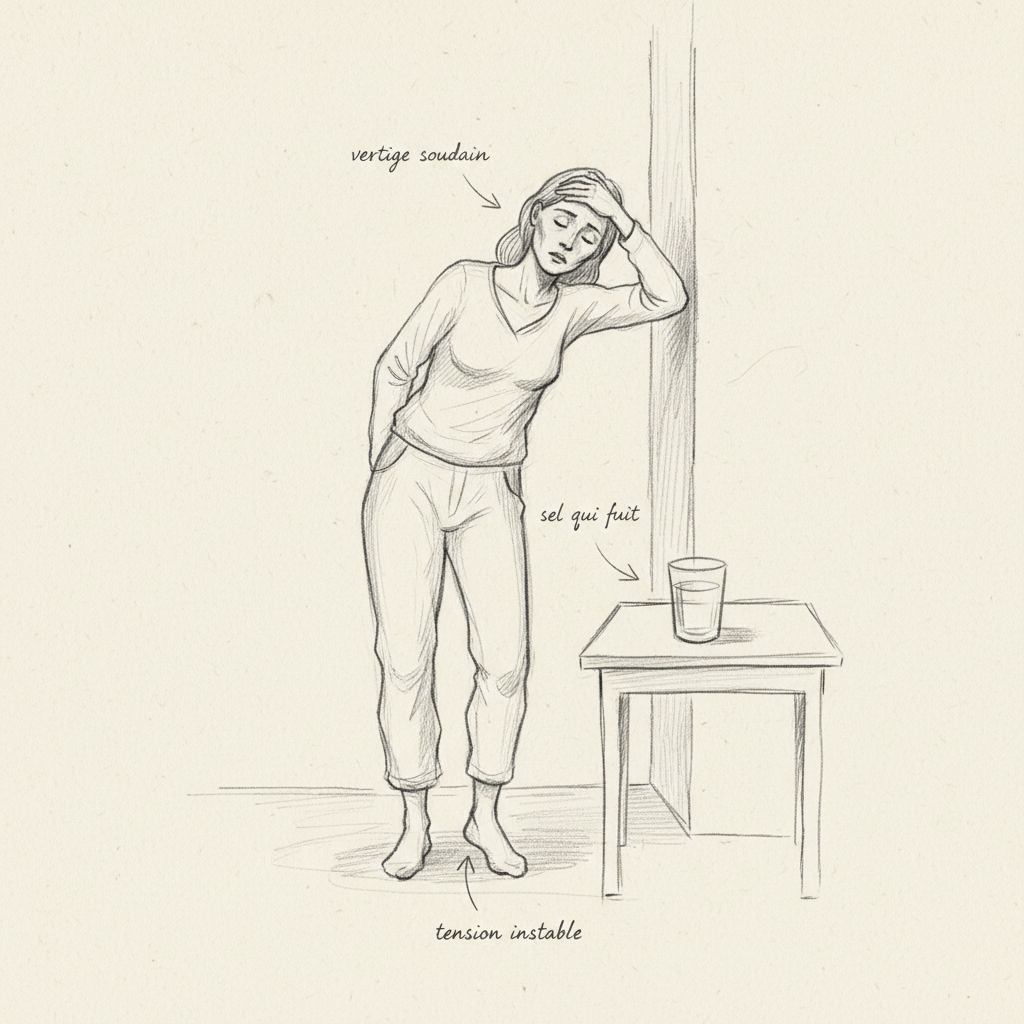
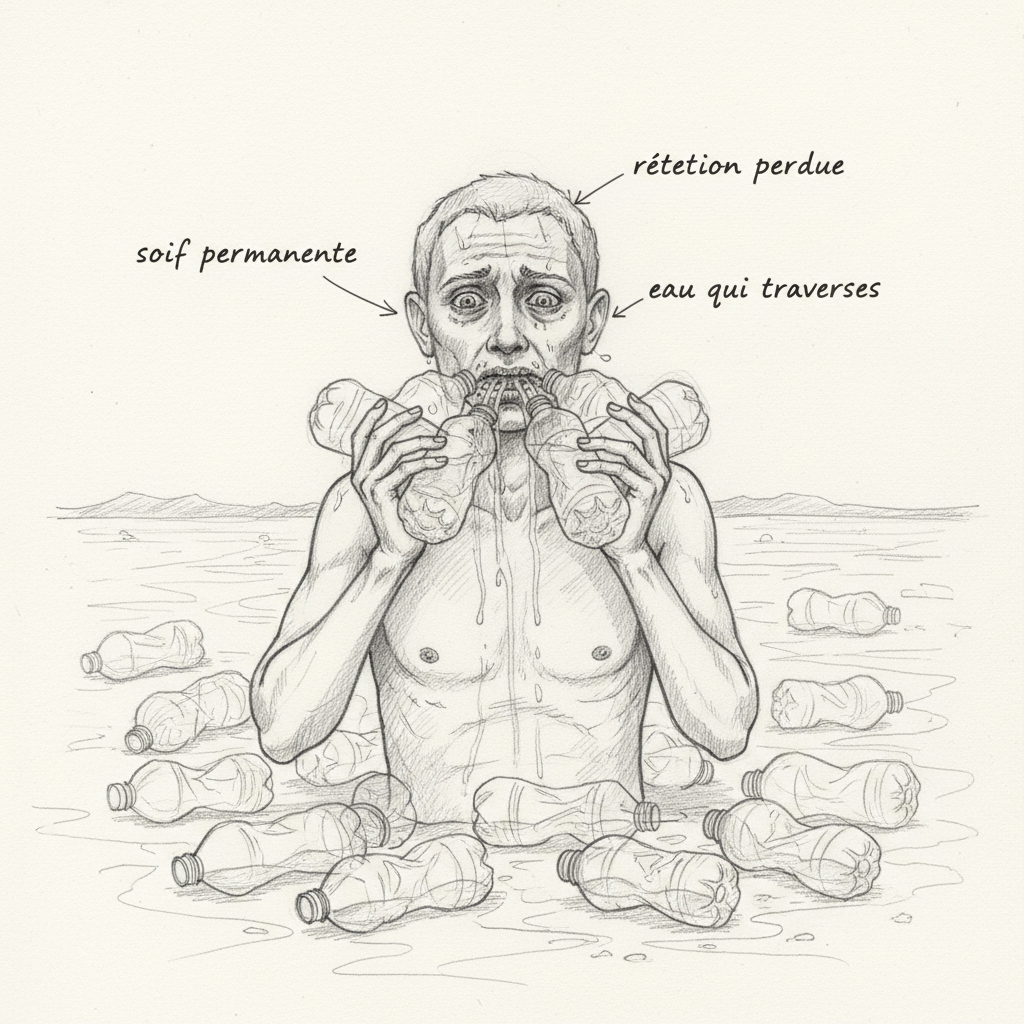
Marc is fifty-three years old. For five years, he has been making the rounds of specialists. The endocrinologist tells him his thyroid is normal. The cardiologist tells him his blood pressure is borderline but not concerning. The urologist tells him his testosterone is within normal range. The psychiatrist offered him an antidepressant for his chronic fatigue and his declining libido. Each specialist looks at their organ, pulls out a number, compares it to the lab range, and concludes: “It’s normal.” Yet Marc feels old. He has gained twelve kilos in five years without changing his diet. He goes to bed exhausted and wakes up exhausted. He can no longer tolerate cold. His skin has become like sandpaper. And when he looks at photos from ten years ago, he doesn’t recognize the man he was.
I reviewed Marc’s test results using Dr. Hertoghe’s standards. His free T4 at 1.05 ng/dL? “Normal” for the lab (range 0.7-1.8). Insufficient for Hertoghe (optimal at 1.3). His testosterone at 350 ng/dL? “Normal” for the lab (250-900). Low for Hertoghe (optimal in the upper third). His DHEA, his morning cortisol, his melatonin: all “within normal range” but all in the lower third. Marc didn’t have ONE hormonal deficiency. He had a global decline in all his hormones, each one just high enough to be declared normal, but all together insufficient to maintain vitality.
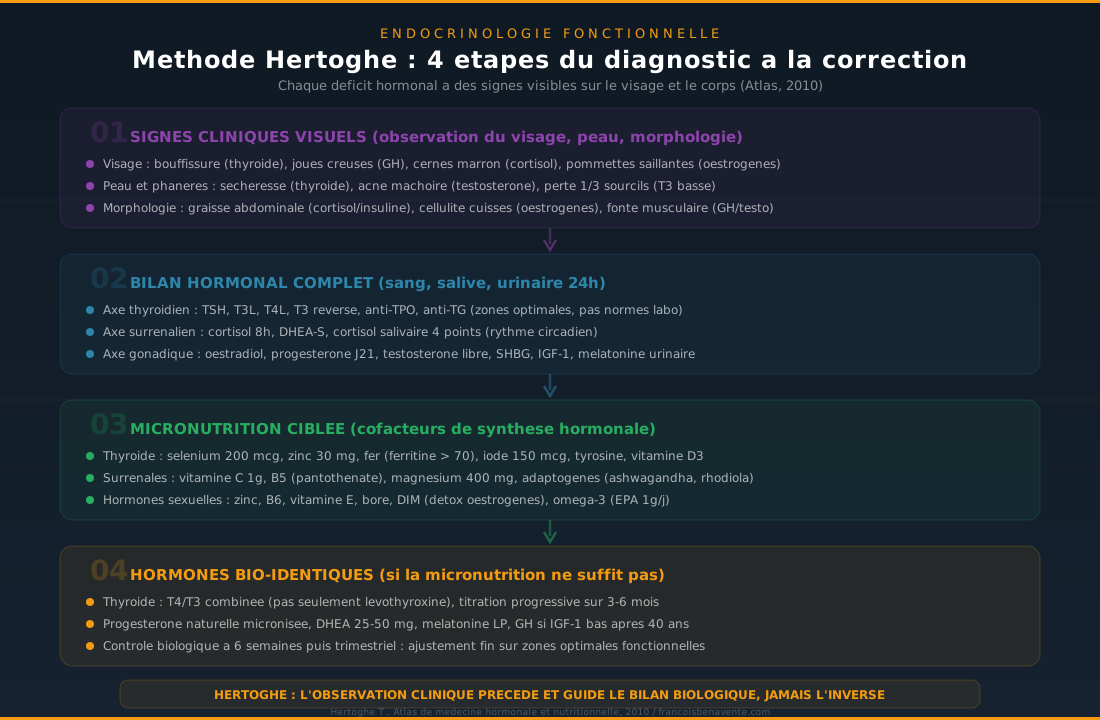
This is exactly what Dr. Hertoghe calls medicine of the hormonal terrain. And this is what I’m going to present to you here: not an isolated protocol for the thyroid or adrenals, but the complete vision of a man whose family has been treating hormones for more than a century.
Four generations of endocrinologists: the Hertoghe dynasty
The story begins in 1892. Dr. Eugen Hertoghe, a Belgian physician, is the first in Europe to administer thyroid extracts to his hypothyroid patients. At a time when the thyroid was barely understood, he observes that cachectic, freezing, depressed patients come back to life in just a few weeks under animal thyroid extracts. He publishes his observations, documents the clinical signs (the loss of the outer third of the eyebrows as a marker of hypothyroidism is a “sign of Hertoghe”), and lays the foundations for hormonal medicine based on clinical observation.
His son continues. Then his grandson. And today, Dr. Thierry Hertoghe, the fourth generation, directs a clinic in Brussels specializing in anti-aging and hormonal medicine. He has trained thousands of doctors around the world, published the Atlas of Endocrinology for Hormone Therapy and the Hormone Handbook, and developed a system of clinical questionnaires that allows assessment of a patient’s entire hormonal and micronutritional terrain in a single consultation.
What fundamentally distinguishes Hertoghe from conventional endocrinology comes down to three principles that I apply daily in my practice.
Principle one: optimal standards versus laboratory standards
This is the central struggle of the entire Hertoghe method. Laboratories define their standards based on the average of the population that comes to be tested. The problem is that this population is not in good health. It is tired, stressed, sedentary, poorly nourished. The “standard” reflects statistical mediocrity, not optimal health.
Hertoghe proposes optimal standards, based not on the average of sick patients but on the values associated with the absence of symptoms and the best functioning. The difference is considerable.
For the thyroid, the optimal free T4 according to Hertoghe is 1.3 ng/dL. The lab declares normal anything between 0.7 and 1.8. A patient at 0.9 is “normal” for the lab. He is functionally hypothyroid for Hertoghe. And studies prove him right: below 1.33 ng/dL of free T4, the risk of metabolic syndrome increases significantly. I detail the seven essential nutrients for the thyroid and complete standards in my article on thyroid and micronutrition.
For ferritin, the lab accepts anything above 12 ng/mL in women. Hertoghe places the optimal level between 50 and 100. Below 30, the conversion of T4 to T3 is compromised, and missing iron leads to a forty-seven percent drop in T3 and a rise in reverse T3. This is documented by Beard in 1990 and I explain it in detail in the article on the Hertoghe diet.
For DHEA, the lab gives such a wide range (80-560 mcg/dL in men aged 30-40) that a patient at 100 is declared normal when he is at the floor. Hertoghe aims for the upper third of the range, adjusted for age.
This gap between lab standards and optimal standards explains why millions of patients are told “it’s normal” when they are suffering. Marc was in this situation. Each hormone individually “within normal range.” But all together in the lower third. Hertoghe calls this “multiple subclinical deficiency”: not low enough for diagnosis, low enough to destroy quality of life.
Principle two: clinical observation before biology
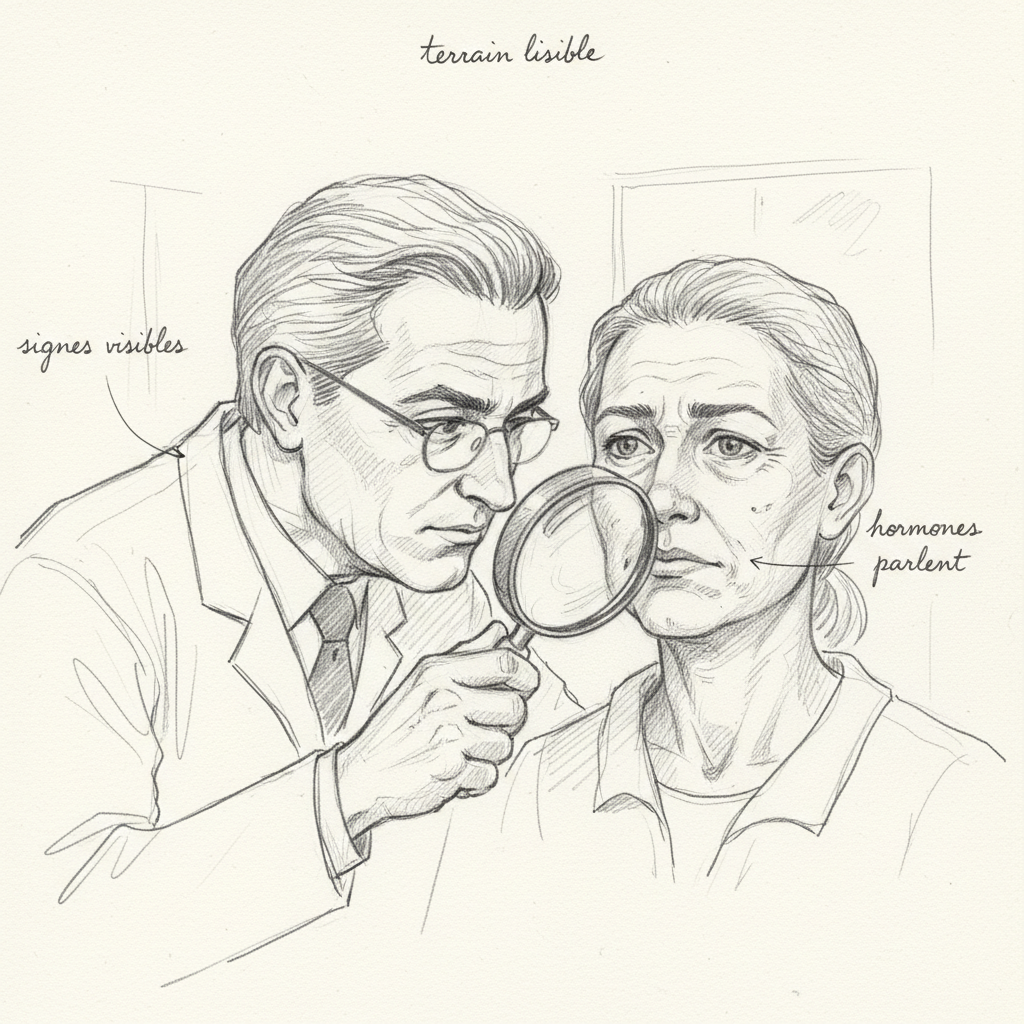
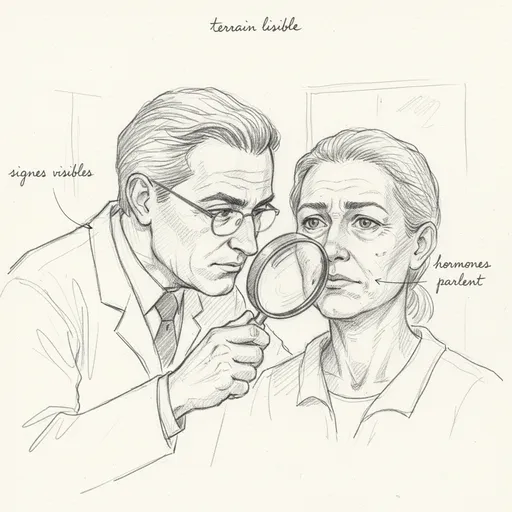
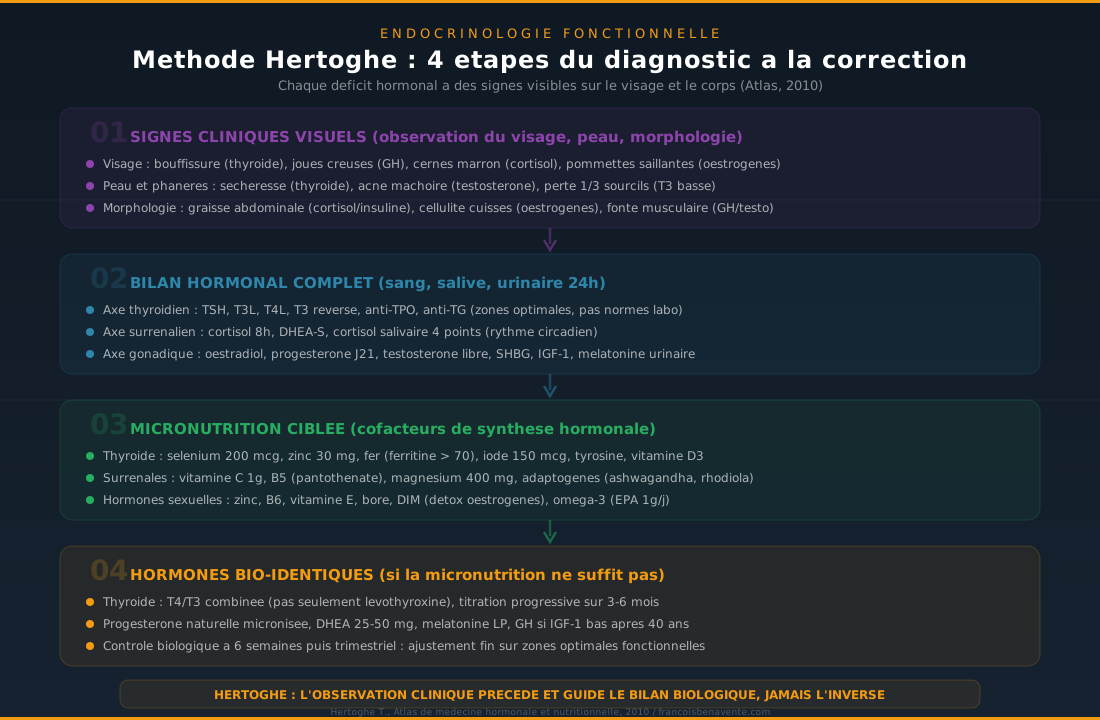
Hertoghe repeats in every training he gives: “Look at the patient before looking at the test results.” The physical signs of hormonal deficiency are often more reliable than laboratory numbers. Loss of the outer third of the eyebrows points toward hypothyroidism. Swollen eyelids upon waking suggest growth hormone deficiency. Skin as thin as cigarette paper on the back of the hands points to a lack of DHEA. Permanent purple dark circles suggest adrenal exhaustion. Very prominent veins on the forearms point toward vasopressin deficiency.
This is why Hertoghe developed thirteen hormonal questionnaires. Each questionnaire evaluates the clinical symptoms of a specific hormone: thyroid, cortisol, DHEA, testosterone, estrogens, progesterone, melatonin, aldosterone, vasopressin, growth hormone, insulin. The score obtained allows identification of probable deficiencies before even running tests.
I have been using these questionnaires in my practice for years. The Claeys thyroid questionnaire (adapted from Hertoghe) is often the first one I give. Ten symptoms, a score from 0 to 40, and clinical guidance that directs the blood test rather than the other way around. All Hertoghe hormonal questionnaires are available on the questionnaires page of the site.
Principle three: hormones in symphony
This is perhaps Hertoghe’s most important contribution to modern endocrinology. Hormones don’t function in silos. They form a symphony where each instrument affects all the others.
Cortisol crushes the thyroid when in excess (chronic stress blocks T4 to T3 conversion). Excess estrogens increase TBG (transport protein) and reduce available free T3. DHEA protects against excess cortisol (the cortisol/DHEA ratio is a key marker of aging). Melatonin regulates the sleep-wake cycle that determines the secretion of all other hormones. Excess insulin blocks weight loss and amplifies systemic inflammation.
This is why treating the thyroid alone when the adrenals are exhausted doesn’t work. This is why supplementing with testosterone without checking estrogens can worsen the situation. And this is why Levothyroxine prescribed as monotherapy doesn’t resolve symptoms in half of hypothyroid patients: it replaces T4 but doesn’t correct hepatic conversion, cofactors, or the global hormonal balance.
Hertoghe recommends treating in order: first the adrenals (cortisol, DHEA), then the thyroid, then sex hormones (estrogens, progesterone, testosterone), then secondary hormones (melatonin, GH, vasopressin). This order is not arbitrary. If you start with the thyroid when your adrenals are on the ground, you risk worsening fatigue: the thyroid accelerates a metabolism that the adrenals no longer have the capacity to support.
The eighteen micronutritional questionnaires
Beyond hormones, Hertoghe expanded his method to include micronutrition. He developed eighteen questionnaires covering the most common vitamin and mineral deficiencies: vitamin A, B1, B2, B3, B5, B6, B8, B9, B12, C, D, E, K, omega-3, omega-6, zinc, iron, magnesium.
The principle is the same as for hormones: clinical symptoms guide the test, not the other way around. Longitudinally striated nails suggest iron deficiency. Nocturnal leg cramps point toward magnesium. Recurring gum bleeding points toward vitamin C. Easy bruising suggests vitamin K. Hertoghe systematized these correspondences into standardized questionnaires, usable in consultation to target the most relevant blood tests instead of asking for a “complete” workup that costs a fortune and obscures useful information.
It is the combination of hormonal and micronutritional questionnaires that gives the Hertoghe method its power. For Marc, the intersection of scores revealed a coherent pattern: subclinical thyroid deficiency + low DHEA + insufficient iron + collapsed magnesium + vitamin D at 22 ng/mL. Each micronutritional deficiency worsened the hormonal deficiencies, and each hormonal deficiency worsened the deficiencies. A vicious circle that only a comprehensive vision could identify.
Nutritional chronobiology and the optimal diet
The Hertoghe diet is not a diet in the restrictive sense. It is a food organization based on chronobiology: eating the right foods at the right time to synchronize nutrition and hormonal rhythm.
In the morning, Hertoghe recommends quality proteins and fats. The reason is biochemical: proteins provide tyrosine that nourishes dopamine, the neurotransmitter of wakefulness and motivation. Fats stabilize blood sugar and provide cholesterol, the precursor of all steroid hormones. A protein-rich breakfast (eggs, avocado, almonds) launches the day with dopamine. A sugary breakfast (cereals, jam, fruit juice) launches the day with an insulin spike followed by a crash at eleven o’clock.
In the evening, Hertoghe recommends starches. Counterintuitive in the low-carb era, but based on biochemistry: carbohydrates increase brain tryptophan, the precursor of serotonin, itself the precursor of melatonin. Eating starches in the evening promotes sleep and sleep quality. Eating protein in the evening overloads the liver with amino acids that slow T4 to T3 conversion throughout the night.
Beyond chronobiology, Hertoghe recommends eliminating dairy products (casein crushes T3 by sixty-two to sixty-nine percent according to Tyzbir 1981), eliminating caffeine (eighty-five percent collapse of TSH according to Spindel 1980), gentle cooking below 110°C, and a paleolithic-type diet rich in fruits, vegetables, quality proteins and good fats.
Genomics: the future of hormonal medicine
The most recent dimension of the Hertoghe method is genomics. Genetic polymorphisms (SNPs) explain why two patients with the same blood test can have radically different symptoms. The DIO2 gene, for example, codes the enzyme that converts T4 to active T3. A polymorphism of this gene (present in approximately fifteen percent of the population) slows this conversion and makes Levothyroxine alone insufficient to normalize symptoms, even when TSH is “perfect.”
MTHFR polymorphisms affect methylation, a biochemical process central to detoxification, neurotransmitter synthesis and hormone metabolism. The FUT2 gene affects the intestine’s ability to feed protective bacteria. The COMT gene influences the rate at which estrogens are broken down by the liver.
Hertoghe integrates these genomic data into his protocols to personalize supplementation. A DIO2 polymorphic patient will need a T4+T3 combination rather than Levothyroxine alone. An MTHFR homozygous patient will need methylated folates rather than synthetic folic acid. This genomic personalization is the future of hormonal medicine, and Hertoghe is one of the first endocrinologists to systematically integrate it into his clinical practice.
What Hertoghe changed in my practice
In consultation, I use Hertoghe’s tools daily. Hormonal and micronutritional questionnaires allow me to identify probable deficiencies before requesting blood tests. Optimal standards give me a more rigorous interpretation framework than laboratory ranges. The symphonic vision of hormones prevents me from treating an isolated organ when it is the entire terrain that is collapsing.
For Marc, the strategy was the one Hertoghe recommends: first the adrenals (magnesium, B5, adaptogens, stress management), then the thyroid (iron, selenium, progressive iodine, vitamin D at Hertoghe dosage), then the overall terrain (nutritional chronobiology, elimination of dairy and coffee, morning physical exercise). Four months later, his free T4 had risen from 1.05 to 1.25, his DHEA had rebounded, and most importantly, he had lost five kilos and regained energy he thought was gone forever.
Hertoghe is not an anti-aging medicine guru. He is a rigorous clinician, from a lineage of rigorous clinicians, who had the audacity to say what many doctors think quietly: laboratory standards are too broad, clinical observation must take precedence over biology, and hormones form an orchestra that cannot be directed by watching only one musician.
Want to evaluate your status? Take the free Claeys thyroid questionnaire in 2 minutes.
If you want personalized support, you can book a consultation.
To learn more
- Aldosterone: the forgotten hormone of your blood pressure and salt
- Graves’ disease and pregnancy: conceiving and carrying safely
- Estrogens: when your femininity fades before its time
- Perimenopause and thyroid: the natural hormonal protocol
Want to evaluate your status? Take the free vitality and toxemia questionnaire in 2 minutes.
Sources
- Hertoghe, Thierry. Atlas of Endocrinology for Hormone Therapy. International Medical Books, 2010.
- Hertoghe, Thierry. The Hormone Handbook. International Medical Books, 2006.
- Spindel, E., et al. “Neuroendocrine effects of caffeine.” J Pharmacol Exp Ther 214, no. 1 (1980): 58-62.
- Tyzbir, R.S., et al. “Influence of dietary protein on thyroid function.” J Nutr 111, no. 2 (1981): 252-259.
- Beard, J.L., et al. “Impaired thermoregulation and thyroid function in iron-deficiency anemia.” Am J Clin Nutr 52, no. 5 (1990): 813-819.
If you want a complete hormonal and micronutritional assessment inspired by the Hertoghe method, you can book a consultation.
Healthy recipe: Gently steamed salmon: The omega-3s in salmon support hormonal balance.


Laisser un commentaire
Sois le premier à commenter cet article.